The Antonov A‑40 was the Soviet Union’s most ambitious attempt to solve a persistent airborne‑warfare problem: paratroopers could be deployed deep behind enemy lines, but they arrived without armoured support.
On the Eastern Front, this deficiency was fatal.
German counterattacks with even lightly armoured vehicles could overwhelm Soviet airborne units before they could consolidate.
Throughout the 1930s, the Red Army experimented with methods of delivering armour by air.
Light tanks such as the T‑27, T‑37A, and T‑38 were slung beneath Tupolev TB‑3 bombers and dropped from very low altitude.
These tanks could survive the fall, but the crews had to be dropped separately, delaying combat readiness.
Other experiments involved parachuting small vehicles or landing them on water, but none provided a reliable way to deliver a tank and its crew together.
By 1941–42, the Soviet Air Force sought a radical solution: a glider capable of delivering a tank with its crew inside, ready to fight immediately upon landing.
Oleg Antonov, already a prominent glider designer, proposed an even more radical idea. Instead of building a glider to carry a tank, he would turn the tank itself into the glider.
This concept became the Antonov A‑40, also known as the KT (“Krylya Tanka”, meaning “Tank Wings”).
Development and Conceptual Design
Selection of the Base Vehicle
The T‑60 light tank was chosen as the basis for the flying tank.
Even this small vehicle was too heavy for flight in its standard configuration, so extensive weight‑reduction measures were required.
These included the removal of:
Ammunition
Most fuel
External fittings such as headlights and tools
In some accounts, the turret was also removed for the test flight
The tank retained its two‑man crew and its 70‑horsepower GAZ‑202 engine.
The Glider Structure
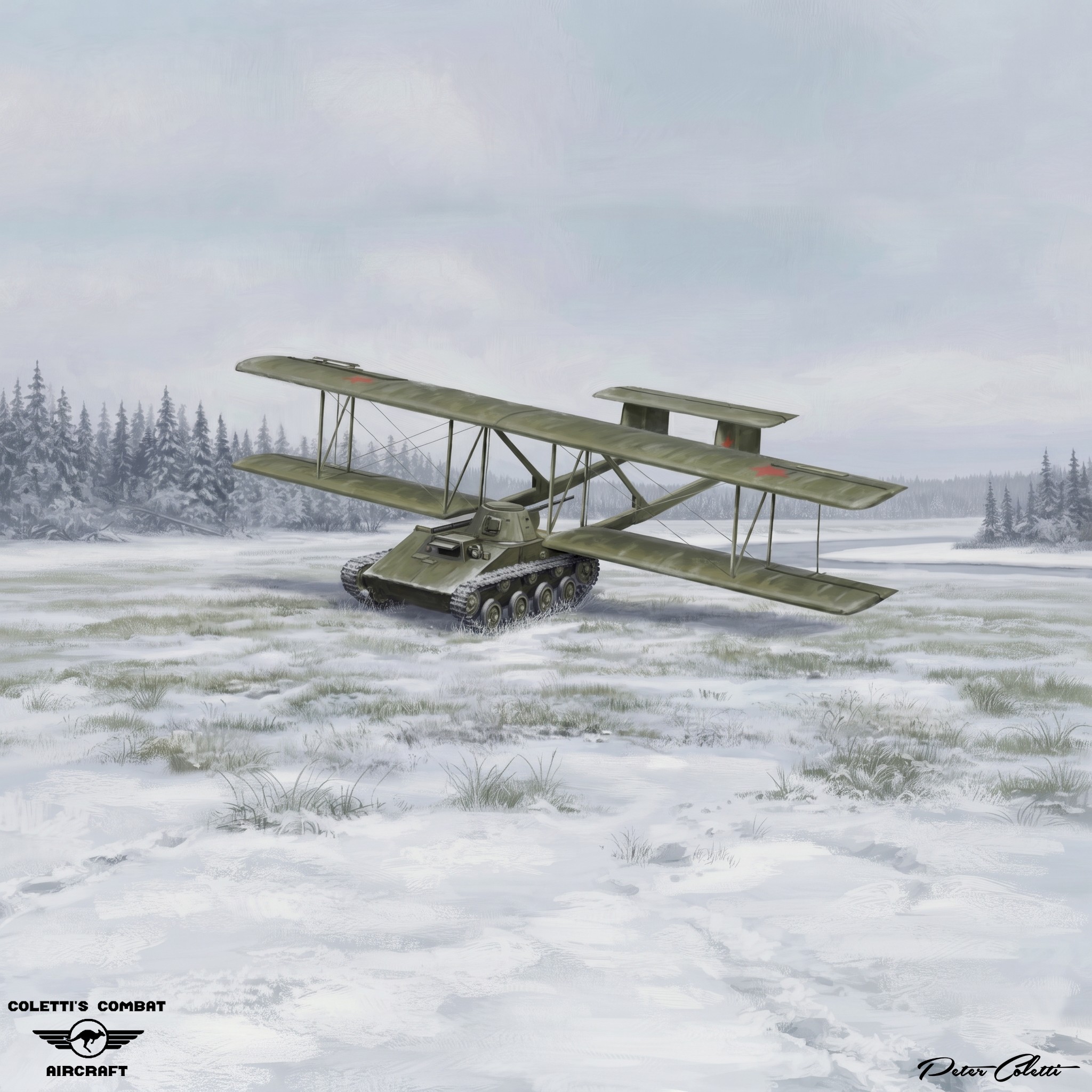
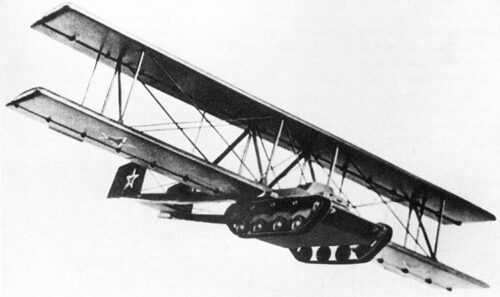
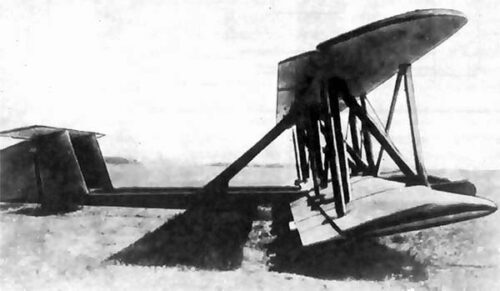
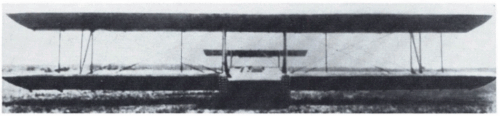
Antonov designed a detachable biplane wing assembly built primarily from wood and fabric.
The structure consisted of:
A large biplane wing with a span of approximately 18 metres
Twin tailbooms extending rearward from the wings
A tailplane and rudder assembly
A cradle attaching the entire structure to the tank hull
The wings were enormous relative to the tank, with a total area of roughly 85 square metres.
This was necessary to generate enough lift for the tank’s mass, even after weight reduction.
Control and Operation
The A‑40 had no cockpit.
The tank commander acted as the pilot, using modified controls connected to the glider’s aerodynamic surfaces.
Steering levers and pedals inside the tank were linked to the rudders and elevators.
The concept was simple in theory:
A heavy bomber would tow the tank-glider into the air.
The tank would glide to a landing zone.
The crew would jettison the wings.
The tank would drive into combat immediately.
Tow Aircraft Requirements
The A‑40 was intended to be towed by large Soviet bombers such as the TB‑3 or the Pe‑8.
However, even these aircraft struggled to generate the required towing speed of around 160 km/h.
The tank’s shape created enormous drag, and the glider assembly added further aerodynamic load.
The 1942 Test Flight
Preparation for Flight
Only one prototype, the A‑40, was built.
The test flight took place on 2 September 1942 at Monino.
The pilot was Sergei Anokhin, one of the Soviet Union’s most skilled glider pilots.
Tow and Release
A TB‑3 bomber successfully lifted the A‑40 into the air, but the flight immediately revealed the design’s limitations.
The tank’s drag was far greater than predicted.
The TB‑3’s engines overheated, and the aircraft struggled to maintain altitude.
To avoid losing the tow aircraft, the crew released the A‑40 prematurely.
Glide and Landing Despite the emergency release, Anokhin managed to glide the tank to a safe landing in a field near Monino.
After landing, the wings were detached, and the tank’s engine was started.
The T‑60 then drove back to the airfield under its own power.
This single test flight demonstrated that the concept was technically feasible but operationally impractical.
Technical and Operational Evaluation
Aerodynamic Limitations
The A‑40’s primary flaw was aerodynamic drag.
Even with extensive weight reduction, the tank’s hull produced too much resistance for any Soviet tow aircraft to handle safely.
The TB‑3 and Pe‑8 lacked the power to tow the A‑40 at the required speed and altitude.
Combat Practicality
Even if the A‑40 could have been towed reliably, its combat value was questionable.
The tank had to be stripped of weapons, ammunition, and fuel to make it light enough to fly.
After landing, it would need to be rearmed and refuelled before entering combat, negating the intended advantage of immediate armoured support.
Logistical Challenges
The glider assembly was large, fragile, and time‑consuming to attach.
It required specialised ground crews and equipment.
In wartime conditions, especially on the Eastern Front, such preparation was unrealistic.
Cancellation and Legacy
Termination of the Program
The A‑40 project was cancelled shortly after the 1942 test flight.
The Soviet Union lacked a two-engine aircraft powerful enough to make the concept viable, and no further prototypes were built.
Influence and Historical Significance
Although the A‑40 never entered service, it remains one of the most unusual and imaginative experiments in military aviation.
It represents the extreme lengths to which designers were willing to go to solve the problem of airborne armoured support.
Other nations explored similar ideas—Britain’s Baynes Bat and Japan’s Ku‑R0—but none reached operational use.
After the war, advances in heavy‑lift aircraft, helicopters, and airdroppable armoured vehicles rendered the flying‑tank concept obsolete.
Technical Summary
Designation: Antonov A‑40 (KT, “Krylya Tanka”)
Type: Experimental tank‑glider
Designer: Oleg Antonov
First flight: 2 September 1942
Number built: 1 prototype
Base vehicle: T‑60 light tank (modified)
Crew: 2
Wingspan: Approximately 18 metres
Wing area: Approximately 85 square metres
Tow aircraft: TB‑3, Pe‑8 (insufficient power)
Outcome: One successful glide; project cancelled
Context Within WWII Airborne Operations
The A‑40 must be understood within the broader evolution of airborne warfare.
Germany’s early airborne successes in 1940–41 demonstrated the potential of paratrooper operations but also exposed their vulnerability to armoured counterattacks.
The Soviet Union sought to overcome this vulnerability by delivering armour directly with airborne troops.
The A‑40 was the most extreme expression of this ambition.
Although it failed, it highlighted the tactical need for rapid armoured support—a need later met by improved transport aircraft and airdroppable armoured vehicles rather than hybrid flying tanks.