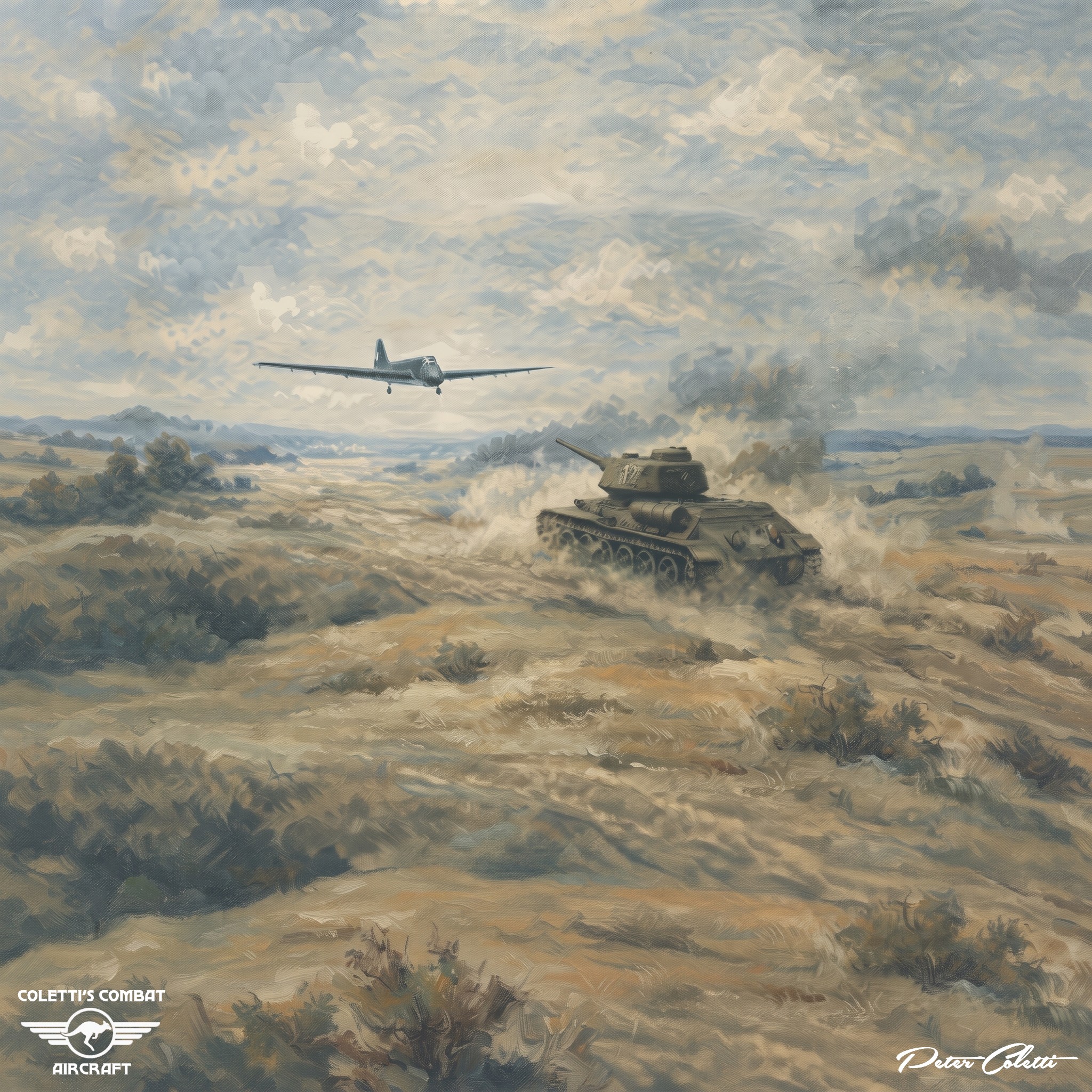
The Avia LM.02 was a highly unusual Italian World War II assault glider project conceived during 1941–1942, reflecting the Regia Aeronautica’s interest in unconventional methods for striking heavily defended strategic targets.
Developed by Azionaria Vercellese Industrie Aeronautiche (A.V.I.A.), a small Italian aircraft firm led by aviator and designer Carlo Francis Lombardi, the LM.02 emerged from a specific operational requirement: a silent, radar‑evading attack platform capable of delivering heavy ordnance against the British naval and intelligence installations at Gibraltar, a critical Allied stronghold controlling access between the Atlantic and the Mediterranean.
Origins and Development
In late 1941, the Regia Aeronautica contracted A.V.I.A. to design an unpowered aircraft capable of approaching Gibraltar undetected.
Lombardi assigned engineer Pieraldo Mortara to develop the LM.02, with two prototypes planned.
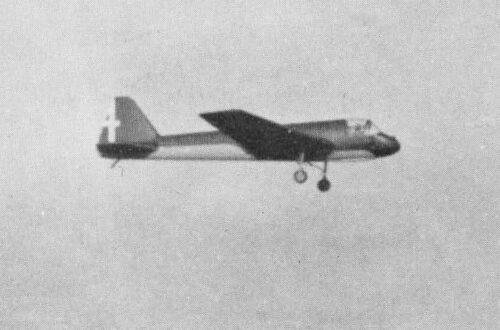
The design was completed in 1942, and the first prototype—likely the only one ever completed—flew in the autumn of that year, piloted by Nello Raimondo. Flight tests reportedly demonstrated good handling characteristics.
However, the project’s strategic viability rapidly diminished.
Shortly after the LM.02’s first flights, British forces activated long‑range aircraft‑tracking radar systems on Gibraltar, undermining the glider’s core advantage of stealthy, radar‑free penetration.
As a result, the Regia Aeronautica discontinued the programme before any operational deployment.
Design Characteristics
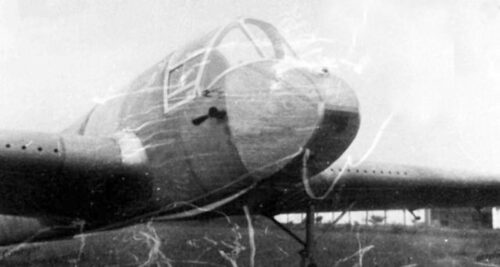
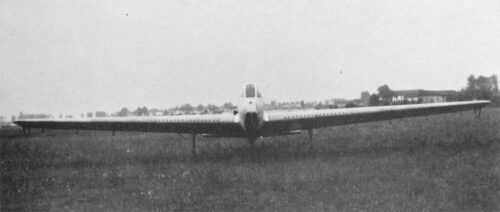
The LM.02 was a single‑seat, low‑mid‑wing monoplane assault glider, constructed entirely of wood to minimise weight and radar visibility.
Its most distinctive feature was its elliptical wooden fuselage, which incorporated watertight compartments enabling flotation after sea landings—a critical requirement for pilot recovery following missions.
The wings were cantilever wooden structures equipped with Junkers‑type dive brakes, allowing the glider to perform steep, controlled dive‑bombing attacks.
Two different landing‑gear configurations were designed: one for flight testing and another capable of supporting the weight of the glider’s heavy bomb load.
The operational gear was jettisonable, reducing drag and weight during the attack phase.
Armament and Mission Profile
The LM.02 was designed to carry two 820‑kg (1,874‑lb) bombs mounted under the fuselage.
This exceptionally heavy payload for a glider underscores the aircraft’s intended role as a precision strike weapon.
Operational plans called for the LM.02 to be towed at night by a Savoia‑Marchetti S.79 bomber modified with extra fuel tanks.
The tow aircraft would release the glider approximately 30 km from Gibraltar, allowing it to glide silently towards the target.
After releasing its bombs in a steep dive, the pilot was expected to use remaining altitude and speed to glide towards the Spanish coast near Algeciras, ditch the aircraft at sea, and await pickup by Italian or German submarines.
Performance
Although unpowered, the LM.02 was designed for high‑speed attack dives.
Sources indicate a maximum diving speed of approximately 280 mph (≈450 km/h), while another source cites 540 km/h in a dive, likely reflecting differing test conditions or reporting variations.
Its minimum controllable speed was around 72 km/h.
Dimensions and Weight
All available sources agree on the LM. 02’s basic dimensions and mass characteristics:
Wingspan: 52 ft 6 in (16.00 m)
Length: 35 ft 3¼ in (10.75 m)
Height: approx. 2.80 m
Wing area: 35.0 m²
Empty weight: 1,100 kg (2,467 lb)
Loaded weight: 2,840 kg (6,283 lb)
Variants
No operational variants of the LM.02 were produced.
While some sources list the LM.02 among A.V.I.A.’s broader family of LM‑series designs, the aircraft appears to have remained a single prototype with no derivative models.
Some historical summaries even suggest it may have remained largely a project‑level design, though the flight testing of at least one prototype is well documented.
Context Within WWII
The LM.02 must be understood within the broader context of Axis experimentation with assault gliders, a concept explored by Germany, Italy, and Japan.
Italy’s interest stemmed from the need to train pilots for high‑sink‑rate cargo gliders and to develop unconventional strike capabilities.
A.V.I.A. had prior experience converting its FL.3 light aircraft into training gliders, which likely contributed to the LM.02’s development.
The strategic impetus—the desire to neutralise Gibraltar—was shared by both Italy and Germany, but the Axis never mounted a serious attempt to seize the fortress.
By the time the LM.02 was ready for evaluation, Allied radar improvements and shifting war priorities rendered the concept obsolete.
The LM.02 thus stands as a testament to the inventive but ultimately impractical late‑war projects pursued by smaller Axis aviation firms.