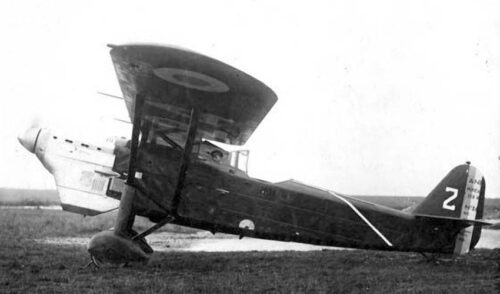
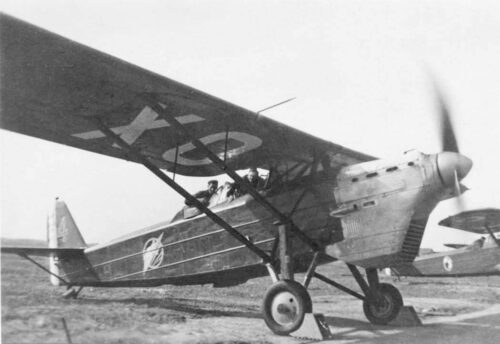
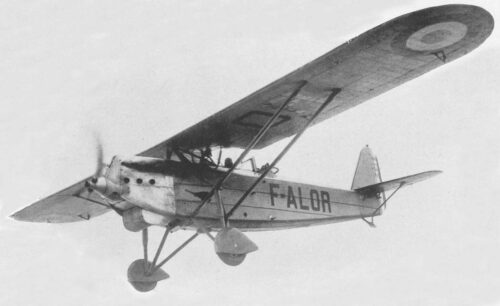
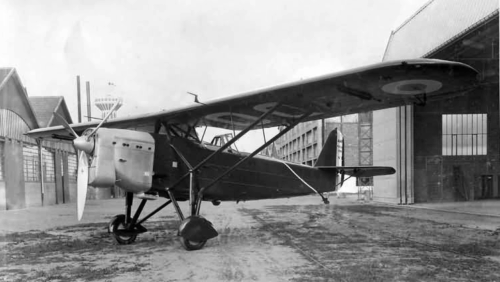
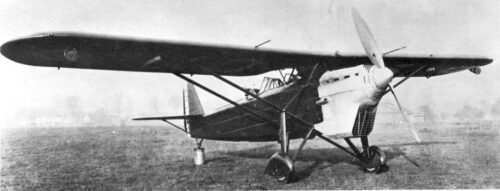
The ANF Les Mureaux 113 sits at a pivotal point in French interwar aviation—bridging the gap between the fabric-and-wood biplane era and the all-metal, higher-performance reconnaissance monoplanes that would enter service on the eve of the Second World War.
It was the first true mass‑production member of the broader Mureaux 110 family, and, although built in modest numbers, it set the pattern for the later and more numerous 115 and 117 series that went to war in 1940.
Development history
Origins in the “R2” requirement
In the late 1920s the French Air Ministry issued a requirement for a new two-seat reconnaissance aircraft in the “R2” category to replace the Breguet 19, which still formed the backbone of the Armée de l’Air’s observation units.
The new type was to be all‑metal, with better speed, range, and climb, and with improved facilities for photographic reconnaissance and artillery spotting.
Les Ateliers de Construction du Nord de la France et des Mureaux (ANF Les Mureaux), under designer André Brunet, chose not to simply refine an existing airframe but to design a clean‑sheet parasol‑wing monoplane.
During this work the company developed new techniques for metal construction—particularly in the use of duralumin skinning and stressed-skin elements—which would become a hallmark of the family.
From prototypes 110/111 to the 113
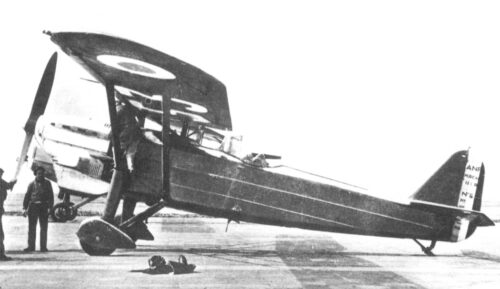
The initial prototypes were the Mureaux 110 and 111, broadly similar but differing in detail and equipment.
Both were all-metal parasol monoplanes with tandem open cockpits and fixed undercarriages, powered by Hispano‑Suiza V‑12 engines.
Flight tests beginning in April 1931 showed promising performance and handling, and the Air Ministry ordered further development.
To bridge the gap between prototypes and a standard production machine, the 110 prototypes were re‑engined and refined as the Mureaux 112 R2 pre‑production aircraft.
These allowed the manufacturer and the air force to validate the structure, systems, and operational procedures before committing to a full series.
The first true mass-production version was the ANF Les Mureaux 113 R2, ordered in 1933. Forty‑nine examples were built between 1933 and 1935, making it the first widely deployed member of the family.
It was soon followed and numerically overtaken by the improved 115 and 117, but the 113 established the basic configuration and operational concept.
Airframe design and construction
General layout
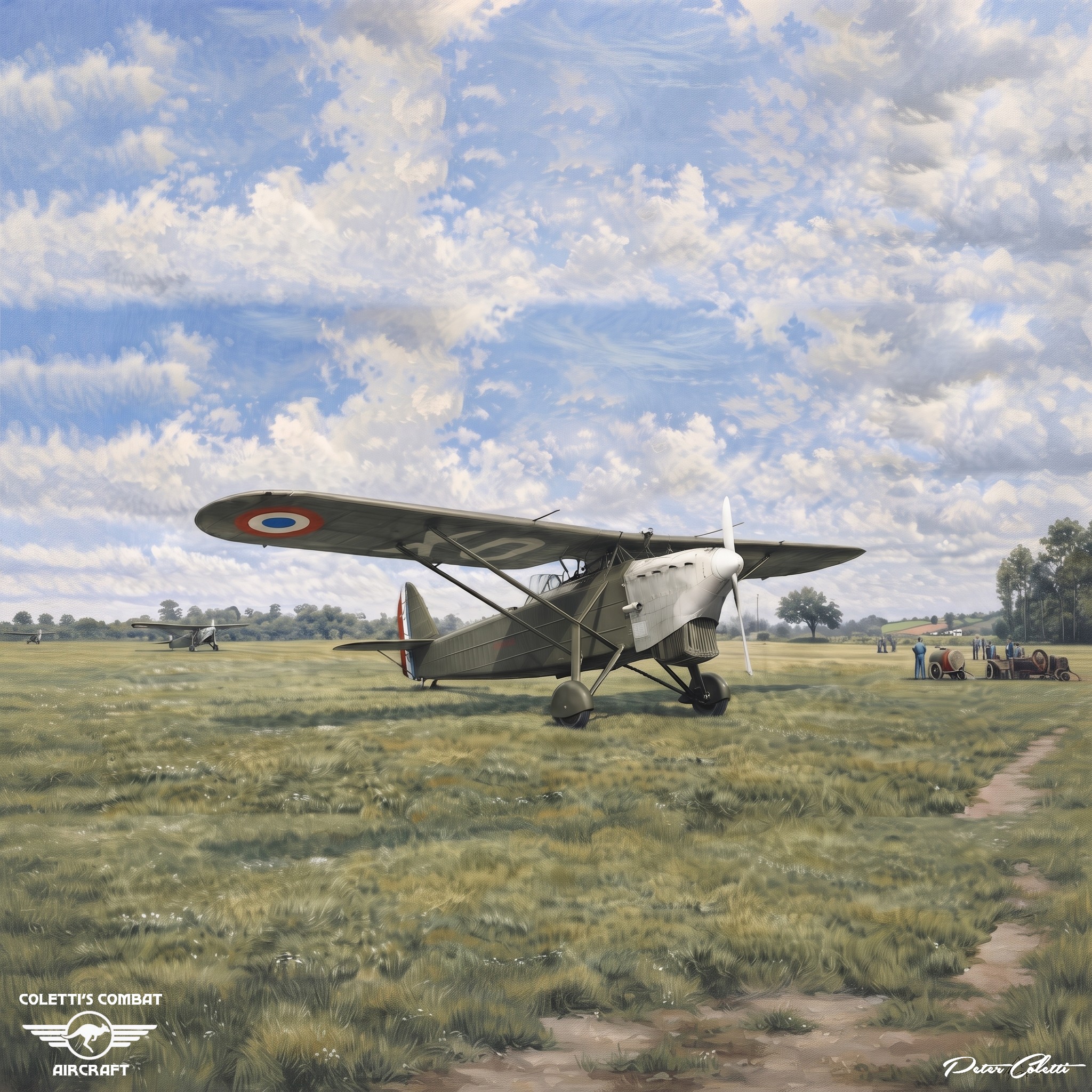
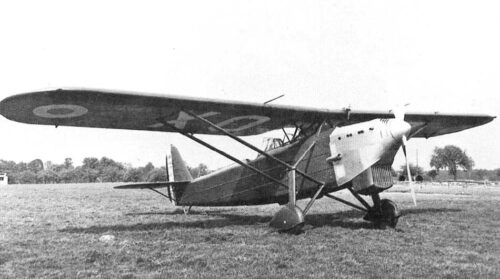
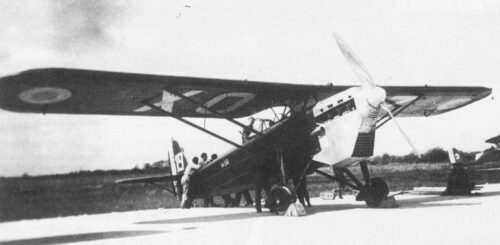
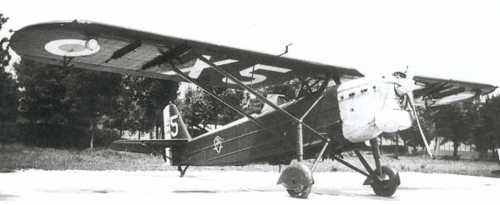
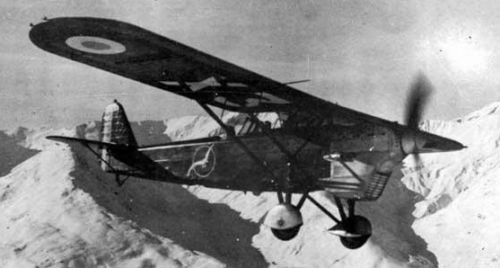
The Mureaux 113 was an all‑metal parasol-wing monoplane with a single engine, a fixed tailskid undercarriage, and two crew members seated in tandem open cockpits.
The parasol layout—a wing mounted above the fuselage on struts—was chosen to give the observer an excellent downward and lateral field of view while keeping the structure relatively simple and robust.
The fuselage cross‑section was essentially trapezoidal, with flat sides and a shorter lower base, while the top and bottom were rounded.
This shape balanced aerodynamic cleanliness with internal volume and structural efficiency.
The pilot’s cockpit was forward, under the wing’s trailing edge, and the observer/gunner sat aft with a broad field of fire and observation.
Structure and materials
The 113’s structure was largely metal, reflecting the Air Ministry’s push away from traditional wood-and-fabric construction.
The fuselage used a framework of metal members covered with duralumin skin panels, typically 20–30 cm wide, joined by riveted flanges or angle pieces.
This gave it a semi-monocoque character: the skin contributed to strength while remaining accessible for maintenance.
The wing was a one‑piece parasol structure supported by cabane struts over the fuselage and braced by struts to the lower fuselage.
It incorporated metal spars and ribs with metal skinning in high‑stress areas and fabric covering elsewhere to save weight.
A generous dihedral and a relatively thick section provided good stability and lift at the low speeds typical of reconnaissance and artillery‑spotting work.
The tail unit was conventional, with a fin and rudder plus a tailplane and elevators, all of metal structure with fabric covering.
Control surfaces were aerodynamically balanced to keep control forces reasonable during long patrols and at higher speeds.
Undercarriage
The fixed undercarriage consisted of two main wheels on robust struts with fairings and a tail skid at the rear.
While retractable gear was beginning to appear on contemporary fighters and bombers, the French reconnaissance requirement prioritised simplicity, ruggedness, and ease of operation from rough or improvised fields—areas where fixed gear was still entirely acceptable.
Crew stations, equipment, and mission fit
Pilot’s cockpit
The pilot’s open cockpit was relatively spacious for the period, with an adjustable seat and a windscreen to deflect airflow.
The instrument panel carried the usual flight instruments, engine gauges, and basic navigation equipment.
The parasol wing’s position gave the pilot good forward and downward visibility, especially to the sides, which was important for low‑level navigation and terrain following.
Observer’s station
The observer sat in the rear cockpit, which was designed as a multi‑role workspace:
Observation and photography: The position allowed the use of cameras for vertical and oblique photography, as well as direct visual observation and artillery spotting.
Defensive armament: A ring or flexible mount carried a 7.5 mm machine gun for rearward defence.
Radio: The observer typically operated the radio set, handling communication with ground units and other aircraft.
The seat could be removed or reconfigured depending on mission equipment, reflecting the aircraft’s role as a flexible reconnaissance platform.
Powerplant, performance, and armament
Engine and systems
The Mureaux 113 R2 was powered by a single Hispano‑Suiza 12Y‑series liquid‑cooled V‑12 engine (commonly cited as the 12Ybrs in this application), delivering around 650 hp.
The engine sat in a streamlined metal cowling, driving a two‑blade (later sometimes three‑blade) propeller.
Cooling was provided by a frontal radiator installation, and the fuel system was fed from fuselage and/or wing tanks sized for medium‑range reconnaissance missions.
In performance terms, the 113 offered a useful step up from the Breguet 19: higher maximum speed, better climb, and improved ceiling, while retaining good low‑speed handling and short‑field capability.
Exact figures vary by source and subvariant, but the type was competitive with early‑1930s reconnaissance aircraft, though it would be overtaken by newer designs later in the decade.
Armament and payload
Typical armament for the 113 R2 comprised the following:
Fixed guns: Two synchronised 7.5 mm machine guns firing forward through the propeller arc, mounted in the nose or upper fuselage.
Defensive gun: One 7.5 mm machine gun on a flexible mount in the rear cockpit.
While the 113 was primarily a reconnaissance aircraft, provision existed for a modest bomb load on under‑fuselage or under‑wing racks—light bombs for harassment or to support ground forces.
This capability was expanded and formalised in the later 115 and 117 “R2B2” reconnaissance‑bomber variants.
Variants within the 110/113 family
The 113 must be understood as part of a broader family of related types:
Mureaux 110:
Early prototype, two built.
Powered by a Hispano‑Suiza 12Nb engine.
Mureaux 111:
Single prototype, similar configuration, also with a 12Nb engine.
Mureaux 112 R2:
Pre‑production machines were created by re‑engining the 110 prototypes with Hispano‑Suiza 12Ybrs engines.
Used to refine the design before full production.
Mureaux 113 R2:
First mass‑production version.
Around 49 built.
A standard two‑seat reconnaissance aircraft with a 12Ybrs engine.
Mureaux 113 CN:
Night‑fighter conversion of 40 Mureaux 113 airframes.
Retained the basic airframe but adapted it for night operations (equipment and armament changes), replacing Breguet 19s in France’s two night‑fighter groups.
Mureaux 113 GR:
Special racing version with a supercharged Hispano‑Suiza 12Ybrs, built for competitions such as the Bibescu Cup.
Only one was produced.
Mureaux 114 CN:
A single prototype of a purpose‑built night‑fighter derivative, distinct from the 113 CN conversions.
Mureaux 115 R2B2:
Improved reconnaissance bomber with a more powerful Hispano‑Suiza 12Ycrs engine and strengthened structure for bomb carriage.
About 119 built.
Mureaux 117 R2B2:
A further refined reconnaissance-bomber variant, also produced in significant numbers.
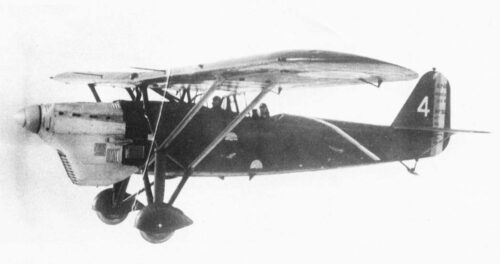
The 113 thus occupies the central position: the first standard production type, the basis for night fighter conversions, and the direct ancestor of the more capable 115/117 that would bear the brunt of wartime service.
Operational history and Second World War context
Entry into French service
The Mureaux 113 entered service in the mid‑1930s with reconnaissance groups of the Armée de l’Air.
It then spread to observation groups and, as newer types arrived, to regional reserve units (Groupes Aériens Régionaux), where it replaced older Potez 25s.
From 1934 to 1935, forty of the original 113s were converted into 113 CN night fighters, replacing Breguet 19s in France’s two dedicated night-fighter groups.
This was an economical way to exploit existing airframes while the air force sought more modern specialised fighters.
Role at the outbreak of war
By the time of the German invasion in May 1940, the Mureaux 113 itself was no longer the main frontline type; the improved 115 and 117 had taken over most reconnaissance and observation duties.
Nevertheless, the 113 family as a whole—113, 115, and 117—was still widely used.
In April 1940, around 228 aircraft of the family remained on strength, equipping numerous Groupes Aériens d’Observation.
The 113 and its derivatives flew short-range reconnaissance, artillery spotting, and liaison missions during the Battle of France.
They operated at low and medium altitudes, often in daylight and close to the front, making them vulnerable to modern German fighters such as the Bf 109 and to concentrated ground fire.
Losses mounted quickly; by the armistice in June 1940, only about 62 aircraft of the family remained, some of them in North Africa.
Obsolescence and withdrawal
By 1939–1940, the Mureaux 113’s basic concept—a fixed-gear, open-cockpit parasol monoplane—was clearly outdated compared with enclosed-cockpit, retractable-gear reconnaissance aircraft emerging elsewhere.
Its speed and climb were insufficient to evade enemy fighters, and its defensive armament was modest.
After the French armistice, surviving aircraft were withdrawn and scrapped; none became significant in Vichy or Axis service.
The type left no postwar legacy in operational use, but it did mark an important step in French structural and aerodynamic practice.
Assessment and significance
The ANF Les Mureaux 113 is best understood as a transitional aircraft:
Technically, it embodied the move to all‑metal, parasol‑wing monoplanes with stressed‑skin elements, showing that French industry could produce robust modern reconnaissance platforms.
Operationally, it gave the Armée de l’Air a more capable successor to the Breguet 19 and provided the basis for night‑fighter conversions at a time when resources were tight.
Historically, its real impact lies in the way it paved the path for the 115 and 117, which bore the brunt of France’s early-war reconnaissance effort and suffered heavy losses in 1940.