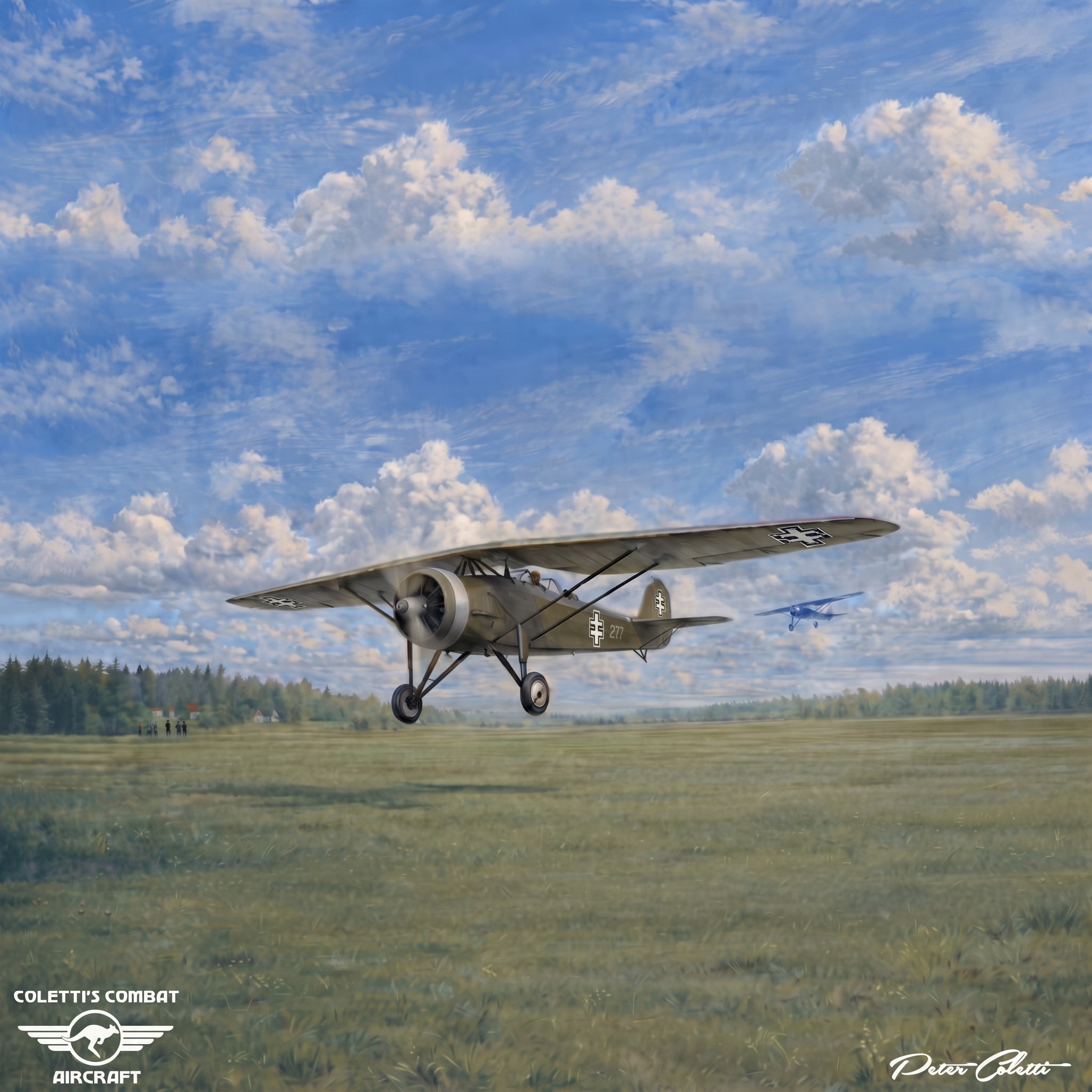
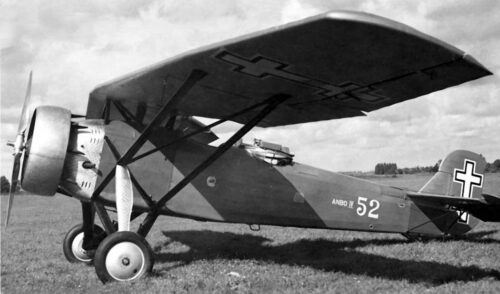
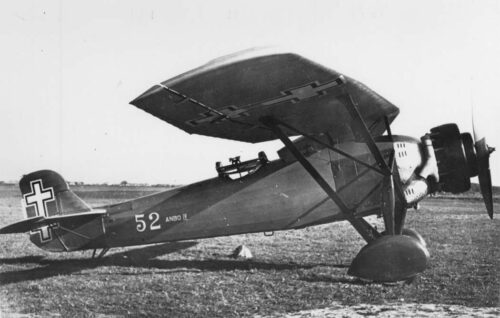
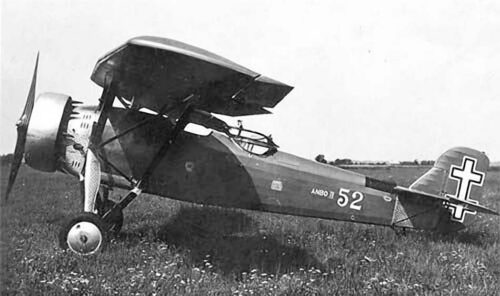
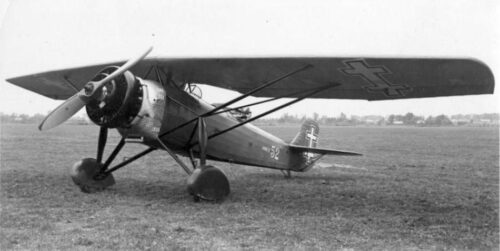
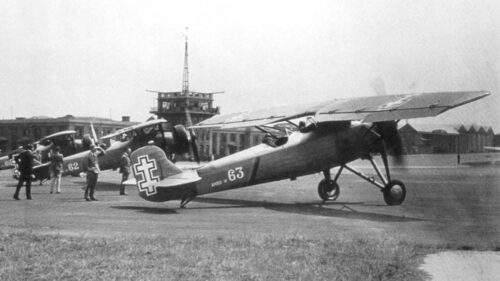
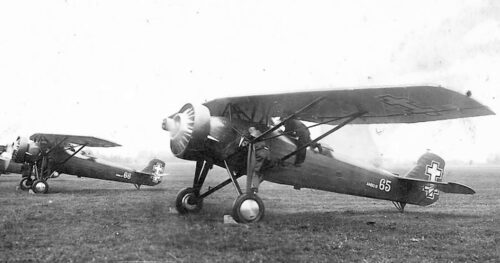
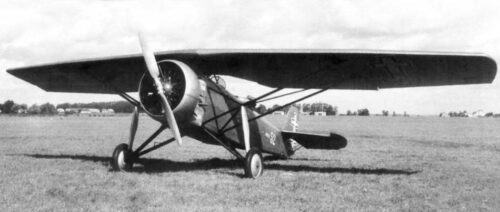
The ANBO IV emerged during a period when Lithuania sought to modernise its small but ambitious interwar air arm.
Designed under the leadership of Colonel Antanas Gustaitis, the nation’s foremost aircraft engineer, the ANBO IV represented a significant evolution of his earlier trainer design, the ANBO III.
Gustaitis personally supervised the development process, ensuring that the aircraft would meet the Lithuanian Air Force’s need for a fast, modern, and versatile reconnaissance platform.
The prototype first flew on 14 July 1932, initially powered by a Pratt & Whitney Wasp radial engine.
Its successful trials demonstrated that Lithuania could produce an aircraft competitive with contemporary European reconnaissance machines.
Following these tests, the Lithuanian Aircraft State Factory began series production, ultimately building 13 aircraft equipped with Bristol Pegasus engines, which provided significantly improved performance.
Gustaitis’s design philosophy emphasised aerodynamic cleanliness, structural simplicity, and ruggedness.
The ANBO IV was a parasol‑wing monoplane, a configuration that offered excellent downward visibility for reconnaissance while maintaining structural efficiency.
The aircraft’s mixed construction—combining metal, wood, and fabric—reflected both the technological capabilities and industrial limitations of Lithuania at the time.
Design and Technical Characteristics
The ANBO IV was conceived as a two‑seat reconnaissance aircraft, with positions for a pilot and an observer/gunner.
Its parasol wing provided stability and visibility, while the robust fixed landing gear allowed operations from rough airfields typical of the Baltic region.
Armament consisted of two fixed forward‑firing 7.9 mm machine guns for the pilot and two flexible guns for the observer, enabling both offensive strafing and defensive coverage.
The aircraft could also carry up to 200 kg of bombs, allowing it to perform light attack missions in addition to reconnaissance.
The later and more advanced ANBO 41 variant—essentially an improved ANBO IV—featured a more powerful engine and a distinctive three‑blade wooden propeller, reportedly unique in Europe at the time.
ANBO 41 specifications (representative of the family’s peak performance) included the following:
Length
8.80 m
Wingspan
13.20 m
Empty weight
1,600 kg
Powerplant
1 × Bristol Pegasus XI, 907 hp
Maximum speed
360 km/h
Range
1,000 km
Service ceiling
9,000 m
Climb
5,000 m in 9 minutes
These figures placed the ANBO 41—and by extension the ANBO IV lineage—among the fastest and best‑climbing reconnaissance aircraft in Europe during the mid‑1930s.
Lithuanian sources even claimed it surpassed contemporary foreign designs in structural sophistication and performance.
Operational History
The ANBO IV entered service with the Lithuanian Air Force in 1934.
Before formal adoption, several aircraft undertook an ambitious demonstration tour across Europe, visiting France, the United Kingdom, the Soviet Union, and Scandinavian countries.
This tour culminated in a 10,000 km flight between 25 June and 29 July 1934, led by Gustaitis himself, showcasing Lithuanian aviation prowess to the international community.
By 1940, ANBO IV and ANBO 41 aircraft equipped one and two reconnaissance squadrons, respectively, forming the backbone of Lithuania’s aerial reconnaissance capability at the time of the Soviet occupation of the Baltic States.
World War II Context and Fate
The Soviet annexation of Lithuania in 1940 brought the ANBO fleet under the control of the Soviet Air Force, which absorbed Lithuanian units along with their equipment.
The aircraft were reportedly used only briefly; most were likely destroyed during the early stages of World War II, either during the German invasion of the USSR or through attrition and obsolescence.
At least one ANBO IV or ANBO 41 survived long enough to be captured by the Luftwaffe, which employed it for training and liaison duties during 1941–1942.
A surviving photograph confirms its use under German markings.
No original ANBO IV aircraft are known to exist today, though replicas and museum displays in Lithuania preserve the memory of this uniquely national aircraft design.
Variants
ANBO IV — The prototype and 13 production aircraft were used for day and night reconnaissance missions.
ANBO 41 — Improved production version with a more powerful engine and a three-blade wooden propeller, representing the pinnacle of the ANBO series’ performance and refinement.
Legacy
The ANBO IV stands as one of the most successful indigenous Lithuanian aircraft designs of the interwar period.
It symbolised the technical ambition of a small nation striving for self-reliance in military aviation.
Its combination of speed, climb rate, and structural innovation earned it a reputation as a reconnaissance aircraft ahead of its time.
Although the ANBO IV’s operational life was cut short by geopolitical upheaval, its development marked a high point in Lithuanian aeronautical engineering.
The aircraft remains a source of national pride and an important chapter in the history of Baltic aviation.
Digital Artworks by Peter Coletti.
Interesting Links
Check out theA N B O website for more historical information and images.