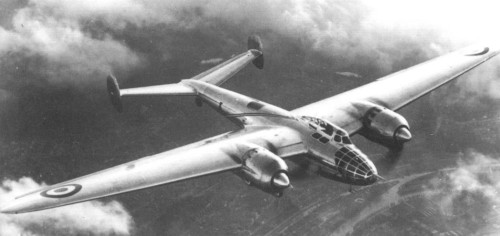
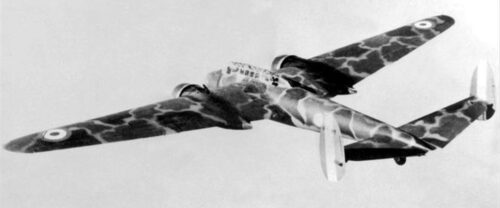
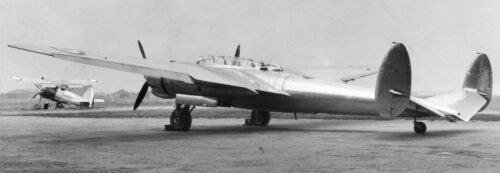
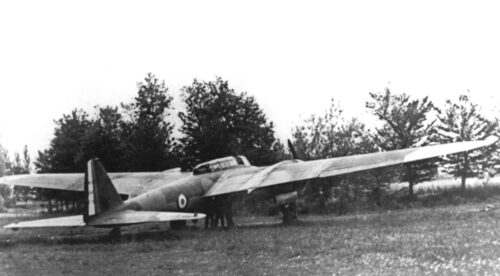
The Amiot 354 emerged from a long and troubled lineage of French fast bomber development in the 1930s.
Its story begins in August 1933, when the French Air Ministry issued a requirement for a new Bombardement Combat Renseignement (BCR) aircraft — a fast reconnaissance bomber capable of outrunning fighters and delivering a meaningful bomb load.
Amiot initially attempted to adapt its earlier Amiot 143 into a modernised derivative, the Amiot 144, but it quickly became clear that the performance demanded by the BCR specification required an entirely new airframe.
This led to the Amiot 340, a sleek, twin‑engine monoplane with retractable landing gear and a crew of three.
The prototype promised speeds approaching 470 km/h with Hispano‑Suiza or Gnome‑Rhône engines, a remarkable figure for the mid‑1930s.
A mock-up was inspected in March 1936, and a prototype was ordered soon after.
Simultaneously, the French government asked Amiot to develop a civil long-range version for a planned Paris–New York race, which evolved into the Amiot 370, the first of the family to fly in July 1937.
The Amiot 340 prototype flew in December 1937, but the French Air Ministry’s insistence on the unreliable Hispano‑Suiza 14AA radial engines forced repeated re‑engining and redesigns.
The aircraft cycled through Gnome‑Rhône 14P, then 14N0/N1, and finally 14N20/N21 engines, each change requiring structural and aerodynamic adjustments.
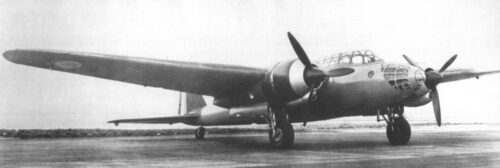
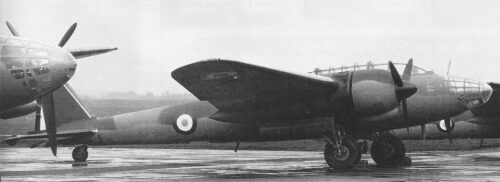
By early 1939, the prototype had been rebuilt into a four‑seat configuration with a twin tail, becoming the Amiot 351.01.
Testing revealed undercarriage and stability issues, and a landing accident in July 1939 delayed progress further.
Nevertheless, the French government, desperate to modernise its bomber fleet, placed large orders under Plan V beginning in May 1938, eventually totalling more than 800 aircraft — orders that Amiot would never come close to fulfilling.
Production delays, nationalisation disruptions, and factory bombings meant that by the outbreak of war in September 1939, not a single production aircraft had been delivered.
The first Amiot 354s reached operational units only in April 1940, mere weeks before the German invasion.
Design Characteristics
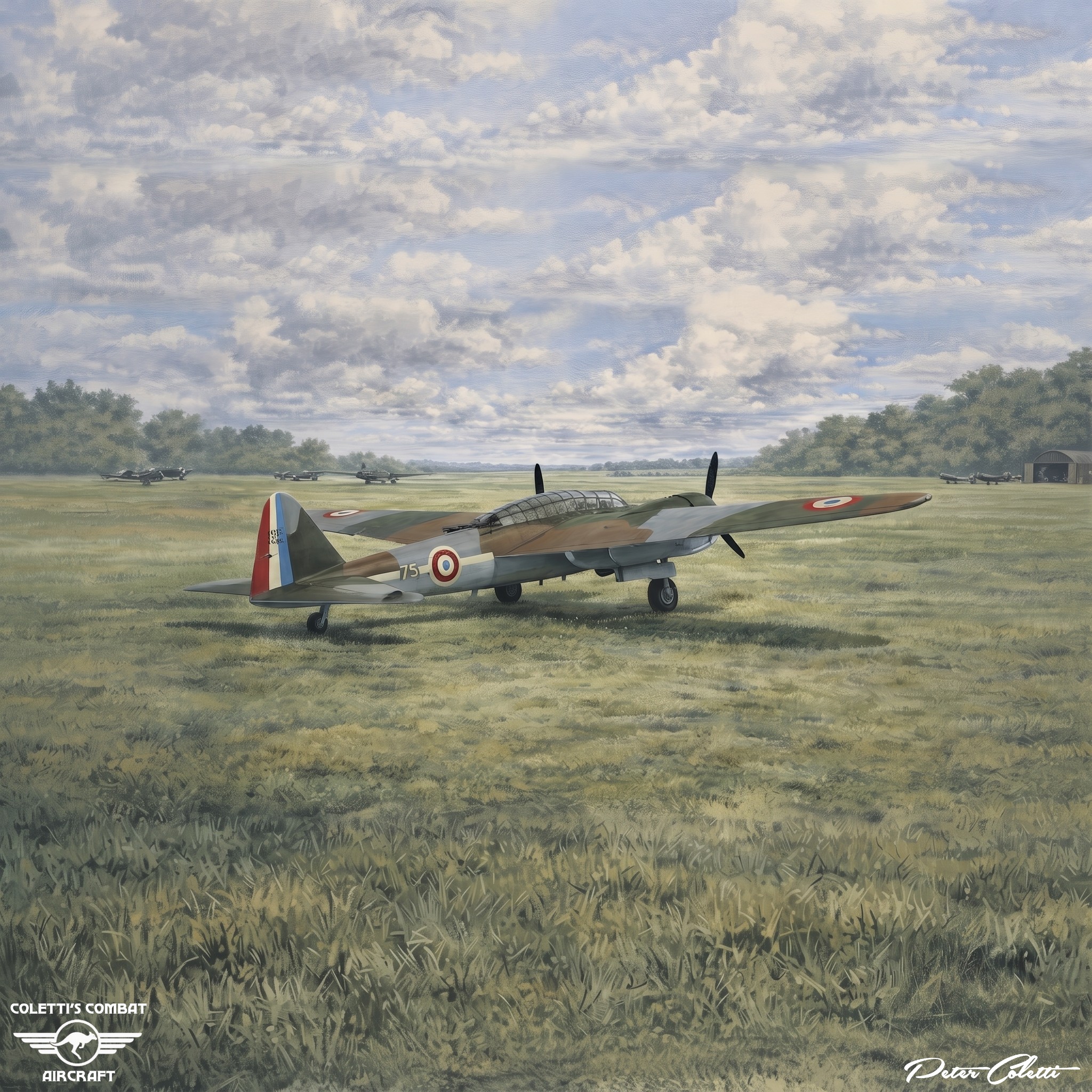
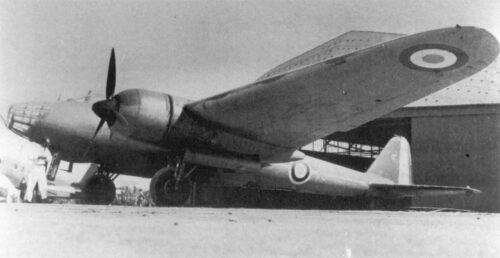
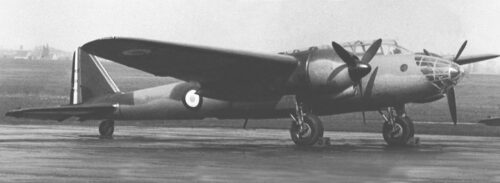
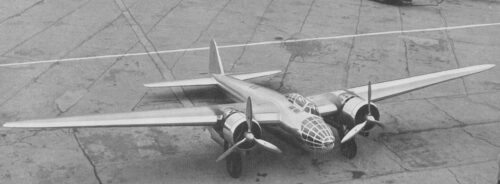
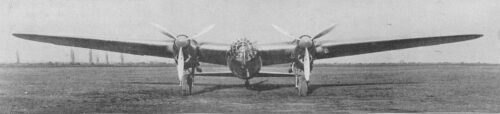
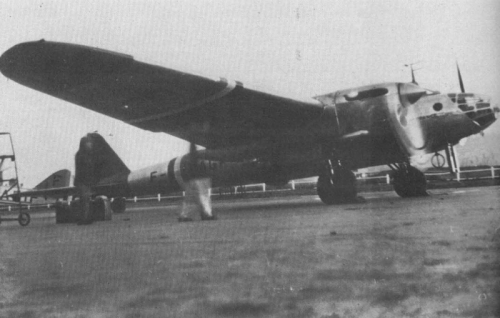
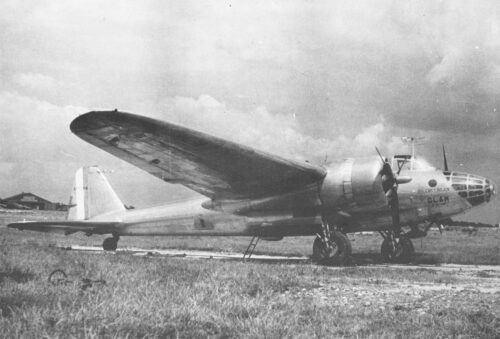
The Amiot 354 was a high-wing, twin-engine, all-metal monoplane with a streamlined monocoque fuselage and retractable tailwheel undercarriage.
Though derived from the Amiot 351, the 354 differed in several key respects:
Airframe and Aerodynamics
Wingspan reduced by 0.17 m compared to the 351 prototype.
The fuselage was lengthened by 0.5 m, improving internal space and stability.
The wing area is slightly reduced, enhancing speed at the cost of some lift.
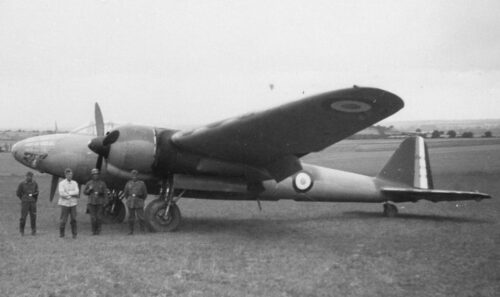
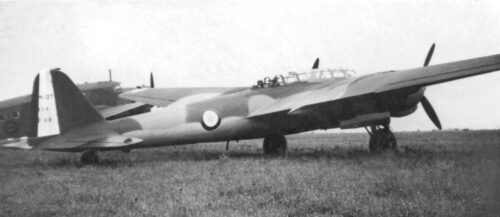
Reversion to a single vertical tail, restoring the configuration of the original Amiot 340 prototype.
The aircraft’s high‑mounted wing provided excellent downward visibility for the bombardier and navigator, while the long, glazed nose housed the bombsight and navigation station.
The pilot sat just aft of the wing’s leading edge, with the dorsal gunner behind him under a long greenhouse canopy.
Crew Layout
The four‑man crew was arranged as follows:
Nose: navigator/bomb aimer in a fully glazed compartment.
Centre: pilot under a streamlined canopy.
Dorsal position: gunner operating a 20 mm cannon in a turret (when fitted).
Ventral position: radio operator/gunner manning a lower defensive station behind the bomb bay.
Construction
Monocoque fuselage with smooth aerodynamic lines.
Large‑span ailerons and well‑faired engine nacelles.
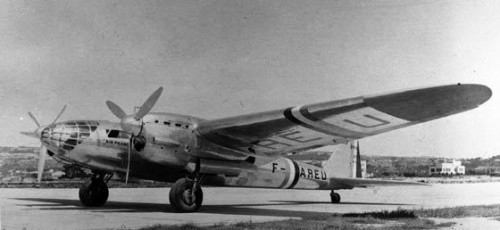
The main landing gear retracted into the engine gondolas.
The Amiot 354 was considered one of the most aerodynamically refined French bombers of its era, rivalling the Lioré‑et‑Olivier LeO 451 in speed and efficiency.
Powerplant and Performance
The Amiot 354 was powered by two Gnome‑Rhône 14N‑48/49 14-cylinder radial engines, each producing around 1,060–1,160 hp depending on the rating.
These engines were more reliable than earlier French radials and gave the aircraft competitive performance:
Performance (Amiot 354 B4)
Maximum speed: ~480 km/h at 4,000 m
Cruise speed: ~350–400 km/h
Range: 2,500–3,500 km depending on load
Service ceiling: ~10,000 m
Climb to 4,000 m: ~8.7 minutes
These figures placed the Amiot 354 among the fastest medium bombers in Western Europe in 1940 — on paper.
In practice, production aircraft often suffered from incomplete armament, unreliable systems, and insufficient testing.
Armament and Bomb Load
Defensive Armament
The intended defensive suite was formidable for a French bomber:
1 × 20 mm Hispano‑Suiza HS.404 cannon in the dorsal turret
2 × 7.5 mm MAC 1934 machine guns (nose and ventral positions)
However, due to production delays and shortages:
Many aircraft were delivered without the 20 mm cannon, replaced by a single rifle-calibre machine gun.
Some lacked complete ventral installations.
Bomb Load
Normal load: 800 kg
Maximum load: 1,200 kg in an internal bomb bay
This was adequate but not exceptional compared to contemporary medium bombers.
Operational History in WWII
Entry into Service
By May 1940, only 35 Amiot 351/354s were flight-ready, equipping:
GB I/21 & GB II/21 based at Avignon.
Despite more than 200 aircraft being near completion, factory bombings and logistical chaos prevented their delivery.
Combat Use
The Amiot 354’s first combat sorties occurred on 16 May 1940, conducting armed reconnaissance over Maastricht.
The aircraft demonstrated excellent speed but suffered from the following:
incomplete armament
inexperienced crews
mechanical issues
lack of spare parts
By June 1940:
Only a handful had flown combat missions.
Three were lost in combat, ten in accidents.
On 17 June, surviving aircraft were ordered to evacuate to North Africa; 37 made the crossing.
After the Armistice
Some aircraft returned to Vichy France but were not used operationally.
A few were converted into long‑range mail planes for Air France, fitted with auxiliary fuel tanks.
The Luftwaffe seized four aircraft, using them as transports; their engines were later cannibalised for the giant Me 323 transport.
The Amiot 354 never had the chance to influence the war.
It arrived too late, in too few numbers, and in too incomplete a state to alter France’s fate in 1940.
Variants of the Amiot 350/351/354 Family
The Amiot 354 was part of a broad family of prototypes and limited‑production variants distinguished mainly by engines and tail configurations:
Prototype Lineage
Amiot 340.01 — original three‑seat prototype with single tail.
Amiot 350 — 351 airframe with Hispano‑Suiza 12Y‑28/29 engines.
Amiot 351.01 — four‑seat prototype with twin tail.
Amiot 351 — production twin-tail version with Gnome-Rhône 14N-38/39 engines.
Amiot 352 — 351 with Hispano‑Suiza 12Y‑50/51 engines.
Amiot 353 – 351 with Rolls‑Royce Merlin III engines.
Amiot 354 — main production version with 14N‑48/49 engines and single tail.
Amiot 355.01 — prototype with Gnome‑Rhône 14R engines.
The Amiot 356.01 — 354 with Rolls‑Royce Merlin X engines.
Amiot 357 — a high‑altitude, pressurised prototype with Hispano‑Suiza 12Z engines.
Amiot 358 — post‑war re‑engined version with Pratt & Whitney R‑1830 engines.
Civil Variant
Amiot 370 — long-range racer/postal aircraft, the fastest of the family.
This proliferation of variants reflected both Amiot’s ambition and the chronic instability of French engine programmes in the late 1930s.
Assessment and Legacy
The Amiot 354 was, in many respects, a victim of timing and circumstance.
Technically, it was.
fast
aerodynamically advanced
structurally modern
competitive with the best medium bombers of 1940
But France’s industrial disorganisation, engine shortages, nationalisation disruptions, and the rapid German advance ensured that the aircraft never reached maturity.
Had it entered service in 1938 or early 1939, the Amiot 354 might have been a cornerstone of French tactical bombing capability.
Instead, it became a symbol of unrealised potential — a modern bomber that arrived too late to matter.
Today, the Amiot 354 is remembered as one of the most elegant and promising French bombers of the interwar period, a machine whose performance on paper far exceeded the limited role it played in the desperate final weeks of the Battle of France.