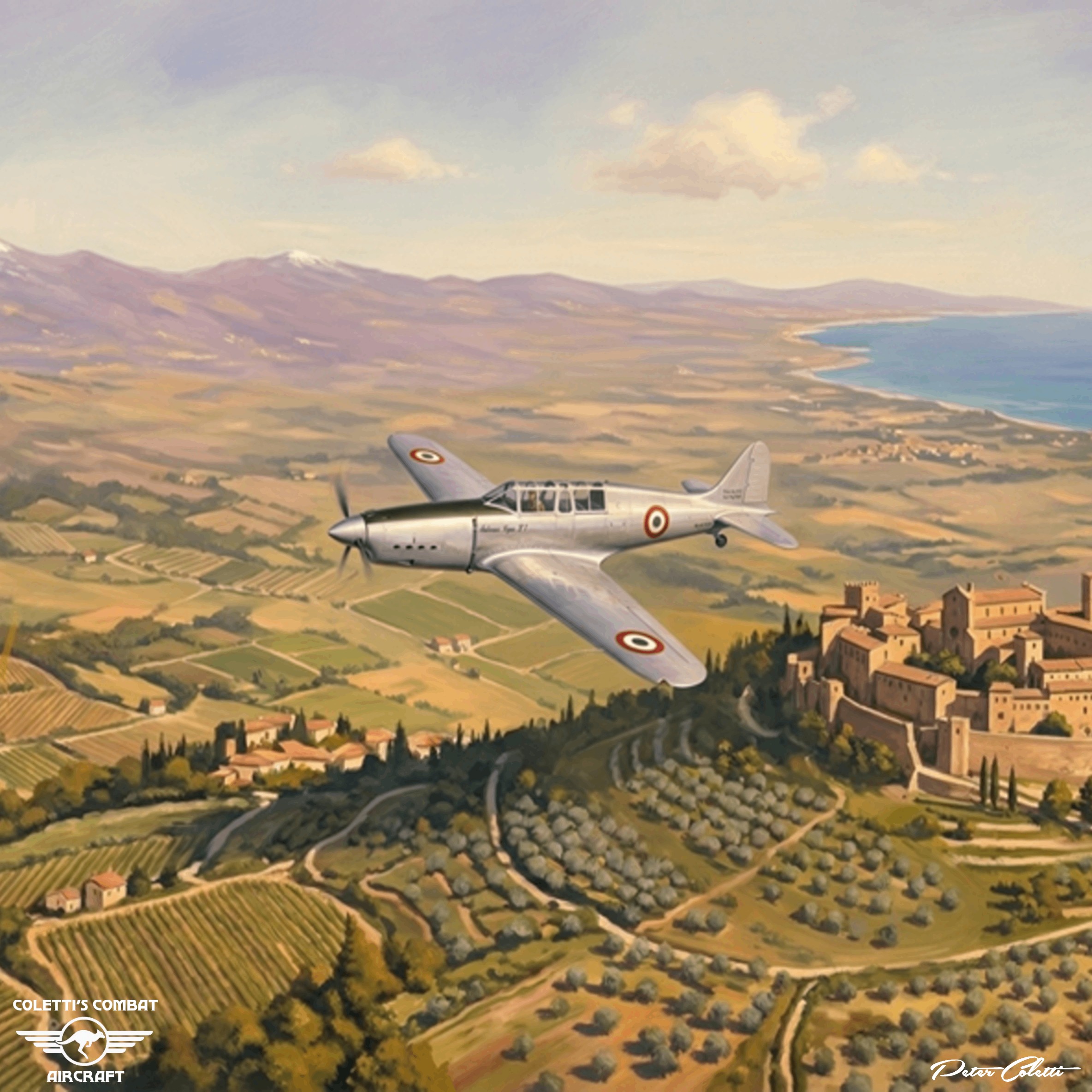
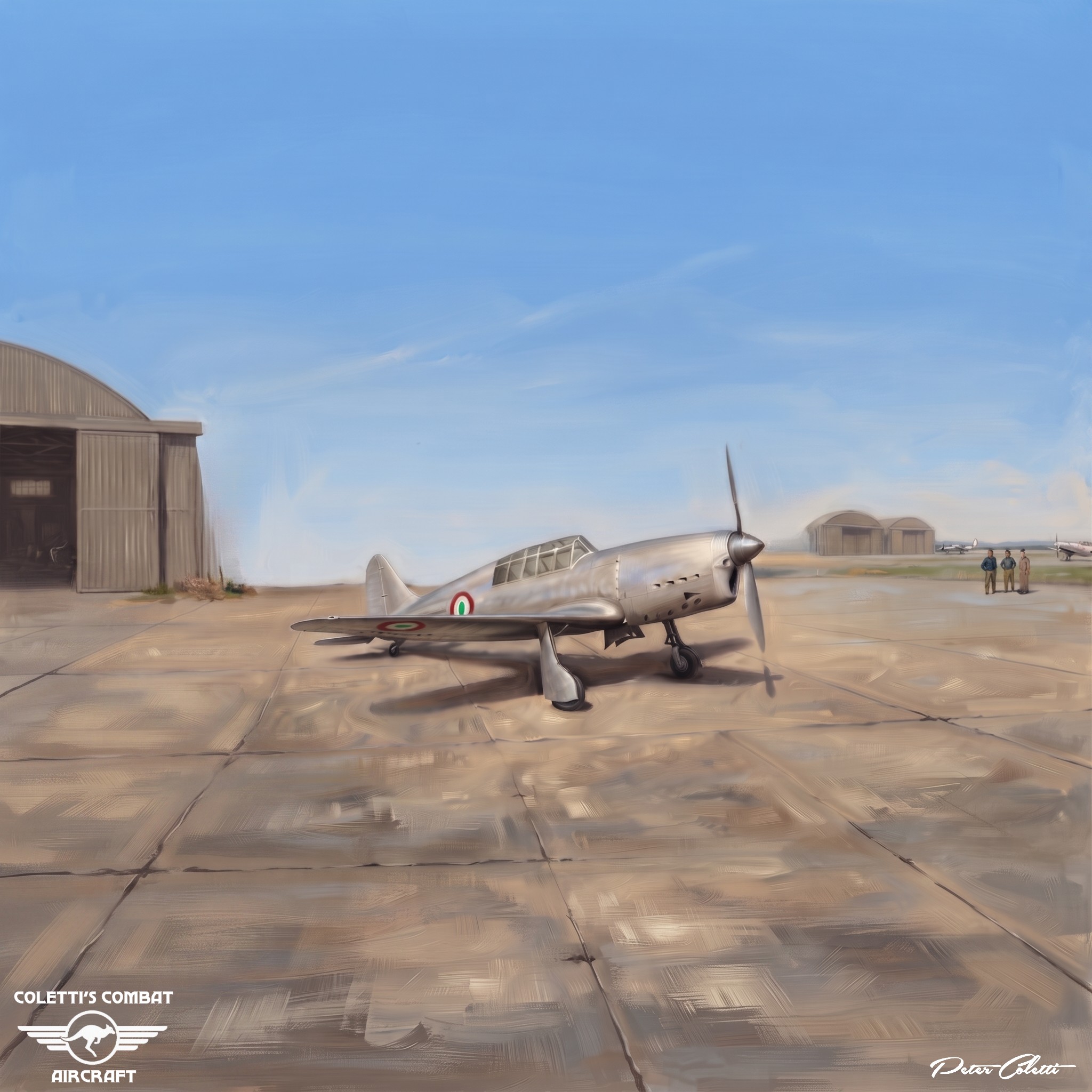
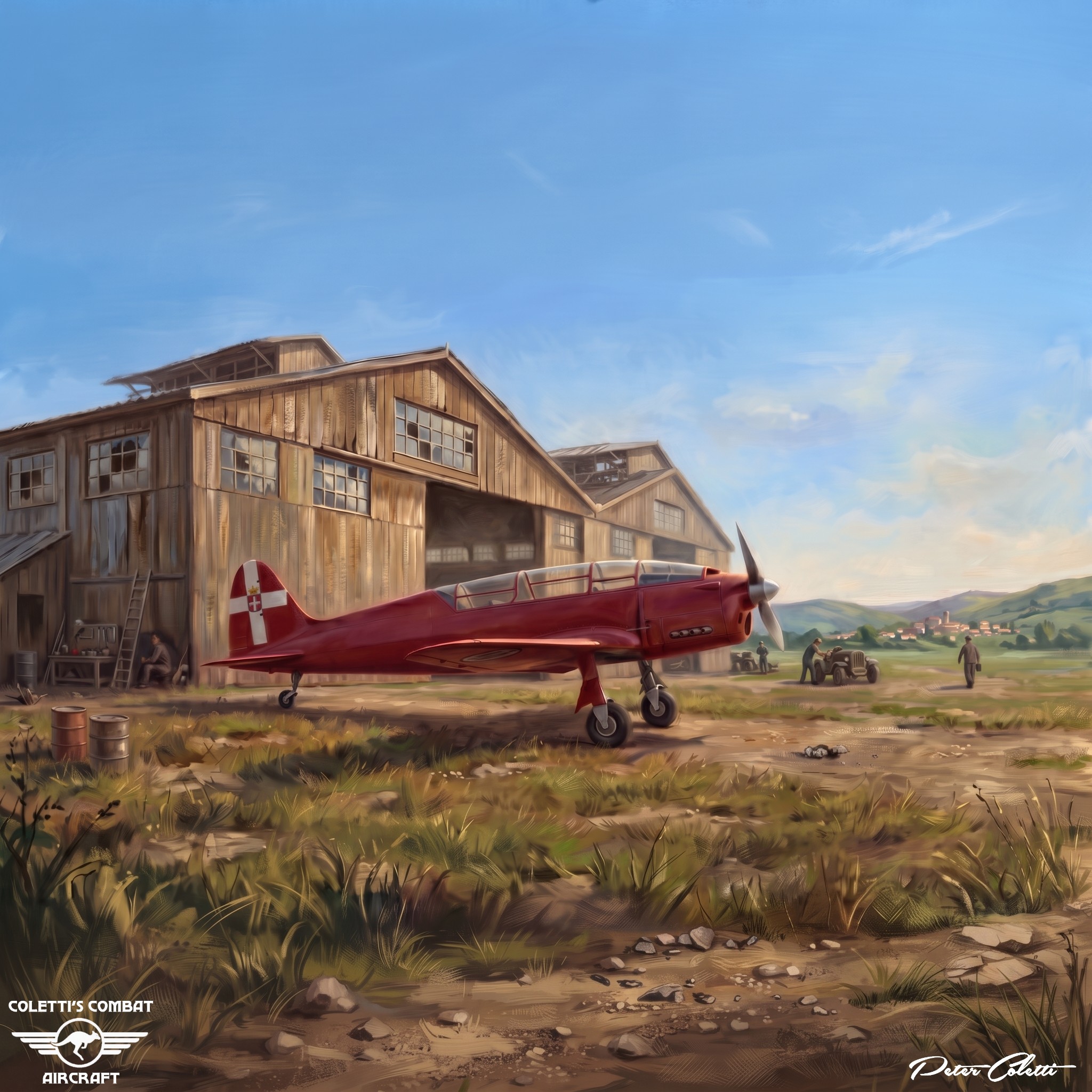
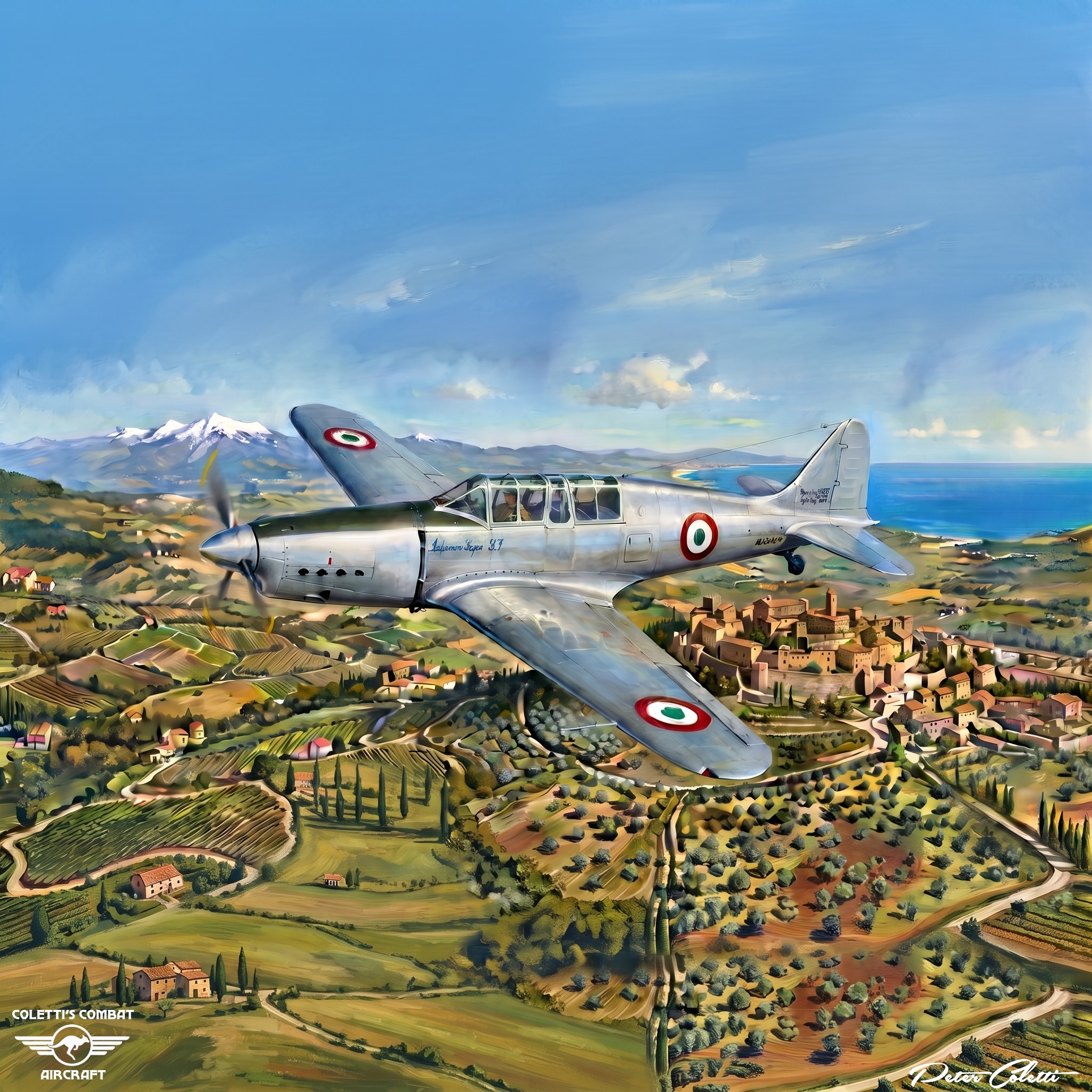
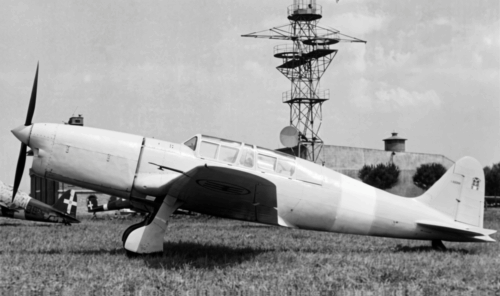
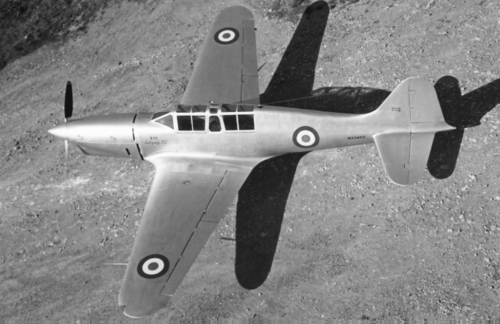
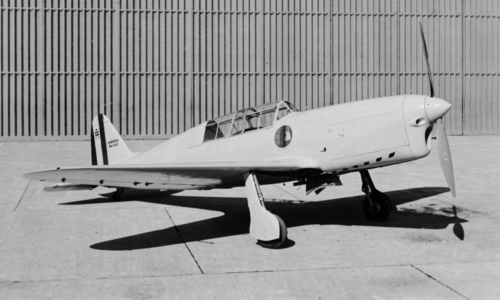
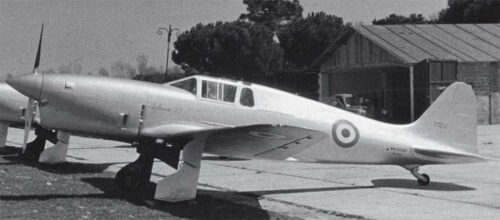
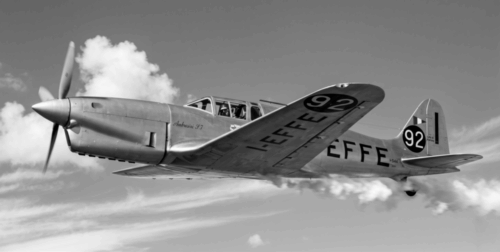
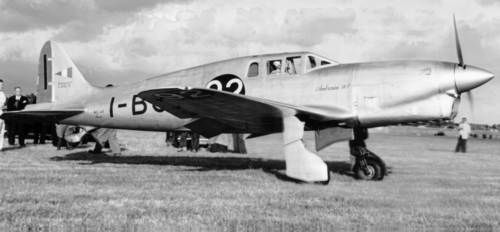
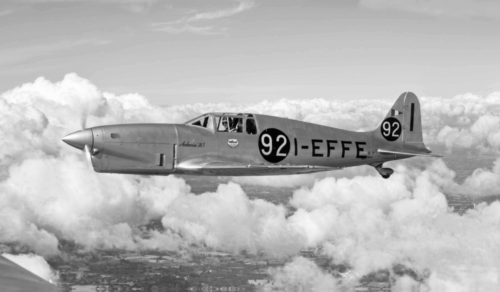
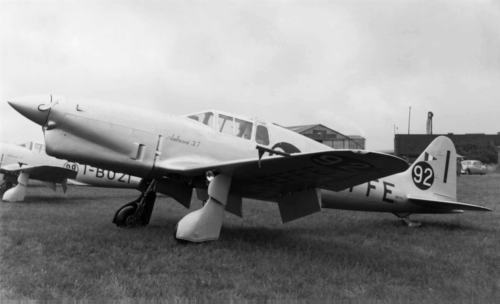
The Ambrosini S.7 traces its lineage to a pre-war Italian fascination with lightweight, high-performance sport aircraft.
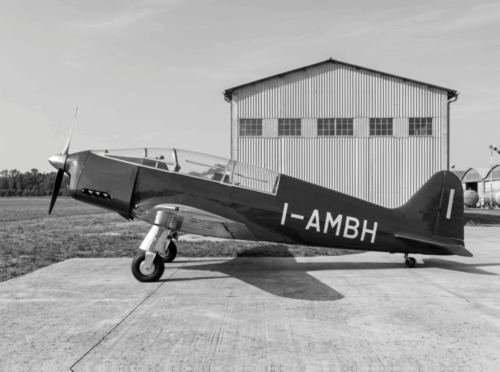
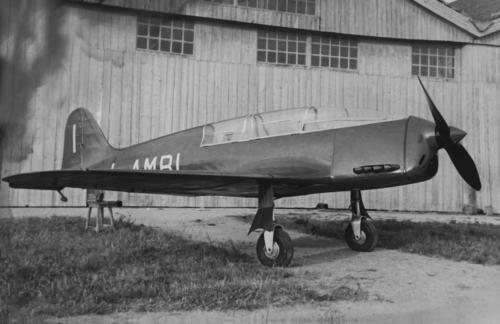
In the late 1930s, designer Sergio Stefanutti—already known for his unconventional lightweight fighters—developed a sleek, wooden racing monoplane intended to showcase Italian aerodynamic innovation.
The aircraft’s earliest form, the SAI.7, was conceived as a fast touring and competition aircraft.
Its design emphasised:
A very clean aerodynamic profile
All-wood construction using plywood skinning
A low‑wing monoplane layout
A compact fuselage with minimal frontal area
A retractable tailwheel undercarriage, which is unusual for such a small aircraft
The pre-war prototypes demonstrated remarkable speed for their power class, immediately attracting attention from the Italian aviation establishment.
Wartime Context and Military Interest
When Italy entered World War II, the Regia Aeronautica faced a shortage of modern advanced trainers capable of preparing pilots for high‑performance fighters like the Macchi C.202 and Reggiane Re. 2001.
The SAI.7’s speed and handling made it a natural candidate for adaptation into a military trainer.
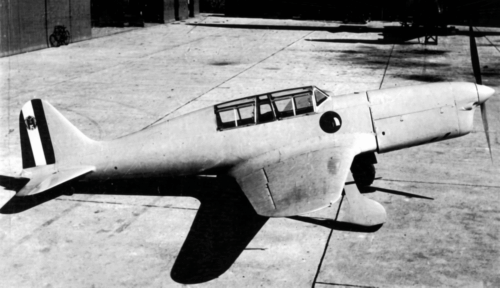
The wartime derivative, known as the SAI. 7T retained the wooden structure but incorporated the following:
Dual controls
Simplified systems for training use
A more reliable inline engine suitable for mass production
Only a small number were built during the war due to industrial disruption, material shortages, and shifting priorities.
Nevertheless, the type proved that a lightweight wooden airframe could deliver fighter‑like handling at a fraction of the cost.
Postwar Revival and the S.7 Production Model
After the war, Italy’s aviation industry was reorganised under strict limitations, but Ambrosini saw an opportunity to revive the SAI. 7 as a modern trainer for the newly formed Aeronautica Militare.
The postwar Ambrosini S.7 was refined into a practical, reliable two‑seat advanced trainer.
Key improvements included the following:
A more powerful Alfa Romeo inline engine
Strengthened structure
Revised canopy and cockpit layout
Updated systems for military training standards
The aircraft entered production in meaningful numbers and became one of Italy’s primary advanced trainers during the late 1940s and early 1950s.
It served both as a stepping stone to jet aircraft and as a sport and competition aircraft in civilian hands.
Technical Design and Construction
The S.7 was a classic example of Italian wooden aircraft engineering at its peak.
Its structure combined simplicity, lightness, and aerodynamic refinement.
Airframe
Material
Primarily wood, with plywood skinning over a wooden frame
Wing
Low-mounted, cantilever monoplane with a relatively small area for high speed
Stefanutti’s design aimed to achieve fighter‑like performance from modest power.
This was accomplished through:
Very low structural weight
Clean lines with minimal protuberances
A narrow frontal profile
Careful attention to surface finish
The result was an aircraft that could reach speeds normally associated with much more powerful machines.
Performance Characteristics
Although exact figures varied between prototypes, wartime trainers, and postwar production models, the S.7 family generally offered:
Maximum speed
Around 350–380 km/h
Cruise speed
Approximately 260 km/h
Range
Roughly 900–1,000 km
Service ceiling
Over 5,000 m
Rate of climb
Around 5–6 m/s
These numbers placed the S.7 among the fastest piston‑engine trainers of its era.
Its handling was crisp and responsive, making it an excellent transition aircraft for pilots moving towards frontline fighters or early jets.
Record‑Breaking Achievements
The S.7’s aerodynamic efficiency made it a natural candidate for speed records.
Both pre‑war and postwar examples were used to set class records over closed‑circuit courses.
Later, heavily modified versions—particularly the Supersette—achieved even higher speeds, demonstrating the remarkable potential of the basic airframe.
The Supersette and Experimental Development
Ambrosini continued to refine the design into the early 1950s.
The most ambitious evolution was the Super S.7, often called the Supersette.
This version featured the following:
A significantly more powerful engine (various types tested)
A redesigned cowling and cooling system
Structural strengthening
Aerodynamic refinements, including cleaner canopy lines and improved fairings
The Supersette achieved speeds exceeding 400 km/h, setting new class records and proving that the original 1939 airframe still had untapped performance potential.
Despite its success, the Italian Air Force was transitioning rapidly to jet trainers, leaving no operational role for a high‑performance piston trainer.
Development ended after a small number of prototypes.
Variant Overview
SAI.7 (Pre‑War)
Original racing and touring aircraft
Extremely clean aerodynamics
Set early speed records.
SAI.7T (Wartime Trainer)
Dual‑control military trainer
Limited production due to wartime constraints
Ambrosini S.7 (Postwar Production)
Main production version
Used by the Aeronautica Militare into the 1950s and early 1960s
Super S.7 / Supersette
High‑performance experimental derivative
Record‑setting speeds
Served as a testbed for advanced aerodynamic concepts
Operational Use
Military
The postwar Italian Air Force used the S.7 primarily as
An advanced trainer
A transition aircraft for pilots moving towards jets
A competition and aerobatic aircraft for military flying clubs
Civilian
Civilian flying clubs and private owners valued the S.7 for the following:
Its speed
Its responsive handling
Its suitability for sport flying and air racing
Legacy
The Ambrosini S.7 occupies a distinctive niche in aviation history:
It represents the pinnacle of Italian wooden aircraft design.
It bridged the gap between pre‑war racing aircraft and postwar military trainers.
It demonstrated how far aerodynamic refinement could push a lightweight airframe.
It served as a stepping stone towards more advanced Ambrosini projects, including early Italian jet research aircraft.
Though overshadowed by Italy’s wartime fighters and postwar jets, the S.7 remains one of the most elegant and technically interesting piston-engined trainers ever built.