In 1940–1941, the dramatic German airborne operations in the Low Countries and Crete jolted both the US Army and the US Marine Corps into taking airborne and glider forces seriously.
The Marines, in particular, explored the idea of using gliders to augment amphibious doctrine—essentially, to land troops directly onto or just off enemy‑held beaches as part of an assault.
The Navy’s Bureau of Aeronautics (BuAer) was tasked with the hardware side: gliders, towing aircraft, and associated equipment, while the Marine Corps focused on personnel and tactical employment.
Early on, BuAer’s design studies emphasised the following:
Amphibious capability
able to take off from land and alight on water.
Assault role
carrying at least a 12‑man squad of Marines.
Flexibility
potential to carry light vehicles or guns, and possibly support parachute operations.
Cost and simplicity
Gliders were seen as cheaper than powered transports for initial assault waves.
From these studies emerged a family of Navy assault glider concepts, including amphibious-transport gliders.
One of the key outcomes was a requirement for a 12‑seat amphibious assault glider, which would eventually be built in prototype form by two companies: Bristol Aeronautical (XLRQ) and Allied Aviation (XLRA).
Contracting and programme context
By 1941–1942, the navy let contracts for several amphibious transport gliders, intended primarily for marine assault use.
Two of these contracts were for 12‑seat gliders built largely from non‑strategic materials (mainly wood) to conserve aluminium and other critical war materials.
One went to Bristol (XLRQ‑1); the other went to Allied Aviation (XLRA‑1 and XLRA‑2).
The Allied Aviation design received the designation XLRA.
X – Experimental
L – Glider
R – Transport
A – Manufacturer code for Allied Aviation
Two prototypes were ordered and built, with a larger production order planned once testing validated the concept.
Design and configuration
Overall concept
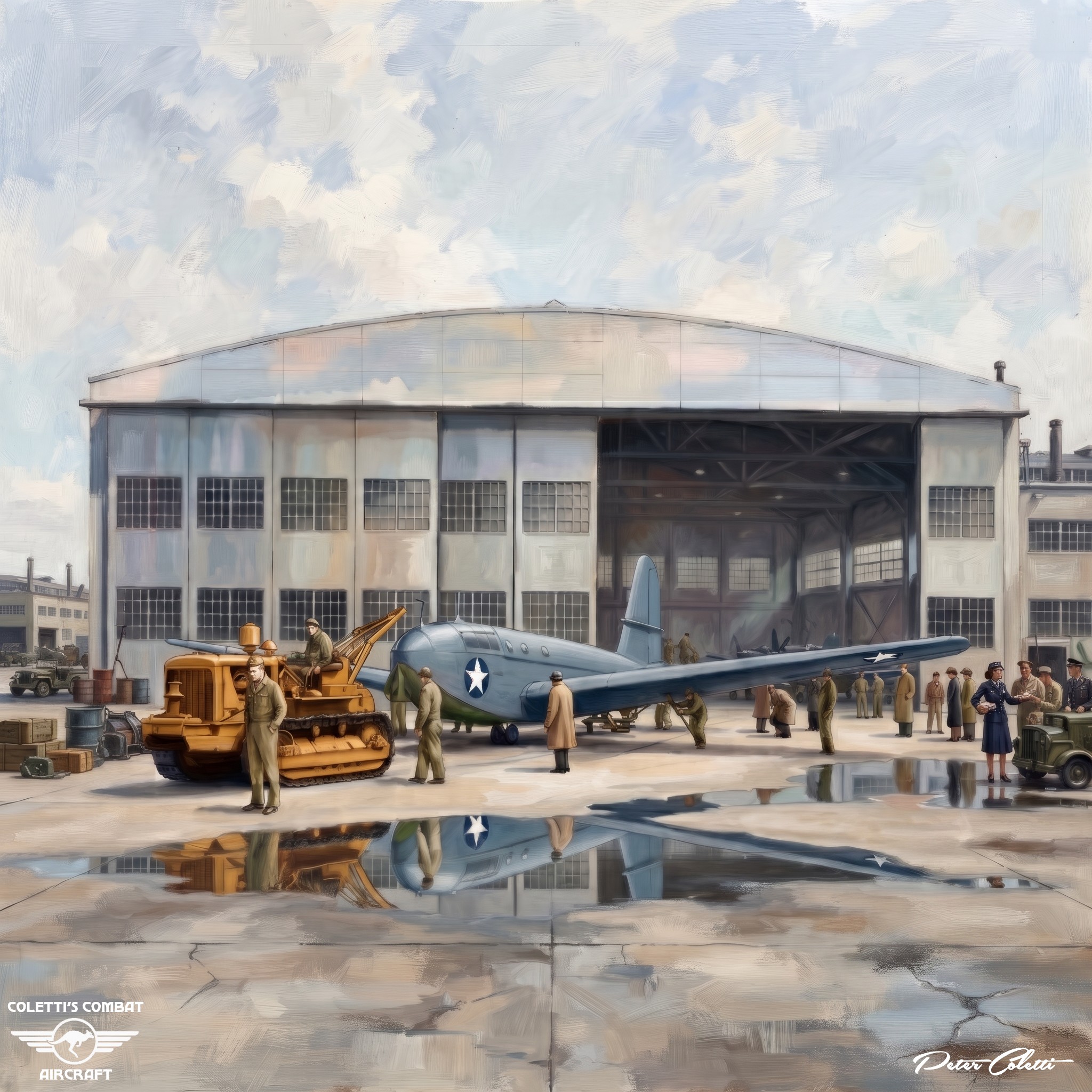
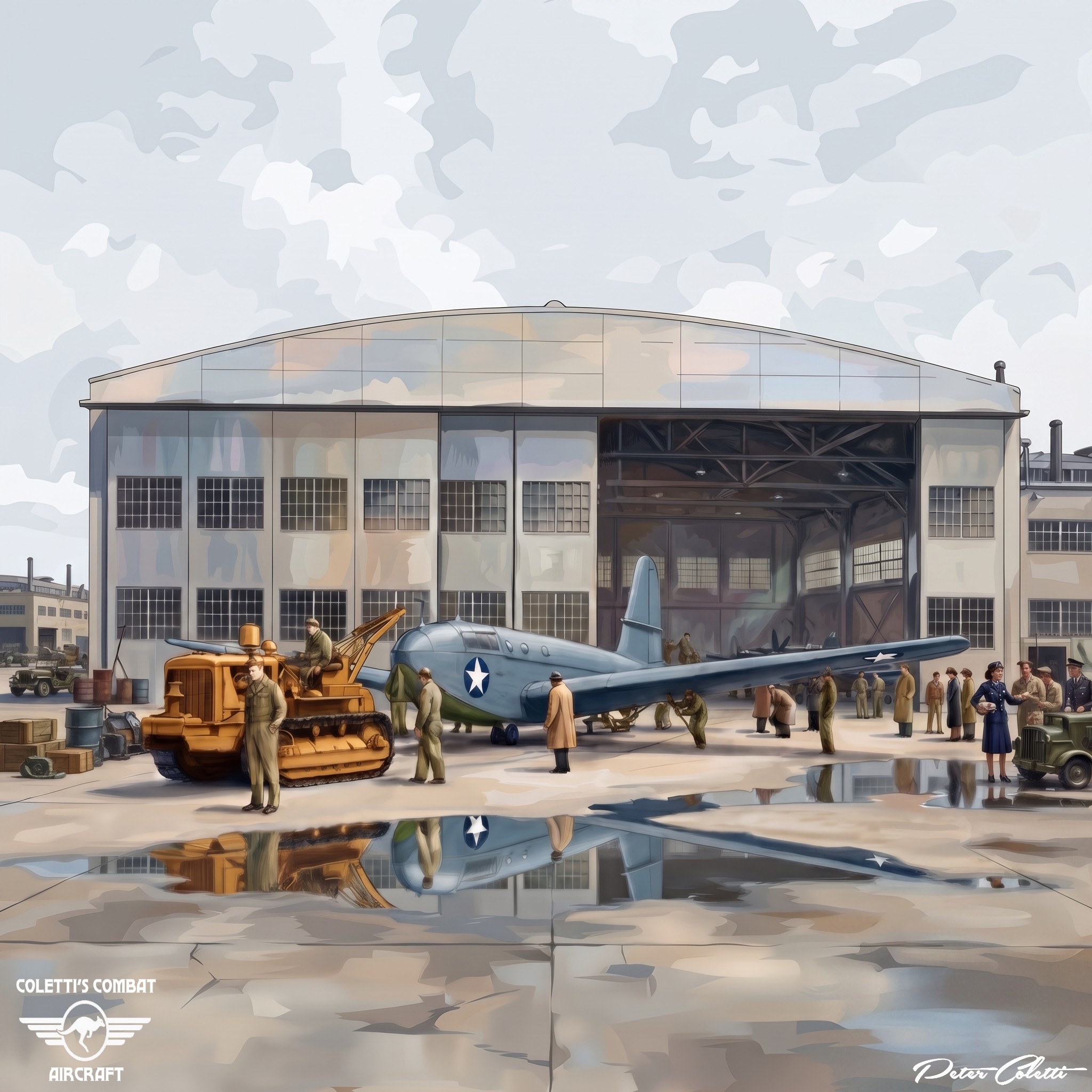
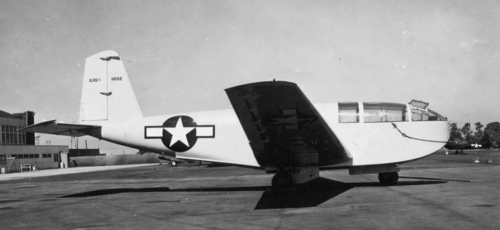
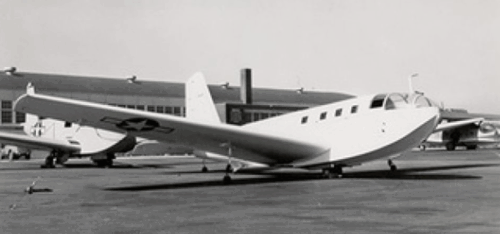
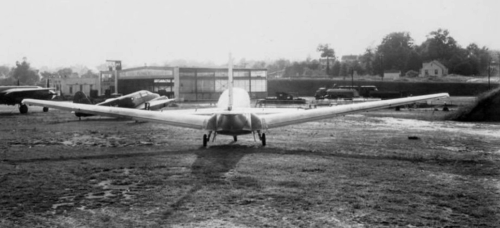
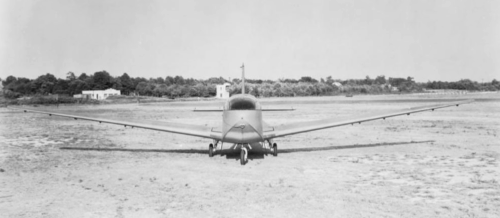
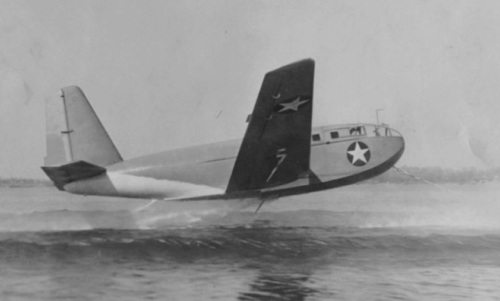
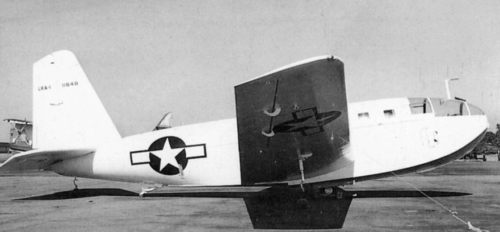
The Allied Aviation XLRA was a transport flying-boat glider—a low-wing, wooden monoplane designed to operate from water, towed into the air by amphibious aircraft, and then released to glide onto a beachhead or lagoon.
It combined:
Flying-boat hull
for water landings and planning.
“Float wing” concept
The wing itself provided buoyancy and stability on the water, eliminating the need for separate wingtip floats.
Troop transport role
carrying a small Marine squad plus two pilots.
Structure and materials
The XLRA was designed around wartime material constraints:
Primary construction
mainly wood.
Skins
fuselage and wing skins made from impregnated plywood, providing strength, moisture resistance, and smooth aerodynamic surfaces.
Hull
a two-step planing hull typical of flying boats, optimised for water takeoff and landing characteristics.
This approach allowed the Navy to preserve strategic metals for fighters, bombers, and powered transports while still fielding a specialised assault vehicle.
Airframe layout
Key configuration features:
Wing
low-set monoplane wing, spanning about 72 ft (21.95 m).
The low position helped support the aircraft on the water and simplified loading from the hull.
Fuselage/hull
flying-boat style, with a stepped bottom for planing and a cabin sized for two pilots and approximately ten to twelve troops, depending on the version and loading assumptions.
Tail unit
conventional tailplane and fin/rudder arrangement (details are less documented but consistent with contemporary glider and flying-boat practice).
Landing gear
differed between the two main variants (see below) but were always subordinate to the primary water‑landing role.
Crew and capacity
For the XLRA‑1, typical figures were:
Crew
2 (pilot and co‑pilot).
Troop capacity
About 10 troops (the broader programme aimed at 12‑man squads; the exact usable capacity varied slightly by configuration and loading assumptions).
Dimensions (XLRA‑1)
Length
40 ft 0 in (12.2 m)
Wingspan
72 ft 0 in (22.0 m)
Height
12 ft 3 in (3.7 m)
Performance and operational concept
Basic performance
As a glider, the XLRA’s performance is best understood in terms of speed and handling rather than range (which depended on tow altitude and release point).
Available data for the XLRA‑1 indicate:
Maximum speed (in tow or dive) is about 210 km/h(130 mph)
Detailed glide ratio figures are not well documented, but the aircraft was designed to behave more like a heavy assault glider than a high‑performance sailplane.
The Navy had already learned that high‑performance civilian sailplanes (like the Schweizer LNS‑1 and Pratt‑Read LNE‑1) were poor analogues for the heavier, draggy assault gliders they intended to use in combat.
Towing and launch
The XLRA was intended to be towed by amphibious aircraft, including the following:
Grumman J2F‑5 Duck
Consolidated PBY‑5A Catalina
These towplanes could operate from water and land, matching the amphibious nature of the glider.
The concept was:
Take off from water (or land, depending on the variant and mission).
Climb under tow to a suitable altitude.
Release near the objective—typically a lagoon, bay, or coastal area.
Glide to a water landing close to the beach or within a sheltered area.
Tactical employment
In theory, the XLRA would:
Deliver a squad of Marines directly into a lagoon or just offshore of a defended beach.
Potentially land behind obstacles or in areas unsuitable for landing craft.
Operate quietly after release, with no engine noise to betray its final approach.
However, as combat experience accumulated in the Pacific, the Navy and Marine Corps recognised the brutal reality of heavily defended beaches.
Even armoured landing craft suffered heavy losses under concentrated fire; unarmoured, slow, low‑flying gliders approaching at predictable paths and low altitudes were judged extremely vulnerable.
Variants and related designs
XLRA‑1
The XLRA‑1 was the first Allied Aviation prototype and closely paralleled the Bristol XLRQ‑1 in concept.
Key features:
Landing gear, a dual-centre wheel for land operations.
Wingtip skids for support and stability on land.
Primary environment:
could operate from land for takeoff and landing but retained the flying-boat hull for water operations.
Role
amphibious assault glider, with emphasis on flexibility between land and water bases.
XLRA‑2
The XLRA‑2 was a refined version, optimised more clearly for amphibious operations.
Landing gear:
A jettisonable two‑wheeled undercarriage, allowing takeoff from land.
After takeoff, the gear could be dropped, reducing drag and weight.
The glider would then alight on water using its hull and float‑wing configuration.
Operational idea
launch from a landing base, be towed to the target area, release, and land on water near the objective.
Planned production and cancellation
Initially, the Navy placed an order for 100 XLRA‑2 production aircraft, anticipating their use in Pacific island-recapture operations.
However, by 1942–1943, several factors converged:
Combat experience
showed the extreme vulnerability of craft approaching defended beaches, even when armoured.
Doctrinal shift
The Marines increasingly favoured conventional amphibious assaults supported by overwhelming naval and air firepower rather than glider-borne landings.
Logistics and practicality
Powered transports and landing craft offered more flexibility and did not require the complex towing and recovery infrastructure of gliders.
As a result, the order for 100 XLRA‑2s was cancelled, and only the two prototypes (XLRA‑1 and XLRA‑2) were completed and flown.
LR2A (refined design)
A further refined version, designated LR2A, was proposed as a more advanced transport glider derived from the XLRA concept.
It remained on paper and was never built.
The cancellation of the XLRA production order effectively ended the Navy’s interest in this line of amphibious gliders.
Place in WWII context
Comparison with Army and Allied glider programmes
While the US Army pursued large numbers of land‑based assault and cargo gliders (e.g., the Waco CG‑4A), the Navy’s amphibious glider programme remained small and experimental.
The XLRA sat within a broader but short-lived navy effort that also included the following:
Bristol XLRQ‑1
another amphibious assault glider of similar capacity.
Training gliders
such as the Schweizer LNS‑1 and Pratt‑Read LNE‑1, plus converted light aircraft like the Taylorcraft‑based LNT‑1, used to train marine glider pilots.
The Navy’s glider programme never reached the operational scale of the Army’s.
It remained a niche experiment, constrained by:
Limited training infrastructure.
Competing priorities for pilots, tow aircraft, and ship space.
Rapidly evolving amphibious doctrine that increasingly favoured more conventional means.
Why the XLRA never saw combat
Several strategic and operational realities doomed the XLRA:
Beach defences
Pacific island defences—interlocking fields of fire, artillery, and prepared positions—made slow, unarmoured gliders an unattractive proposition.
Risk vs. payoff
The small number of troops per glider (roughly a squad) did not justify the risk of losing towplanes, gliders, and crews in heavily defended approaches.
Rise of powered transports
As the war progressed, the US fielded more capable transport aircraft and refined techniques for air landing and parachute operations, reducing the perceived need for specialised amphibious gliders.
Logistical complexity
Towing gliders over long stretches of ocean, coordinating releases, and recovering crews and equipment after water landings added layers of complexity compared to landing craft and conventional amphibious operations.
By 1943, the Navy concluded that powered transport aircraft and traditional amphibious landing craft were more practical and survivable.
The XLRA prototypes continued in test and evaluation roles but never progressed to operational deployment.
Legacy and significance
The Allied Aviation XLRA is one of those “what‑if” machines that sits at the intersection of bold concept and harsh wartime reality:
Technically
It was an inventive attempt to merge flying boat and glider technologies—using a float wing, wooden construction, and amphibious tactics to solve a very specific assault problem.
Historically
It captures a moment when the US Navy and Marine Corps were willing to experiment radically with airborne and amphibious combinations before experience and pragmatism narrowed the path.
Programmatically, its cancellation, along with related designs, marks the end of serious US Navy interest in combat gliders and a pivot towards powered transports and more conventional amphibious doctrine.