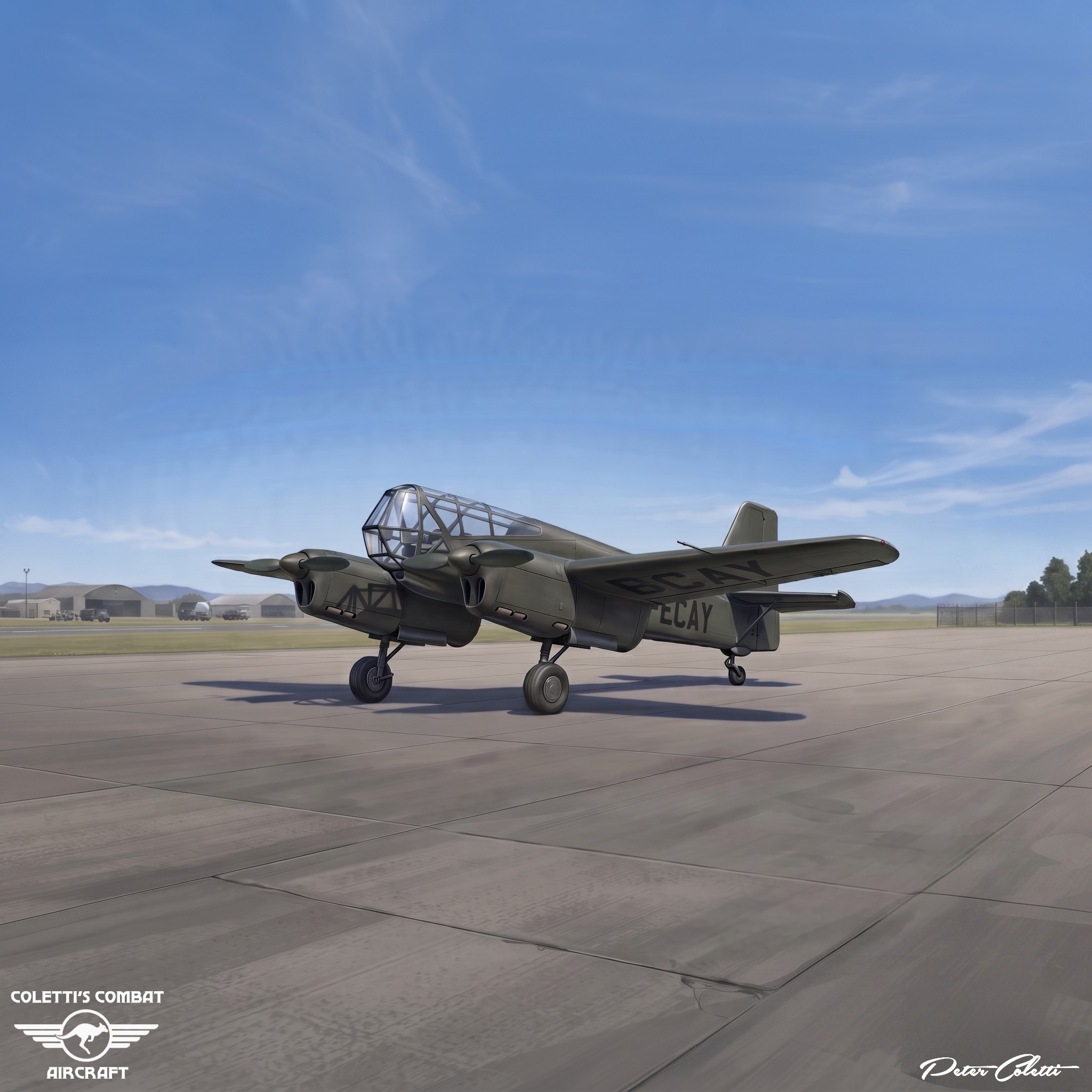
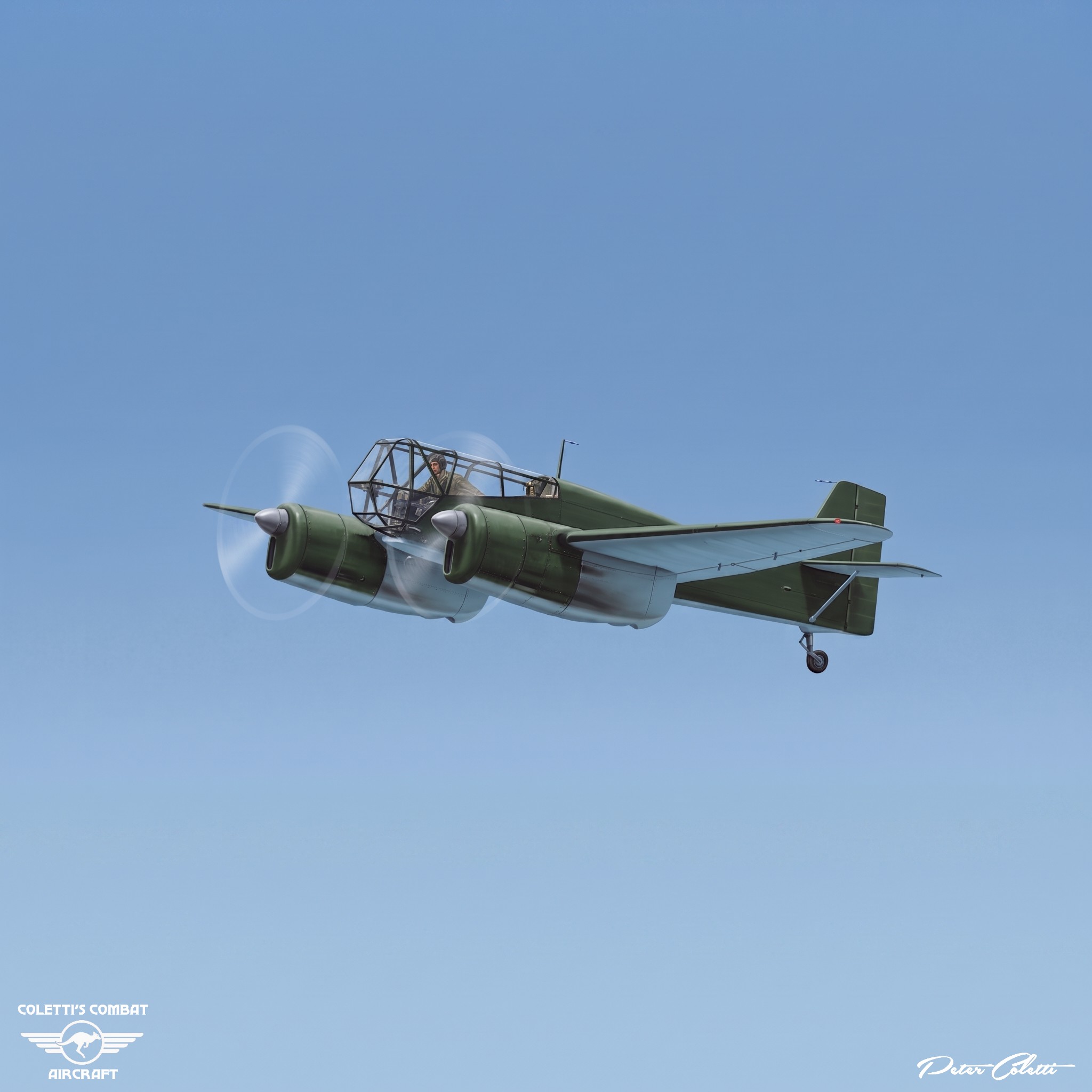
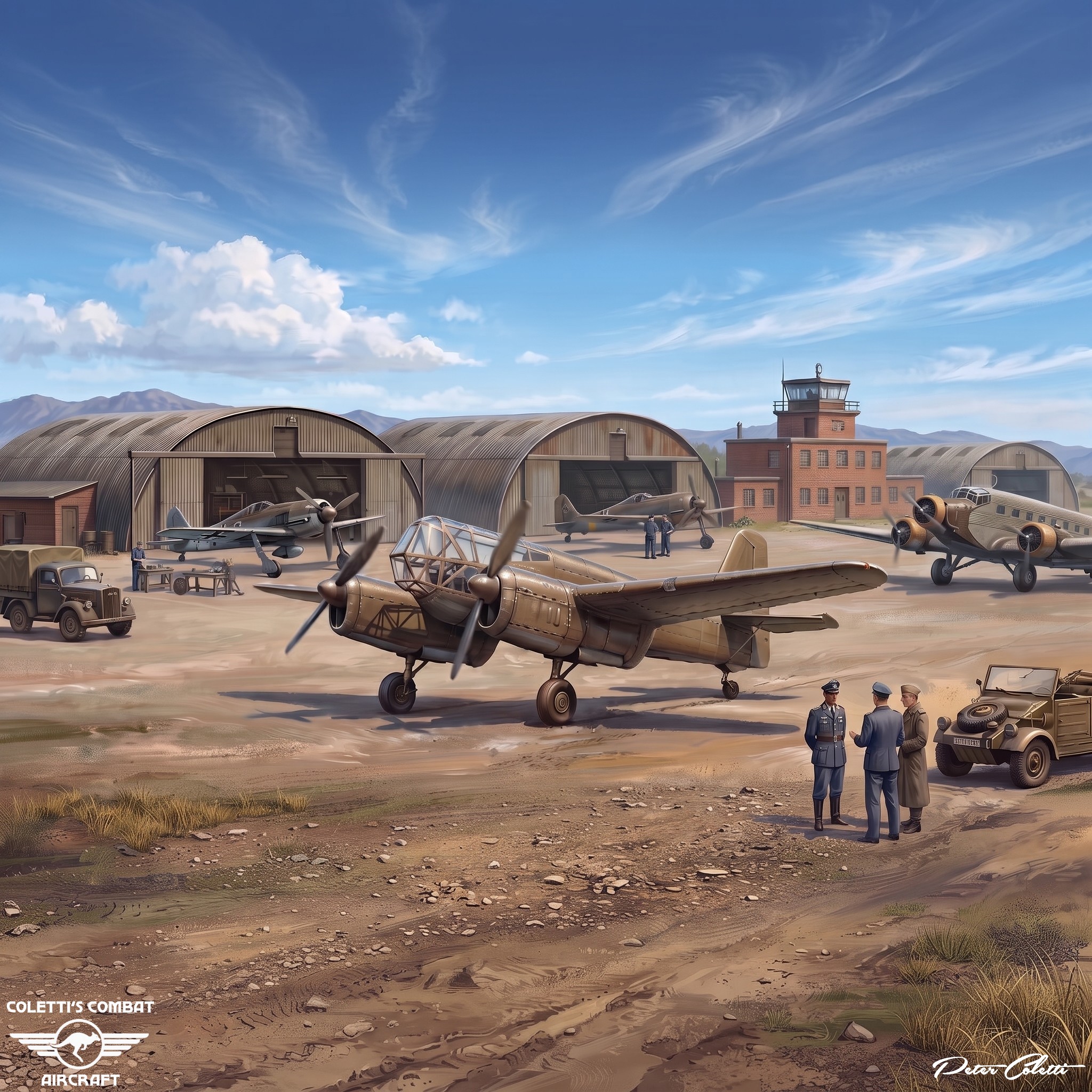
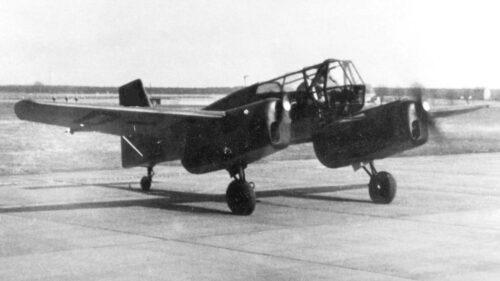
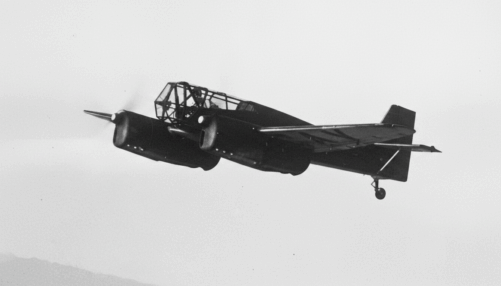
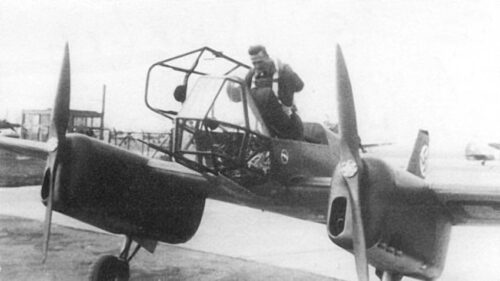
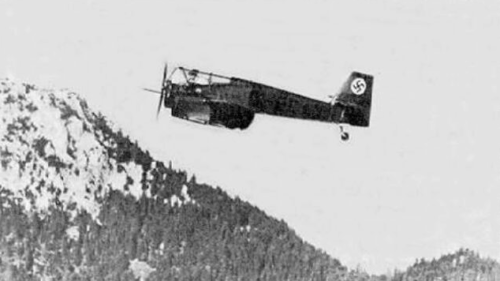
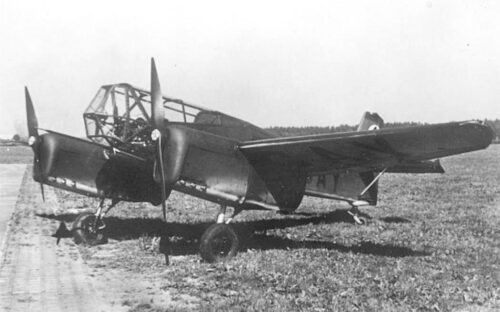
Akaflieg Berlin B 9 The Akaflieg Berlin B 9 is one of those obscure wartime experiments that look almost like science fiction at first glance—a small twin‑engine aircraft with the pilot lying on his stomach in a fully glazed nose.
Behind that odd appearance sits a very specific question: how far could you push a human pilot in high‑g manoeuvres if you changed the way he sat in the aircraft?
Below is a full narrative of how that question arose, how the B 9 was conceived and built, what it could actually do, and how it fit into the broader technical and strategic context of the Second World War.
Origins and institutional background
Akaflieg and the German academic flying groups
Akaflieg Berlin was one of several German academic flying groups (Akademische Fliegergruppen) founded in the interwar period.
These groups—based at technical universities in cities like Berlin, Stuttgart, Braunschweig and others—combined student training with genuine aeronautical research.
They designed and built gliders and powered aircraft, often in close cooperation with official research bodies and industry.
By the late 1930s and early 1940s, these groups were increasingly drawn into military-relevant work.
In Berlin, the Flugtechnische Fachgruppe (FFG)—an aero‑technical student group—worked with Akaflieg Berlin and with the Deutsche Versuchsanstalt für Luftfahrt (DVL), the German Aviation Research Institute.
The B 9 emerged from this triangle: a student‑driven design, backed by formal research questions and wartime funding.
The problem of g‑forces in WWII air combat
As aircraft became faster and combat manoeuvres more violent, pilots increasingly ran into the physiological limits of the human body.
In tight pull‑outs from dives or hard turns, the acceleration (g‑load) along the body’s vertical axis could cause:
Heaviness and restricted movement were apparent as body weight increased.
Grey‑out and blackout as blood drained from the head and eyes.
G‑LOC (g‑induced loss of consciousness) when blood flow to the brain dropped too far.
In the early 1940s, anti-G suits were still primitive and not widely available.
German researchers looked for alternative solutions, including changing the pilot’s posture in the aircraft.
Conceptual roots: the prone-pilot idea
Physiological rationale
In a conventional cockpit, the pilot sits upright, so high positive g in a pull‑out acts from head to foot.
Blood is forced downwards, away from the brain.
If the pilot lies prone—on his stomach, roughly aligned with the direction of flight—his heart and brain are at nearly the same level.
Under high g, the pressure gradient between heart and brain is much smaller, so blood flow to the brain is better maintained.
The expected benefits were:
Higher tolerable g‑loads before grey‑out or blackout.
Better tolerance of sustained g, not just brief peaks.
Potentially smaller cockpit and fuselage cross‑section, reducing drag and frontal area.
The trade‑offs were obvious: visibility, ergonomics, escape, and the difficulty of operating controls in an unfamiliar posture.
The FS 17 glider precursor
Before anyone risked a powered aircraft, the concept was tested in a glider.
At Stuttgart, the FS 17 was built as a research glider with the pilot lying prone.
It was designed to withstand very high g‑loads and used in flight tests to explore both structural and human limits.
Reports from this work suggested that pilots could tolerate dramatically higher g in the prone position—figures up to the mid-teens in g are often quoted in secondary sources, though those numbers reflect brief peaks rather than sustained loads.
The FS 17’s results encouraged further work, and the idea migrated to Berlin, where it would be combined with a powered twin‑engine layout to create the B 9.
Development of the Akaflieg Berlin B 9
Project initiation and objectives
The B 9 was conceived in the early 1940s as a powered experimental aircraft to:
Provide a realistic, controllable testbed for the prone pilot concept.
Explore high‑g manoeuvres in a configuration closer to a combat aircraft.
Gather data for potential future attack or dive‑bomber designs.
The DVL defined the research questions, while Akaflieg Berlin and the FFG undertook the design and construction.
The aircraft is often referred to as FFG Berlin B 9 or Akaflieg Berlin B 9, reflecting this joint origin.
Design and construction timeline
The design phase ran through the early war years, with construction carried out in a glider production workshop—consistent with the mixed wood‑and‑metal structure and the academic origins of the project.
The prototype was completed and flown in 1943, by which time the Luftwaffe’s strategic situation was already deteriorating, but research projects of this type were still being pursued.
Only one prototype was built.
There is no evidence of a second airframe or a distinct “series” version; all references describe a single experimental aircraft.
Airframe and structural design
General configuration
The B 9 was a low-wing, twin-engine, tractor aircraft with a conventional tail and retractable tailwheel undercarriage.
In outline, it looked like a compact light twin, but with a very short, heavily glazed nose and a relatively small fuselage cross‑section.
Key general characteristics (approximate):
Crew
1 (pilot, prone)
Length
~9.06 m
Wingspan
~9.40 m
Height
~2.3 m
Wing area
~11.9 m²
Empty weight
~940 kg
Gross weight
~1,115 kg
These figures underline how compact the aircraft was—its wing area and span are closer to a light sport aircraft than a typical twin‑engine combat type.
Materials and structure
The B 9 used a mixed construction, reflecting both glider-building practice and wartime material constraints:
Fuselage
A framework of steel tubing and wood, with fabric and light alloy (often described as “Duralumin” or similar) skinning in selected areas.
Wings
Primarily a wooden structure with plywood skinning, typical of German glider and light aircraft practice.
Control surfaces
Wood and fabric, with conventional hinged ailerons, elevators, and rudders.
This combination allowed relatively rapid construction in a workshop familiar with gliders while still providing adequate strength for the intended g‑loads.
Wing and tail
The wing planform was moderately tapered, with a relatively small area to keep drag low and to match the modest power available.
The tailplane and fin were conventional, with no radical departures from standard practice—most of the innovation was concentrated in the cockpit and pilot arrangement.
Propulsion and systems
Engines and propellers
The B 9 was powered by two Hirth HM 500 engines, one mounted under each wing in streamlined nacelles.
Each engine drove a two-blade propeller in tractor configuration.
The choice of relatively small, light engines kept the aircraft compact and limited structural loads but also capped its top speed.
Fuel and systems layout Fuel tanks were likely located in the wing roots or fuselage near the centre of gravity, though detailed tank arrangements are not well documented in surviving sources.
Systems were simple—this was a research aircraft, not a combat machine:
Fixed‑pitch or simple variable‑pitch propellers (sources differ, but there is no indication of complex constant‑speed units).
Basic electrical and instrumentation systems, sufficient for test flying and engine monitoring.
Retractable landing gear with a tailwheel, operated mechanically or hydraulically, again in line with contemporary light twins.
Cockpit, prone position, and ergonomics
Overall cockpit layout
The most striking feature of the B 9 was its fully glazed nose.
The pilot lay prone in this nose section, facing forward and slightly downward, with a broad field of view through the canopy and nose glazing.
Key features:
Pilot position
Lying on the stomach, head forward, supported by a padded rest or “chin rest”.
Canopy
Large, multi‑framed canopy and nose glazing, providing downward and forward visibility essential for low‑level and dive‑type manoeuvres.
Access
Likely via a side‑opening or top‑hinged canopy section; detailed drawings suggest a canopy that could be opened for entry and exit, but emergency escape would have been more complicated than in a standard fighter.
Controls and instruments
The prone position forced a complete rethink of cockpit ergonomics:
Primary flight controls:
A control column or stick arranged so that the pilot could operate it with hands at his sides or slightly forward.
Rudder and brake controls operated by the feet, as usual, but with the legs extended rearwards rather than downwards.
Engine controls
Throttles and mixture levers placed on side consoles within easy reach of the pilot’s hands.
Instruments:
Flight instruments and essential engine gauges placed in front or slightly to the sides.
Additional engine instruments are reportedly placed behind the pilot, visible via a mirror, an unusual but logical solution given the cramped nose.
The cockpit was thus a kind of ergonomic experiment: could a pilot operate a complex aircraft effectively while lying down, with controls and instruments arranged in this unconventional way?
Performance and flight characteristics
Basic performance figures
Given its modest power and small size, the B 9’s performance was closer to a light twin trainer than a combat aircraft.
Typical figures reported:
Maximum speed
Around 250 km/h(about 160 mph) in some references; other accounts suggest more realistic operational speeds in the 140–160 mph range.
Cruise speed
About 225km/h (140 mph).
Range
Roughly 400km.
Service ceiling
Around 4,000m.
Climb
On the order of 4 minutes to 1,000m.
These numbers confirm that the B 9 was not built for speed or altitude performance; it was a testbed, not a frontline aircraft.
Handling and g‑load behaviour
The real interest lay in how the aircraft behaved under high‑g manoeuvres and how the pilot coped:
G‑tolerance
Tests indicated that pilots in the B 9’s prone position could withstand significantly higher g‑loads without black‑out—figures around 8.5 g are often cited as tolerable without serious ill effects.
Control feel
With the pilot’s body aligned with the direction of flight, the subjective sensation of G was different; pilots reported that high‑G pull‑outs felt more manageable, though the physical strain on arms and neck remained.
Visibility
Forward and downward visibility was excellent, which would have been advantageous for dive‑bombing or low‑level attack profiles.
Lateral and rearward visibility were more limited, a serious drawback in combat.
Overall, the B 9 demonstrated that the physiological concept worked: prone pilots could indeed tolerate higher Gs.
But it also highlighted the ergonomic and operational compromises.
Evaluation, outcome, and lack of production
Why the B 9 remained a one‑off
Despite promising physiological results, the B 9 never progressed beyond the prototype stage. Several factors contributed:
Limited performance
With only about 200 hp total, the aircraft was too slow and lightly powered to serve as a realistic stand‑in for front‑line fighters or dive bombers.
Operational complexity:
Training pilots to fly prone would have required new procedures and conversion time.
Emergency escape and bailout in a prone cockpit were problematic.
Maintenance and field handling of such a specialised type would have been more difficult.
Competing solutions
As the war progressed, anti‑G suits and improved cockpit ergonomics offered a more incremental, less disruptive way to increase G‑tolerance without redesigning entire aircraft around a prone pilot.
Given these issues, the B 9 was judged valuable as a research tool but not as a production aircraft.
Influence on later designs
The experience gained with the B 9 did not vanish.
It fed into later German work, most notably the Henschel Hs 132, a jet-powered attack aircraft designed from the outset around a prone pilot for high-speed dive attacks.
Other nations also experimented with prone-pilot arrangements, including:
Gloster Meteor “Prone Pilot” test aircraft in Britain.
Ikarus 451 in Yugoslavia.
Experimental configurations in the UK and elsewhere where prone cockpits were grafted onto existing airframes.
In that sense, the B 9 sits in a small but interesting family of aircraft that tried to solve the g‑problem by rearranging the human, not just the machine.
Variants and related projects
B 9 variants
There are no documented production variants of the B 9.
All available sources describe a single prototype with the configuration outlined above.
References to “B 9” in different languages (German, Italian, Japanese, etc.) all point back to the same aircraft.
Closely related designs
Instead of variants, it is more useful to think in terms of related projects:
FS 17 glider (Stuttgart)
The unpowered precursor that validated the prone-pilot concept structurally and physiologically.
Henschel Hs 132
A jet‑powered dive bomber with a prone pilot, intended for operational use but never completed before the war’s end.
Other prone‑pilot testbeds
Post‑war experiments in several countries, often using modified fighters or trainers.
The B 9 thus forms a bridge between early glider experiments and more ambitious operational designs.
WWII context and strategic significance
Timing within the war
The B 9’s first flight in 1943 places it in a critical phase of the war:
The Luftwaffe was under increasing pressure from Allied strategic bombing.
Fighter and attack aircraft were being pushed to higher speeds and more violent manoeuvres.
Germany was still investing in advanced research—jets, rockets, swept wings, and physiological studies—despite mounting resource constraints.
Within this environment, the B 9 was one of many high-risk, high-concept projects that might, in theory, yield a tactical edge.
Why the concept did not spread operationally
In practice, several broader trends worked against prone‑pilot aircraft:
Rapid technological change
Jet propulsion and higher speeds made structural and aerodynamic issues more pressing than cockpit posture alone.
Human factors
Pilots and commanders were understandably reluctant to adopt radically different cockpit arrangements that complicated training and emergency procedures.
Resource priorities
By 1943–44, Germany had to prioritise projects with immediate combat payoff.
Experimental types without clear near‑term operational value were increasingly sidelined.
The B 9 therefore remained a technical curiosity—important for research, but peripheral to the main currents of wartime aircraft development.
Technical and historical significance
Even though only one B 9 was built and it never saw combat, it matters for several reasons:
Human‑machine integration
It is an early, concrete example of designing an aircraft around the pilot’s physiology, not just around aerodynamics and engines.
Proof of concept
It demonstrated that prone pilots could indeed tolerate higher g‑loads, influencing later designs and informing the eventual choice to pursue anti‑g suits and other measures.
Academic–military collaboration
It showcases how student groups like Akaflieg Berlin could contribute real experimental hardware to national research programmes.
A window into wartime innovation culture
The B 9 sits alongside jets, rocket fighters, and other unconventional projects as evidence of how far designers were willing to go in search of an advantage.