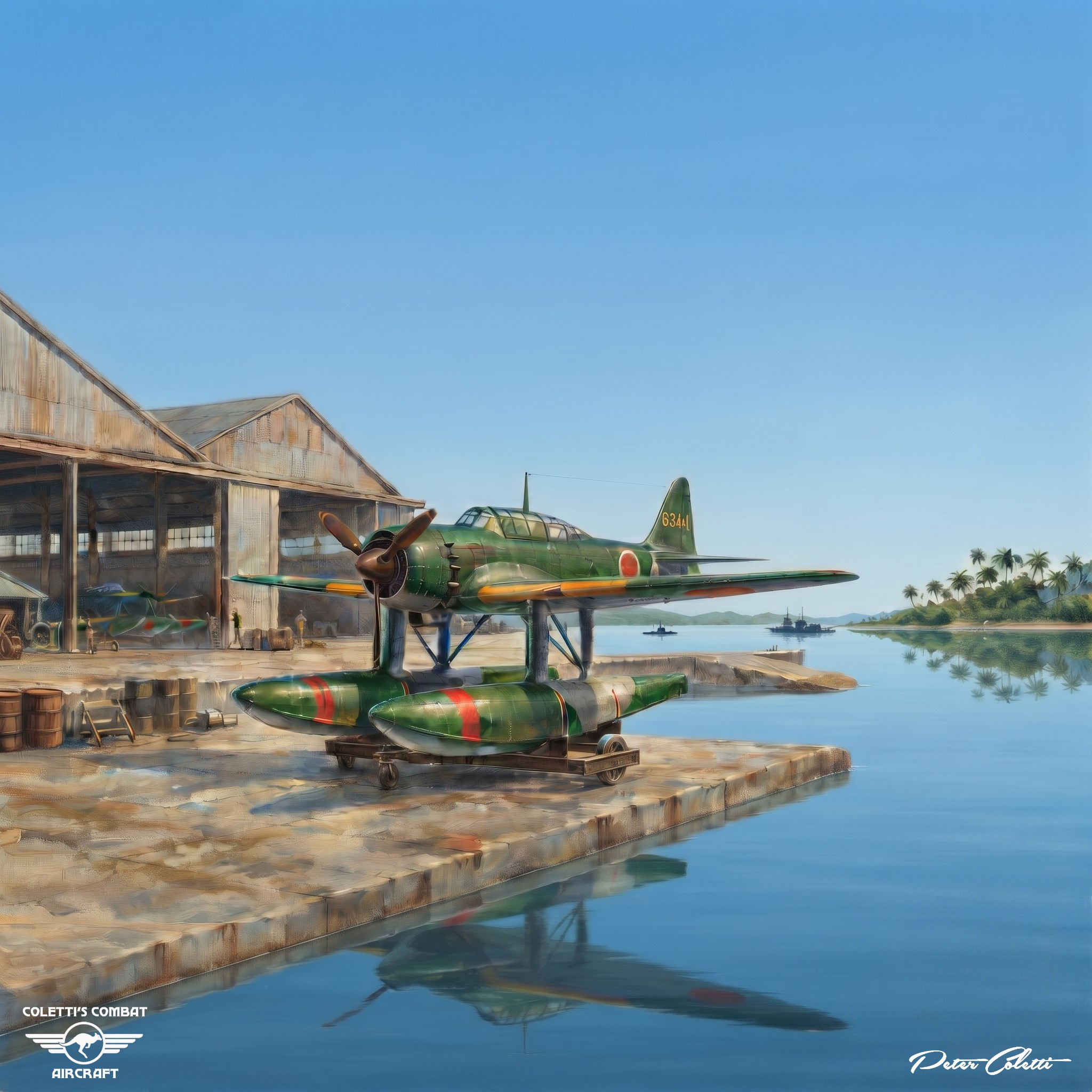
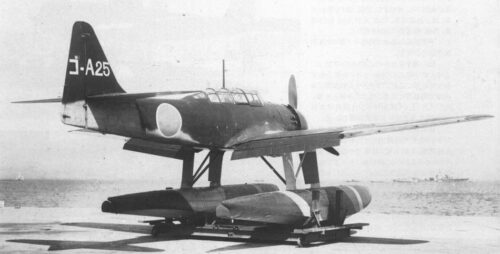
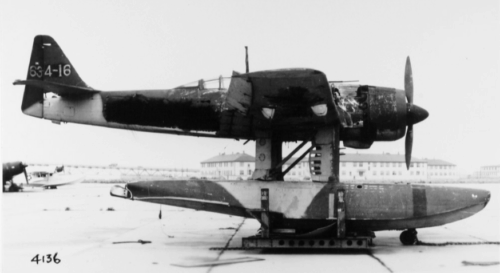
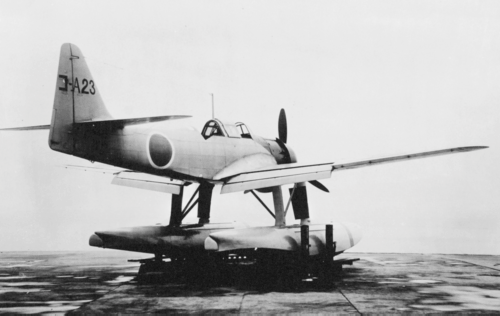
The Aichi E16A Zuiun (“Auspicious Cloud”), known to the Allies as “Paul”, was the Imperial Japanese Navy’s final and most advanced purpose‑built reconnaissance floatplane of the Second World War.
It was conceived to replace the Aichi E13A and to provide both long‑range scouting and secondary dive‑bombing capability.
The aircraft ultimately entered service too late and in too few numbers to influence the war’s outcome, but it represented the peak of Japanese floatplane design.
Origins and Development
The E16A originated from a 1939 Imperial Japanese Navy specification seeking a successor to the Aichi E13A, which itself had not yet been fully accepted into service.
Disagreements over the requirements of the original “14‑Shi” specification discouraged most manufacturers from submitting designs.
Aichi, however, pursued an internal concept designated AM‑22, created by engineers Kishiro Matsuo and Yasuhiro Ozawa.
In 1941, the Navy issued a revised “16‑Shi” specification built around Aichi’s AM‑22 proposal.
The first prototype, initially designated the Navy Experimental 16‑Shi Reconnaissance Seaplane and later shortened to E16A1, was completed in May 1942.
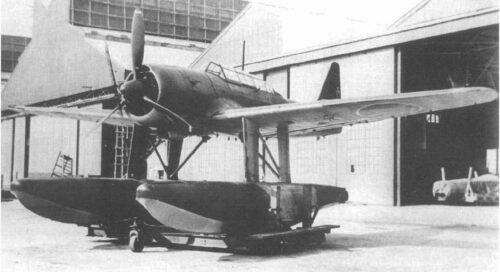
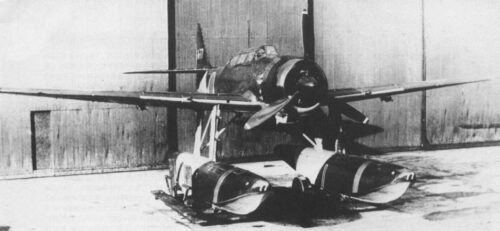
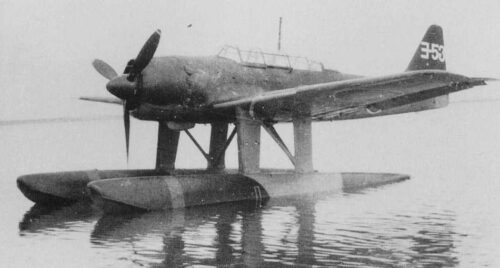
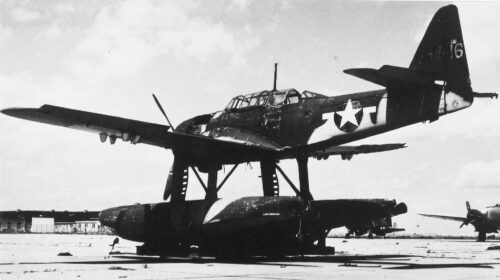
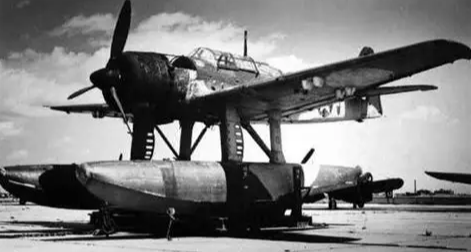
It was a low-wing monoplane with twin floats and an unusual feature for a seaplane: dive brakes mounted on the forward legs of the float struts, enabling it to function as a dive bomber.
The Navy formally adopted the aircraft in August 1943, but production did not begin until 1944.
Only 256 aircraft were built between 1944 and 1945, including prototypes.
Design and Structural Characteristics
The E16A was a two‑seat, all‑metal, low‑wing monoplane with two large floats mounted on struts.
Its design emphasised aerodynamic cleanliness and high performance for a floatplane.
The dive brakes integrated into the float struts were a distinctive engineering solution, allowing the aircraft to perform steep dive attacks despite the drag and structural challenges inherent to floatplane design.
The aircraft was intended for catapult launch from battleships and cruisers, and its structure was optimised for naval handling.
Photographic evidence shows that early-production aircraft had variations in rear cockpit glazing and dive-brake perforation patterns, reflecting iterative refinement during manufacturing.
Powerplant
The E16A1 production model was powered by a Mitsubishi MK8N Kinsei 54 radial engine producing 1,300 horsepower.
Earlier prototypes used the MK8A Kinsei 51 of the same power rating.
A single prototype of the E16A2 was fitted with a more powerful 1,560 horsepower Mitsubishi MK8P Kinsei 62 engine, but this variant never entered production.
Armament
The E16A’s armament evolved from prototype to production:
Prototype armament:
Two forward‑firing 7.7 mm Type 97 machine guns
One rearward‑firing 7.7 mm Type 92 machine gun
Production E16A1 armament:
Two forward‑firing 20 mm Type 99‑2 cannons
One rearward-firing 13 mm Type 2 machine gun
Up to 250 kg of bombs for dive-bombing
Performance
The E16A1 Zuiun Model 11 achieved performance levels unusually high for a floatplane.
Maximum speed
439 km/h (274 mph)
Range
approximately 2,420 km (1,510 miles)
Service ceiling
10,000 m (33,000 ft)
Rate of climb
10 m/s
These figures made it one of the fastest and highest-flying floatplanes of the war.
Variants
E16A1 Experimental (Prototype)
Three prototypes built.
Powered by the 1,300 hp Mitsubishi MK8A Kinsei 51.
Lightly armed with 7.7 mm guns.
E16A1 Zuiun Model 11 (Production)
The main and only production version.
Powered by the 1,300 hp Mitsubishi MK8N Kinsei 54.
Armed with 20 mm cannons and a 13 mm rear gun.
256 were built, including prototypes.
E16A2 Zuiun Model 12 (Prototype Only)
One aircraft was converted from an E16A1 and fitted with a 1,560 hp Mitsubishi MK8P Kinsei 62.
The project was incomplete and never entered production.
Operational History and WWII Context
The E16A entered service in February 1944, at a time when Japan’s naval aviation capabilities were rapidly deteriorating.
Although intended for deployment aboard cruisers and battleships, the aircraft saw limited shipboard use due to Japan’s shrinking fleet and the increasing dominance of Allied air power.
Units operating the E16A included the Yokosuka, Kitaura, 634th, 801st, 301st, and 302nd air groups.
The battleships Ise and Hyūga, converted into hybrid “battlecarriers”, were intended to operate Zuiuns, and training photographs show catapult launches from Hyūga in mid‑1944.
However, neither ship ultimately saw combat with Zuiuns aboard, and the 634th Air Group transitioned to land‑based operations.
By late 1944 and 1945, surviving Zuiuns were used primarily for reconnaissance in increasingly dangerous airspace and occasionally for dive-bombing.
As Japan’s situation worsened, some were employed in desperate defensive operations, though the aircraft’s impact was minimal due to overwhelming Allied superiority and the small number produced.
Assessment and Legacy
The Aichi E16A Zuiun represented the final evolution of Japanese floatplane doctrine: fast, heavily armed for its class, and capable of dive‑bombing.
Its innovative dive-brake system and high performance made it technically impressive.
However, its late introduction, limited production, and the collapse of Japan’s naval aviation infrastructure meant that it had little strategic effect.
Despite its limited wartime impact, the E16A remains notable as one of the most advanced floatplanes ever built and a symbol of Japan’s late-war attempts to extract maximum versatility from ship-launched aircraft under increasingly dire circumstances.