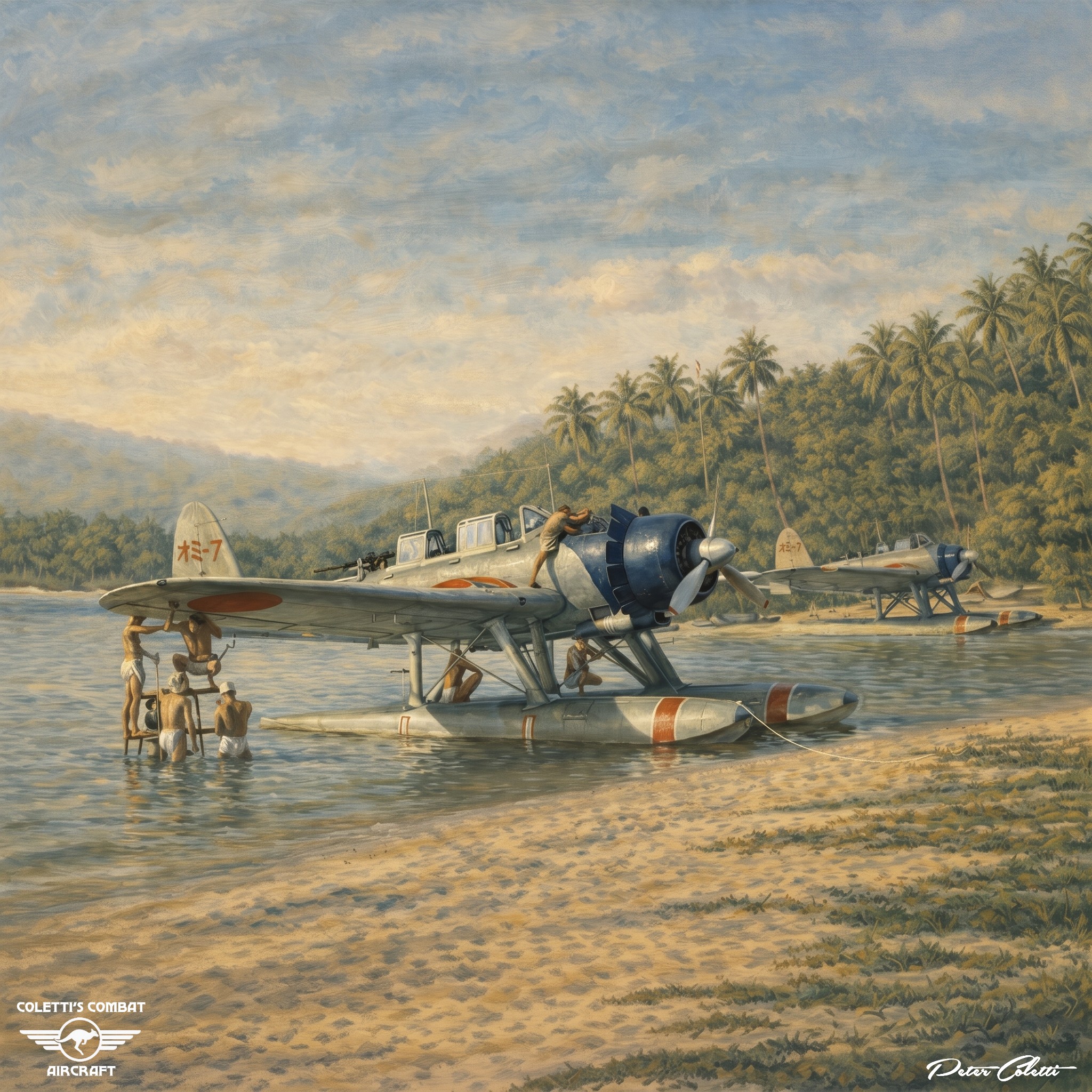
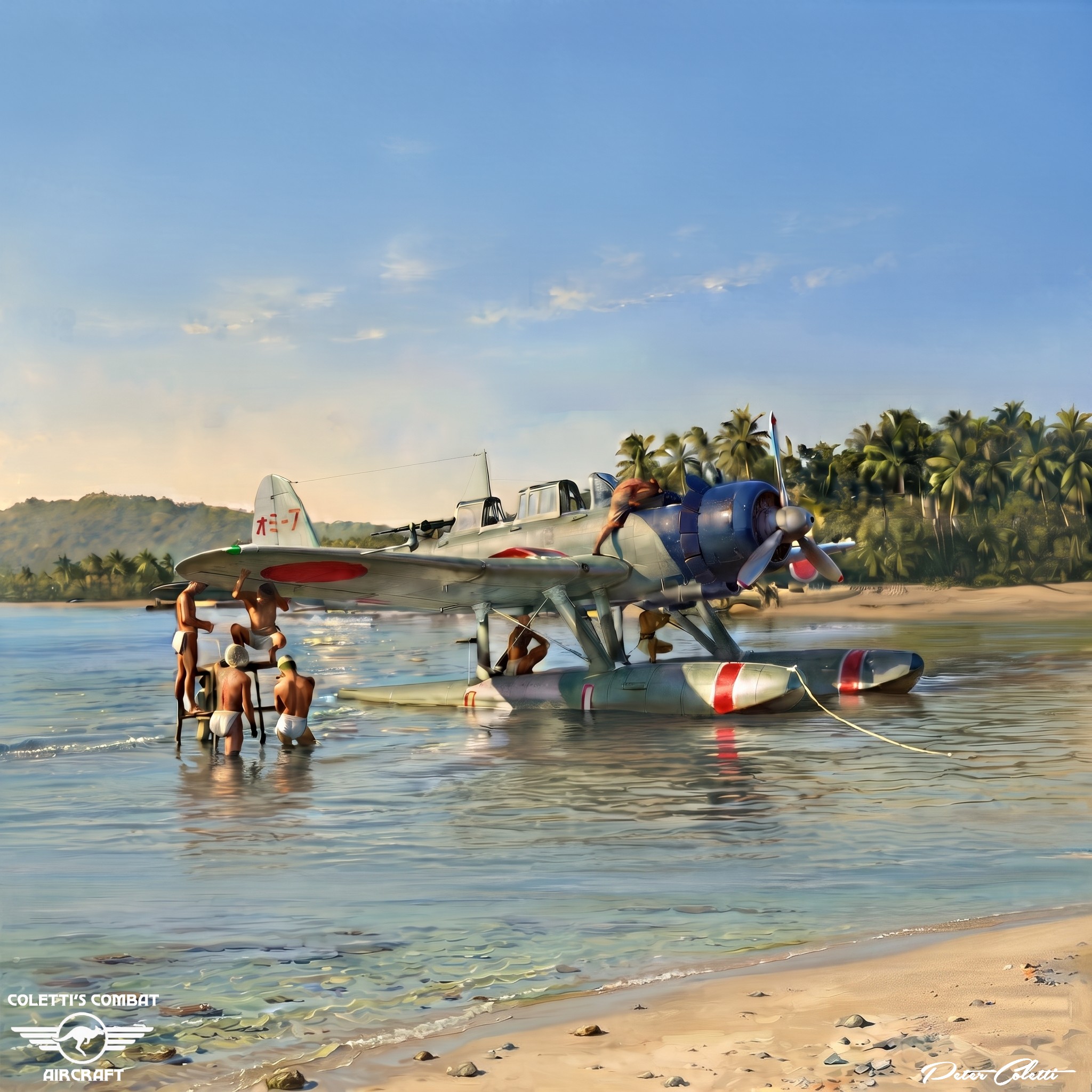
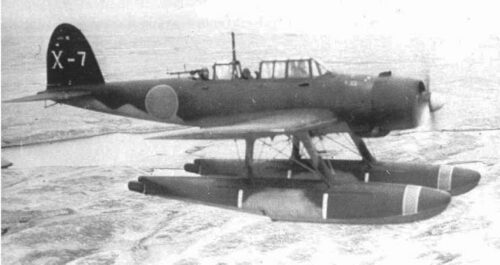
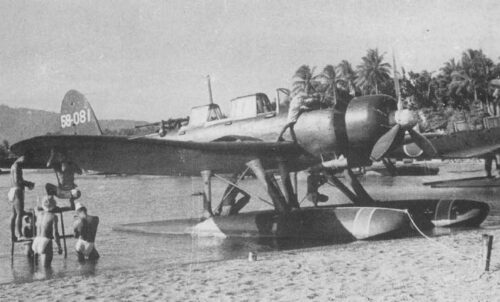
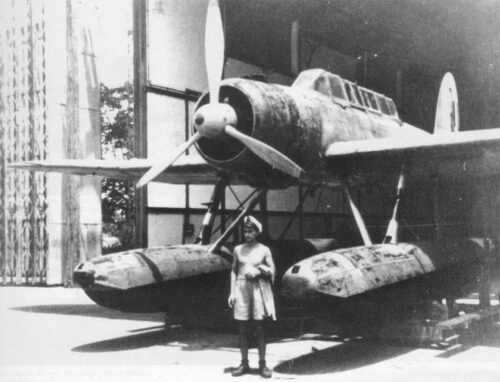
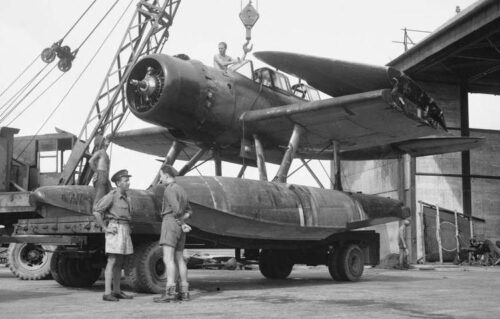
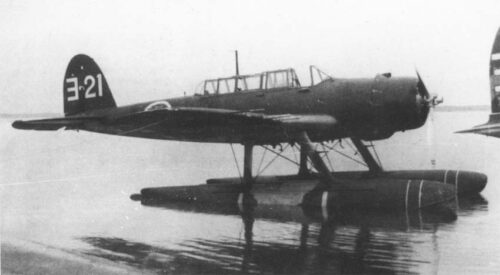
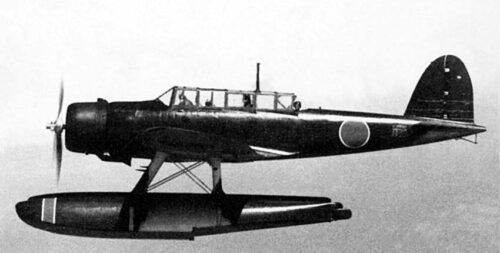
The Aichi E13A—known to the Allies as “Jake”—was the Imperial Japanese Navy’s most widely used and strategically important reconnaissance floatplane of the Second World War.
It combined long-range capability, shipboard operability, and multi-role flexibility, serving from the opening of the Pacific War through Japan’s final months.
Development Origins and Competitive Trials
The E13A emerged from a 1937–1938 Japanese Navy requirement to replace the ageing Kawanishi E7K2 with a more capable long‑range reconnaissance seaplane.
Aichi, Kawanishi, and Nakajima submitted designs under the 12‑Shi specification.
Aichi initially developed the E12A, a two‑seat floatplane, but the Navy soon shifted requirements towards a three‑seat, long‑range platform, prompting Aichi to scale up the design into what became the E13A.
Two prototypes of the Aichi E13A and Kawanishi E13K flew in late 1938.
Although the Kawanishi design outperformed the Aichi in some metrics, it proved unreliable and difficult to maintain, and both of its prototypes were lost in accidents.
Aichi’s design, powered by a 1,060 hp Mitsubishi Kinsei 43, demonstrated better overall reliability and range.
In December 1940, the Navy selected it for production as the Type 0 Reconnaissance Seaplane Model 11 (E13A1).
Design Characteristics and Technical Architecture
The E13A was a low‑wing monoplane with twin floats, optimised for catapult launch from cruisers, battleships, and seaplane tenders.
Its structure blended metal framing with fabric‑covered control surfaces, balancing durability and weight.
Key Structural Features
Twin‑float configuration for maritime stability and shipboard operations.
Three‑man crew: pilot, observer/navigator, and rear gunner.
Mixed metal/fabric construction for strength and weight efficiency.
Refined float strut arrangements in later variants for easier maintenance and improved aerodynamics.
Representative Dimensions
Length
~11.30 m
Wingspan
~14.50 m
Height
~7.40 m
Bomb load
up to 250 kg (550 lb)
Armament
Typically one 20 mm cannon (downward-firing) and one 7.7 mm rear machine gun.
These characteristics gave the E13A excellent range, stability, and endurance, making it ideal for long reconnaissance flights over open ocean.
Performance and Operational Roles The E13A’s performance emphasised range and endurance over speed or manoeuvrability.
It excelled in:
Long‑range scouting for carrier and surface fleets
Its reconnaissance role was pivotal in several major operations, including:
Pearl Harbour: E13As scouted the harbour before the attack.
Coral Sea & Midway: E13As from cruisers such as Tone and Chikuma conducted critical scouting flights.
China operations: Early combat debut included bombing raids on the Canton–Hankow railway.
The aircraft’s long range made it indispensable for the Japanese Navy’s doctrine of forward reconnaissance, often determining the timing of carrier strikes.
Production and Industrial Context
Production was distributed across several facilities:
Total production reached 1,418 units, making it the most numerous Japanese floatplane of the war.
Variants and Evolution
E13A1
Prototype and first production model; later designated Model 11.
E13A1a / E13A1b
Incremental improvements in equipment, float struts, and mission gear.
E13A1 Kai
Modified for specialised roles such as night reconnaissance or enhanced communications.
While the E13A family lacked the extensive variant tree of fighters or bombers, its continuous refinement kept it viable throughout the war.
WWII Service Context and Global Use
The E13A served across the Pacific and Asian theatres:
Japanese cruisers, battleships, and seaplane tenders routinely carried E13As.
Yamato‑class battleships used them for long‑range scouting.
The German Navy operated one E13A alongside Arado Ar 196s at Penang as part of the East Asia Naval Special Service.
The French Navy used eight captured examples during the First Indochina War (1945–47).
The Royal Thai Navy operated several pre‑war.
RNZAF briefly flew a surrendered example in 1945.
The aircraft’s longevity reflected its reliability, range, and adaptability, even as Allied air superiority grew overwhelming.
Strategic Assessment
The Aichi E13A was not fast, heavily armed, or technologically advanced by late‑war standards. Its significance lay in:
Exceptional range for a floatplane
Shipboard compatibility
Operational reliability
Versatility across reconnaissance, patrol, and light attack roles
Mass production enabling widespread deployment
In the Pacific War—where reconnaissance often determined the outcome of naval battles—the E13A was a force multiplier, shaping Japanese fleet awareness and operational timing.