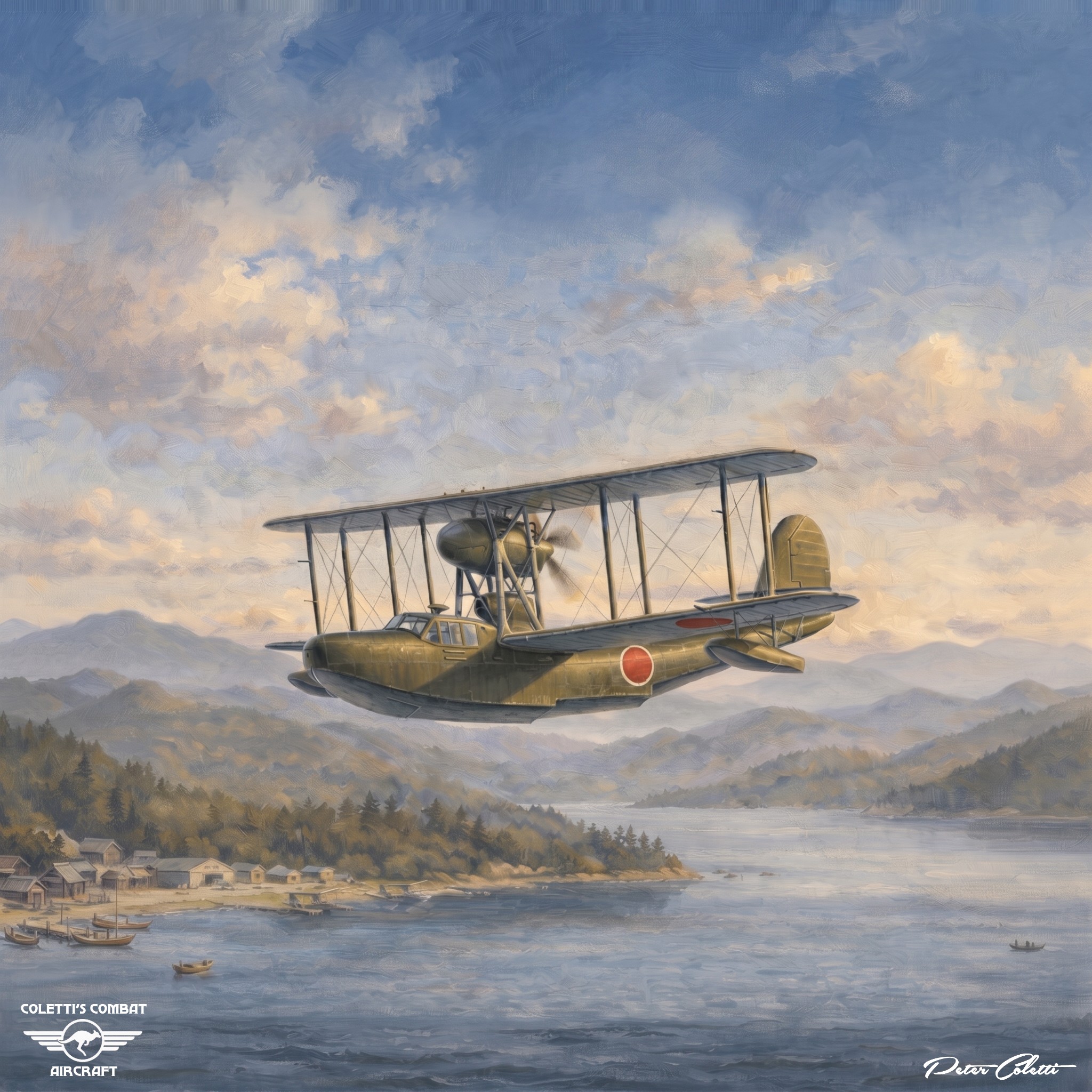
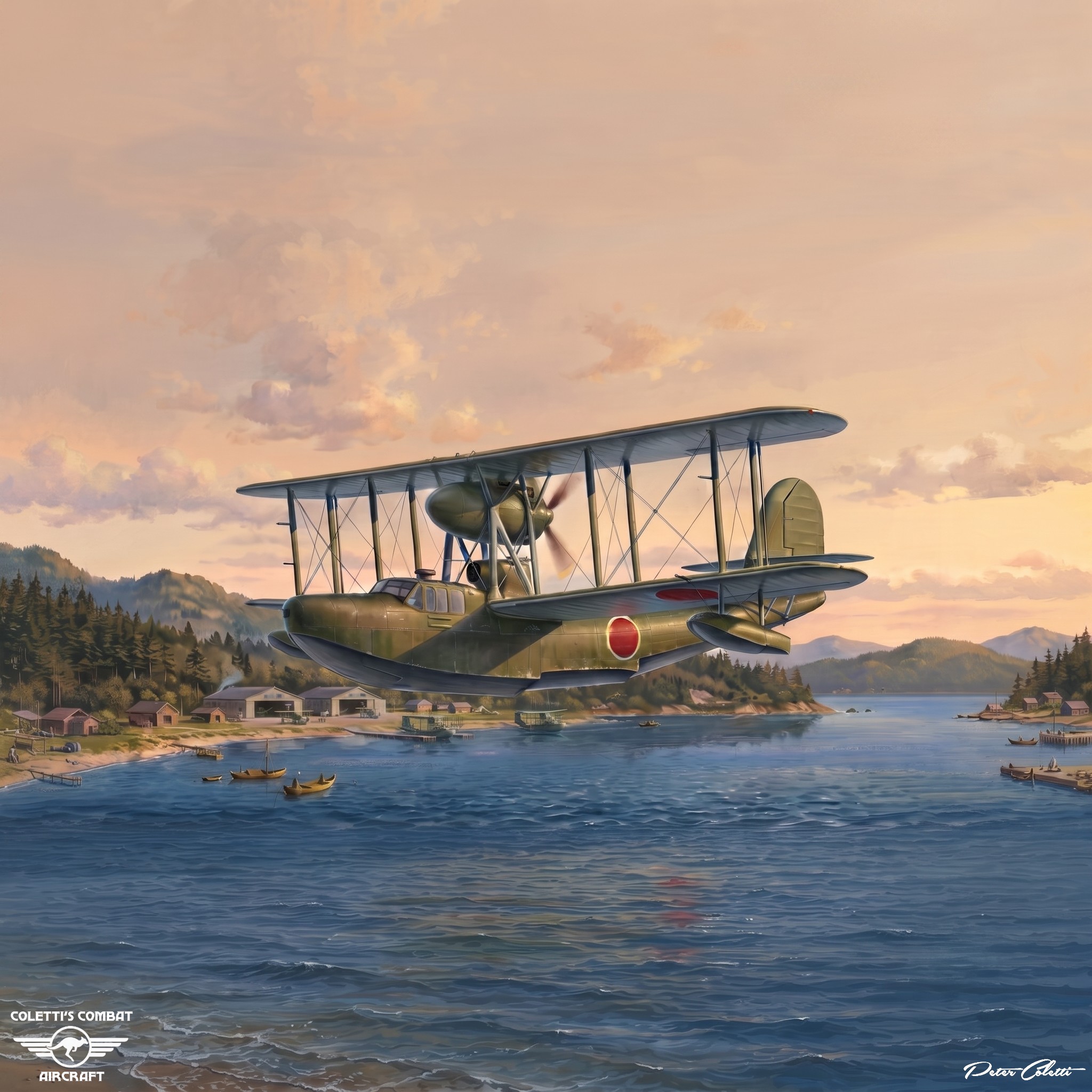
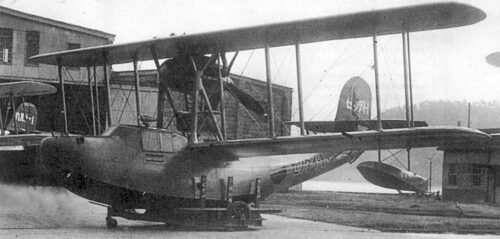
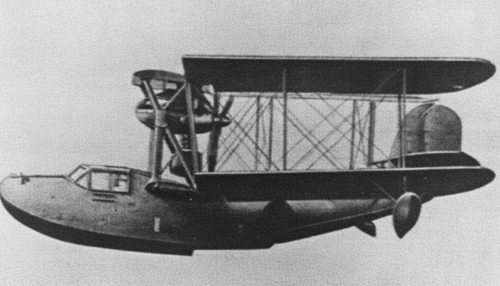
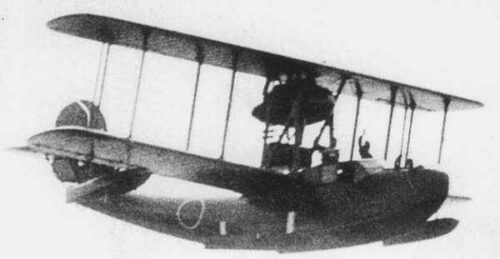
Aichi’s E10A—known to the Imperial Japanese Navy (IJN) as the Type 96 Night Reconnaissance Seaplane and to the Allies as “Hank”—was a compact, single-engine biplane flying boat built in very small numbers (only 15 aircraft) for a highly specialised role: shadowing enemy fleets at night.
It first flew in 1934, entered service in 1936, and was retired in 1941, just before Japan’s wider entry into the Pacific War.
Development Context and Requirements
In 1934, the IJN issued a specification for a new night reconnaissance flying boat, drawing on lessons from the earlier Experimental 6‑Shi Night Reconnaissance Flying Boat.
The mission profile demanded:
Long endurance for extended shadowing of enemy fleets
A crew of three for navigation, observation, and defense
Aichi and Kawanishi both submitted designs.
Aichi’s entry, the AB‑12, ultimately won due to superior stability during trials.
Design and Technical Characteristics
The Aichi AB‑12 / E10A was a single‑engine, all‑metal biplane flying boat with several distinctive features.
Airframe
All‑metal hull with a boat‑shaped underside for water operations
Two‑bay biplane wings that folded rearwards for shipboard stowage
Enclosed cabin for its three‑man crew (pilot, observer/navigator, radio operator/gunner)
Propulsion
Aichi Type 91 water‑cooled W‑12 pusher engine
Power output
370–480 kW (500–650 hp)
Drove a four-blade wooden fixed-pitch propeller mounted behind the wing
The pusher configuration improved forward visibility—critical for night reconnaissance—and reduced spray ingestion during water operations.
Dimensions
Length
~11.22 m
Wingspan
15.5 m
Height
4.5 m
Wing area
~52 m²
Weights
Empty
~2,100 kg
Gross
~3,300 kg
Performance Profile
The E10A was not fast, but it was stable and had a long range—qualities prized for its nocturnal missions.
Maximum speed
206 km/h at sea level
Cruise speed
106 km/h at 1,000 m
Range
1,852 km (1,000 nmi)
Service ceiling
4,120 m
Climb
3,000 m in 17 min 42 s
These numbers reflect a design optimised for endurance and stability rather than speed or altitude.
Armament
1 × 7.7 mm machine gun, flexibly mounted in the nose
This minimal armament underscores its reconnaissance-only role.
Variants
The E10A had no major variants.
All 15 production aircraft were essentially identical, reflecting both the narrow mission and limited production run.
Operational History and WWII Context
The E10A entered service in August 1936 with the IJN.
Its primary role was the following:
Night reconnaissance
Shadowing enemy fleets
Providing early warning and tracking information
However, by 1941, the aircraft was already obsolete.
It was retired before the attack on Pearl Harbour, replaced by more modern reconnaissance seaplanes.
Despite its retirement, Allied intelligence assigned it the reporting name “Hank”.
Why such a short service life?
Rapid advances in aircraft design during the 1930s
Limited performance compared to newer monoplane seaplanes
Increasing emphasis on faster, longer‑range reconnaissance platforms
The E10A thus represents a transitional moment in Japanese naval aviation—bridging early interwar concepts and the more capable reconnaissance aircraft of WWII.
Summary
The Aichi E10A was a niche, low‑production flying boat tailored for night fleet‑shadowing missions.
Namely, it’s:
Pusher engine,
Folding biplane wings,
All‑metal hull, and
Long range
made it well-suited to its specialised role, but rapid technological change rendered it obsolete by the early 1940s.
Though overshadowed by later designs, it remains a fascinating example of interwar Japanese naval aviation engineering.