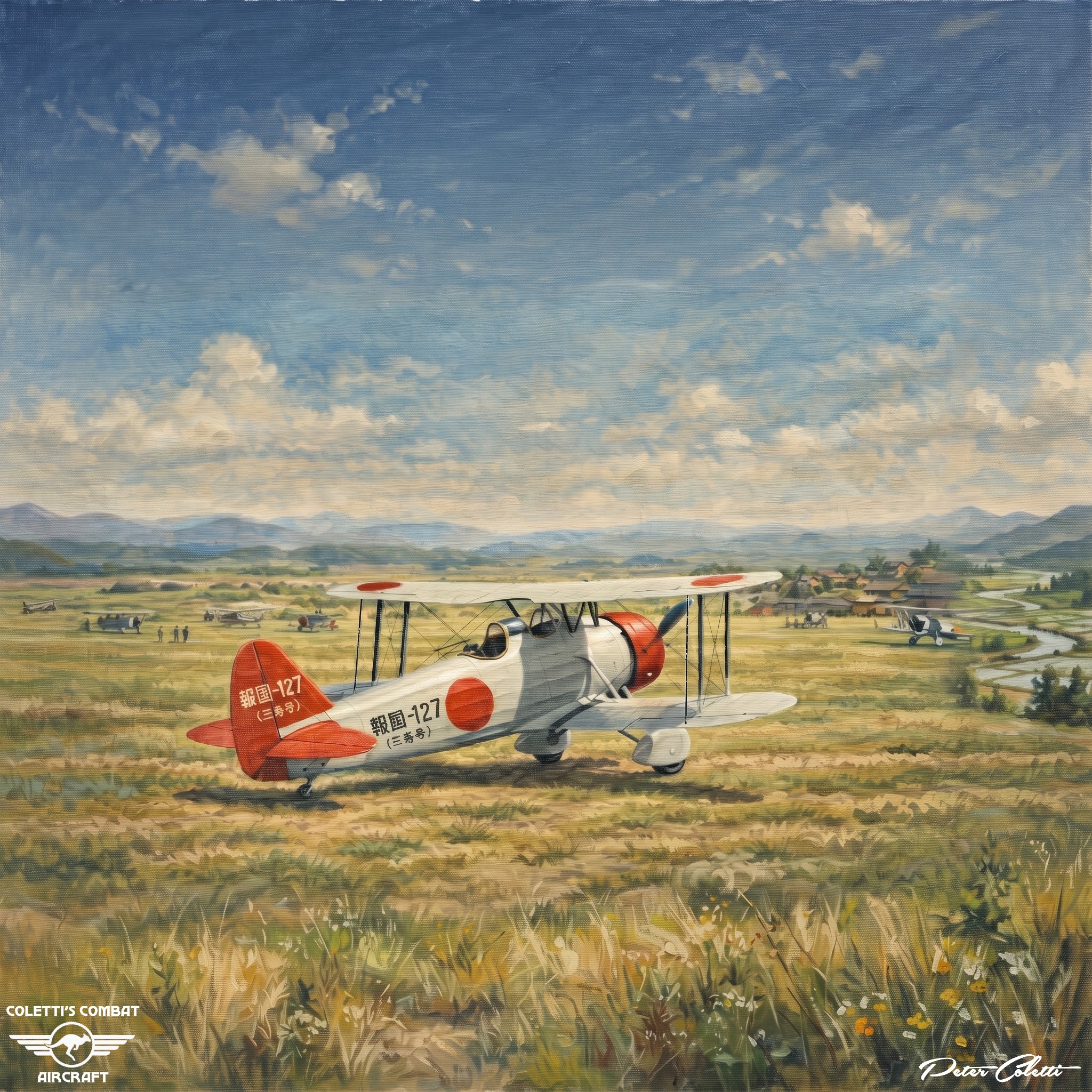
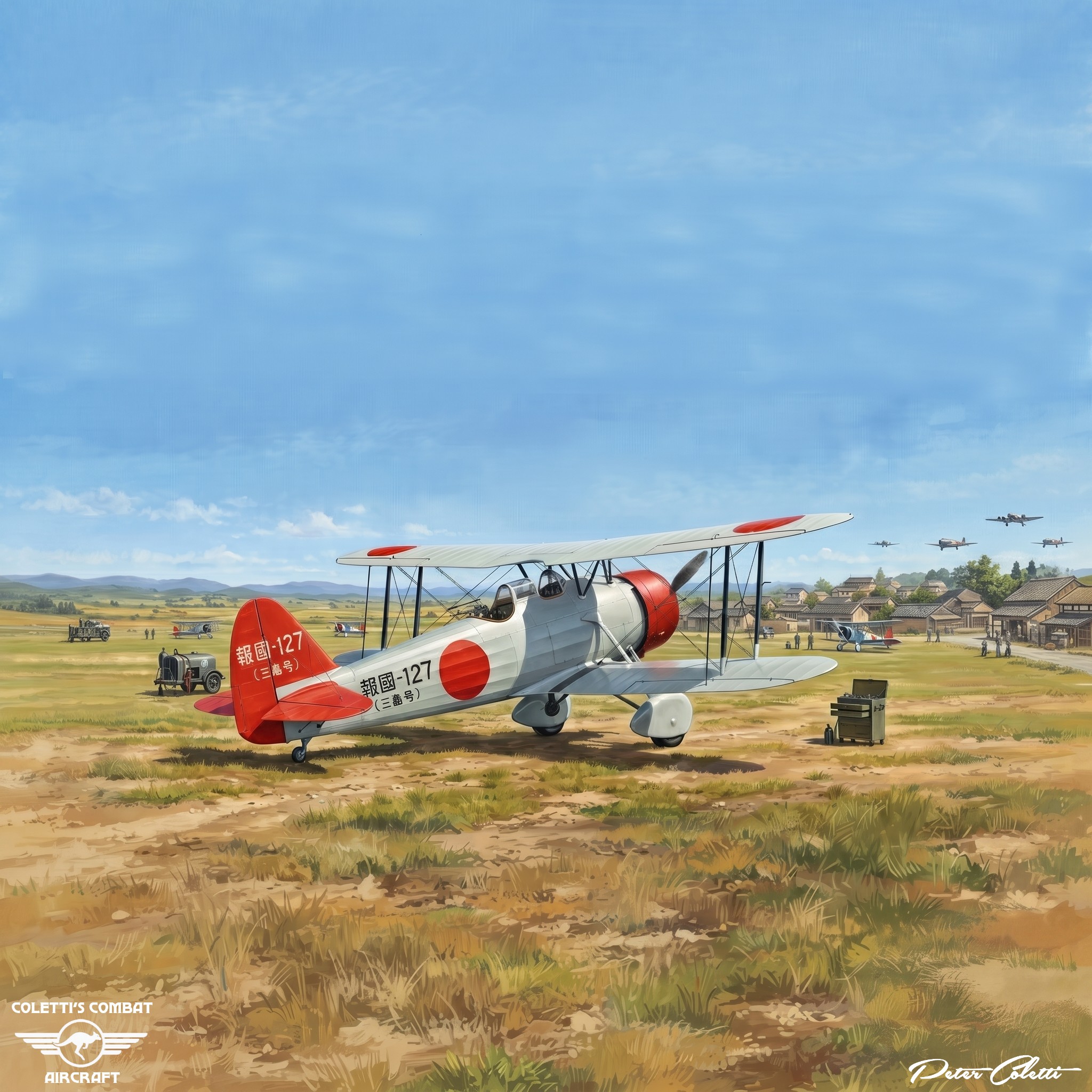
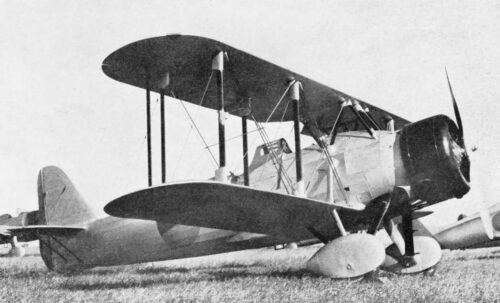
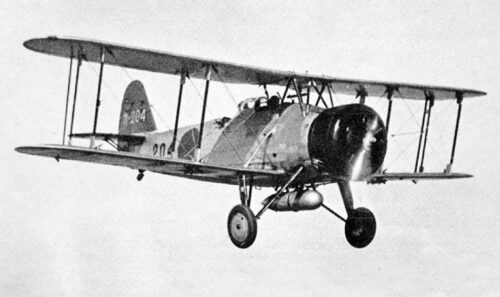
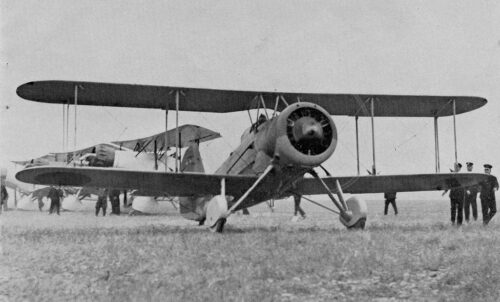
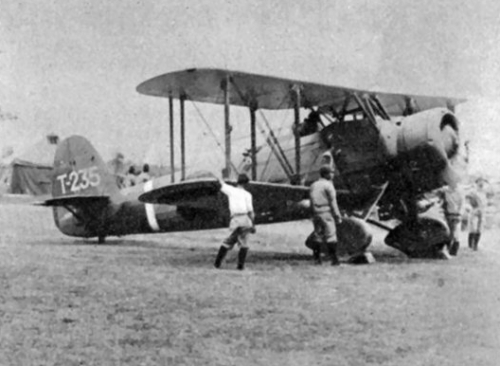
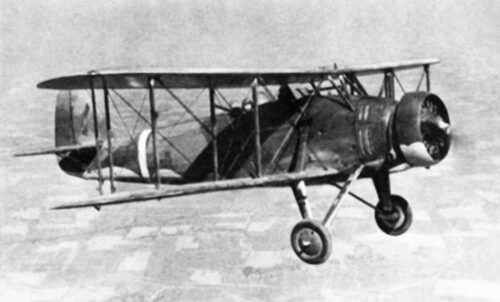
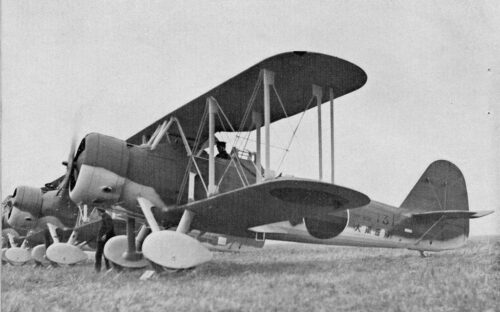
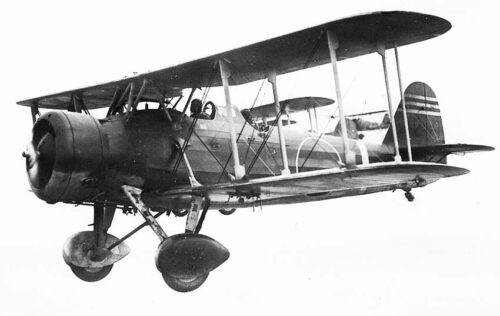
Aichi’s D1A—known to the Imperial Japanese Navy (IJN) as the Type 94/96 Carrier Bomber and to the Allies as “Susie”—was a transitional but historically important dive bomber that bridged early biplane concepts and the more advanced monoplane designs that defined WWII.
It emerged from Japan’s push in the early 1930s to field a modern, carrier-capable dive bomber and ultimately became the IJN’s last operational biplane bomber before the famous D3A “Val”.
Origins and Development The D1A’s development was shaped by Japan’s early interest in dive‑bombing and its close technical partnership with Germany’s Heinkel.
In 1931–34, Aichi—lacking deep in-house design experience—commissioned Heinkel to create a modern dive-bomber prototype.
Heinkel responded with the He 50 and its export derivative, the He 66, which Aichi then adapted into the AB‑9 prototype.
Key developmental milestones:
1932–33
The IJN issues new dive-bomber specifications after earlier prototypes fail to meet requirements.
1934
Aichi’s AB‑9, based on the He 66, outperforms competitors and is ordered into production as the Type 94 Carrier Bomber (D1A1).
1935 onward
Continued refinement leads to the Type 96 (D1A2) with improved aerodynamics and a more powerful engine.
Design Characteristics
The D1A was a two-seat, single-engine biplane with a mixed metal-and-wood structure and fabric covering—typical of early 1930s naval aircraft.
Its design emphasised structural strength for steep dive attacks and ruggedness for carrier operations.
Structural and aerodynamic features
Biplane configuration
Two-bay wings with a slight sweep for stability.
Fixed landing gear
Later D1A2 models added spatted wheels for reduced drag.
Tailwheel/skid
Conventional arrangement for carrier deck handling.
Armament
Two fixed forward‑firing 7.7 mm Type 92 machine guns
One flexible rear 7.7 mm gun
Bomb load
one 551 lb bomb under the fuselage and two 66 lb bombs under the wings
Powerplants
Early models
~490 hp engines
Later D1A1
580 hp Nakajima Kotobuki radials
D1A2
Nakajima Hikari 1 for improved performance
Performance Profile
While not fast by later standards, the D1A delivered solid performance for a mid‑1930s carrier bomber.
Engine power
490–580 hp depending on variant
Dive‑bombing capability
Reinforced structure for steep‑angle attacks
Handling
Good manoeuvrability, praised for reliability and ease of maintenance
Operational range and speed
Adequate for regional operations in China but increasingly limited by late 1930s standards (inferred from its rapid replacement by the D3A “Val”).
Variants
D1A1 Type 94 The first production model.
580 hp Kotobuki engines
162 built
Served extensively in China
D1A2 Type 96 — Improved model
Spatted landing gear
More powerful Hikari 1 engine
428 built
Continued in second-line service into early WWII
AB‑11
Proposed retractable-gear development
Never built
Operational History and WWII Context
The D1A saw its most active combat use during the Second Sino‑Japanese War, where it performed bombing and close‑support missions from both land bases and carriers.
Its reliability and simplicity made it well‑suited for the protracted conflict in China.
By 1941, however, the D1A was obsolete compared to monoplane dive bombers.
At the outbreak of the Pacific War:
Most D1A1s were already retired.
Most D1A2s had been reassigned to training units.
Only 68 D1A2s remained in second‑line support roles before final retirement in 1942.
Its successor, the Aichi D3A “Val”, would become one of the IJN’s most iconic carrier bombers of WWII.
Historical Significance
The Aichi D1A occupies an important transitional place in Japanese naval aviation:
It was the last biplane dive bomber in IJN service.
It demonstrated the value of international collaboration (Aichi–Heinkel).
It provided the operational and design foundation for the far more famous D3A Val, which spearheaded attacks from Pearl Harbour to the Indian Ocean.