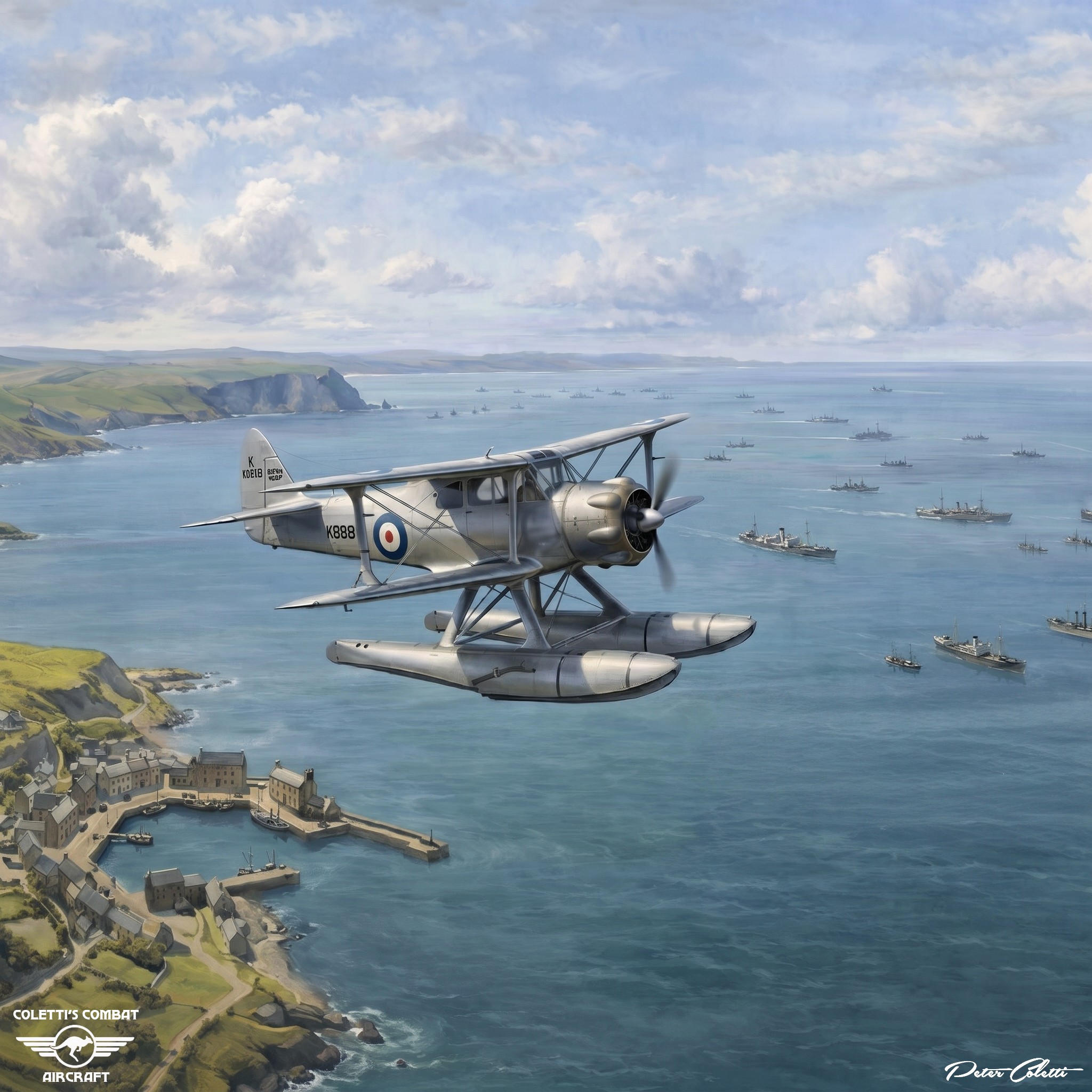
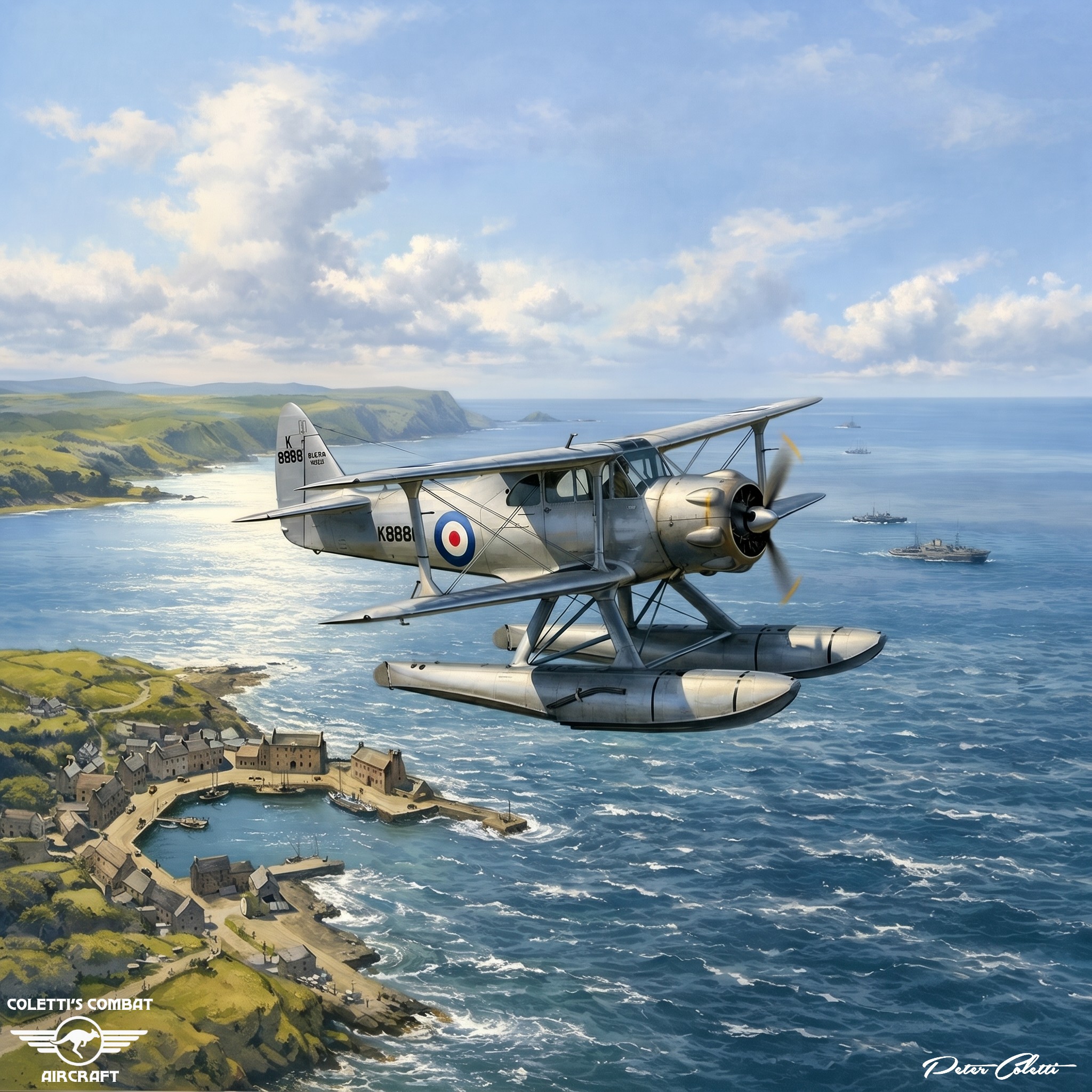
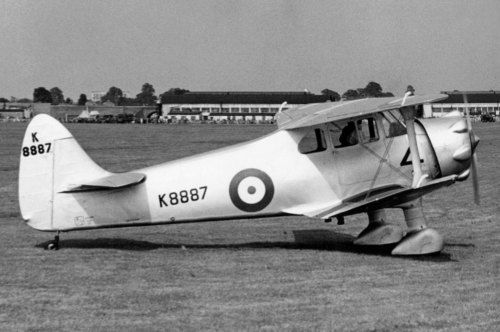
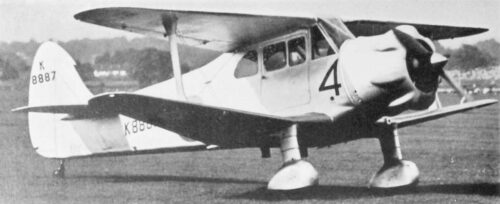
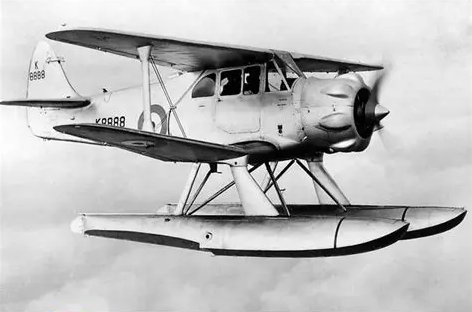
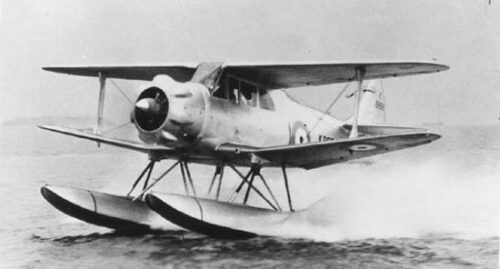
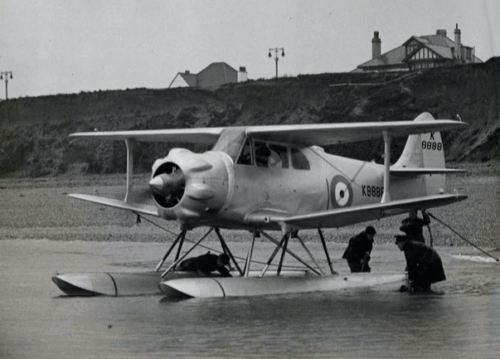
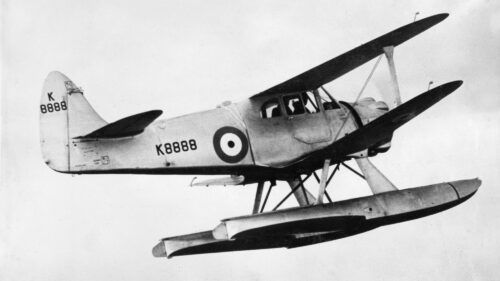
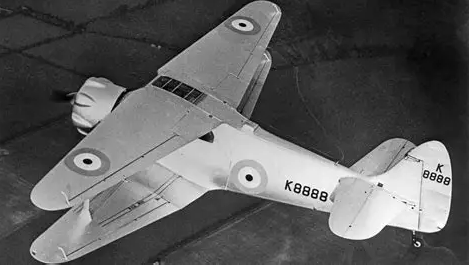
The Airspeed AS.30 Queen Wasp was a British pilotless target aircraft developed in the mid‑1930s to meet Air Ministry Specification Q.32/35, which called for a radio‑controlled drone to replace the de Havilland Queen Bee.
Two prototypes were ordered in May 1936:
One landplane version for the Royal Air Force
One floatplane version for the Royal Navy, intended for gunnery practice at sea
The aircraft was designed by Hessell Tiltman and N.S. Norway of Airspeed Ltd.
It was constructed primarily of wood, with sharply tapered wings and fabric‑covered control surfaces.
An enclosed cockpit allowed the aircraft to be flown manually when the radio‑control system was disengaged.
Radio-Control System
The Queen Wasp featured an unusually complex radio-control suite for its time, including:
Multiple backup safety circuits.
A trailing aerial that deployed after takeoff.
An automatic landing trigger activated when the aerial weight touched the runway.
These systems proved sensitive to turbulence, requiring alternative landing procedures.
First Flights
Landplane prototype: 11 June 1937
Floatplane prototype: 19 October 1937
The floatplane was successfully catapult‑launched from HMS Pegasus in November 1937.
Technical Characteristics & Performance
General Description
The Queen Wasp was a single-engine biplane powered by an Armstrong Siddeley Cheetah radial engine.
It was intended to be inexpensive, expendable, and easy to operate remotely.
Performance (Landplane)
(Values from contemporary specifications)
Maximum speed
~172 mph (277 km/h)
Cruise speed
~151 mph (243 km/h)
Service ceiling
~20,000 ft (6,096 m)
Maximum takeoff weight
~3,500 lb (1,588 kg)
Wingspan
31 ft (9.45 m)
Length
24 ft 4 in (7.42 m)
Height
10 ft 1 in (3.07 m)
Performance Issues
Flight testing revealed two major shortcomings:
Underpowered engine, limiting speed and climb performance
Poor water handling on the floatplane version, requiring a redesign of the floats by Short Brothers
These issues ultimately doomed the aircraft’s production prospects.
Variants and Proposed Derivatives
Built Variants
AS.30 Landplane (prototype and limited production)
AS.30 Floatplane (prototype only)
Proposed but Unbuilt Derivatives
Airspeed attempted to reuse the Queen Wasp’s structure for other designs, none of which were adopted.
AS.38 — proposed communications aircraft
AS.50 — proposed trainer to meet Specification T.24/40
Production History Although an initial order for 65 aircraft was placed (contingent on successful testing), the Queen Wasp failed to meet expectations.
Production was drastically reduced.
Total built: 7 aircraft
There are 5 additional airframes that were started but not finished.
Large follow‑on orders cancelled after poor test results
Only three production aircraft beyond the prototypes were delivered to the RAF.
Operational History in WWII
The Queen Wasp entered limited service in 1937, but by the outbreak of WWII, it was already considered unsatisfactory.
RAF and Royal Navy Use
The RAF used the aircraft briefly as a radio‑controlled target drone.
The Royal Navy tested the floatplane version for ship‑based gunnery training.
However, the aircraft’s underpowered performance, radio‑control reliability issues, and float handling problems meant it was never adopted widely.
Wartime Role
During WWII, the Queen Wasp saw minimal operational use.
More reliable target drones and converted manned aircraft quickly replaced it.
The type had no combat role and made no significant contribution to wartime operations.
Summary Assessment
The Airspeed Queen Wasp was an innovative but ultimately unsuccessful attempt to produce a modern radio‑controlled target aircraft before WWII.
Its advanced control system was ahead of its time, but its poor performance, technical complexity, and limited reliability prevented it from entering mass production.
It remains historically significant as the following:
A transitional step between early radio‑controlled drones and later wartime target aircraft.