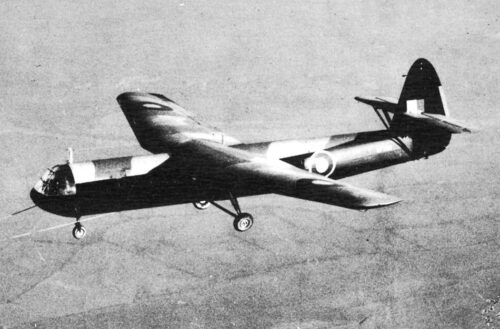
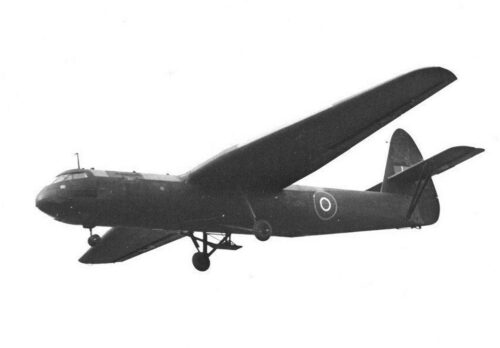
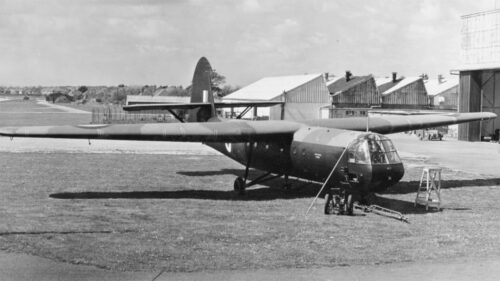
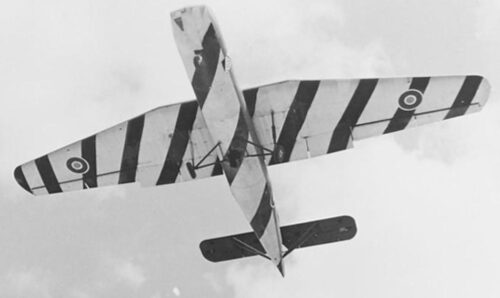
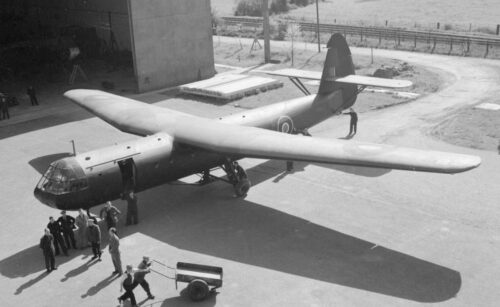
The Airspeed Horsa was born from Britain’s urgent need to create a modern airborne assault capability early in the Second World War.
After observing Germany’s glider-borne operations in 1940, the British government ordered the rapid formation of airborne forces and the development of large troop-carrying gliders.
The initial Hotspur glider proved too small for operational use, prompting the Air Ministry to issue a requirement for a much larger wooden assault glider capable of carrying a full platoon or light vehicles.
Airspeed Ltd, under designer Hessell Tiltman, responded with what became the AS. 51 Horsa — a robust, all-wood aircraft designed for mass production by non-aviation factories.
Design and Construction
The Horsa was notable for the following:
All-wood construction, allowing furniture factories and woodworking shops to build components
High-wing layout for stability and internal volume
Capacity for 25–30 troops, or a Jeep, or a 6‑pounder anti‑tank gun
Tricycle landing gear, jettisonable after takeoff
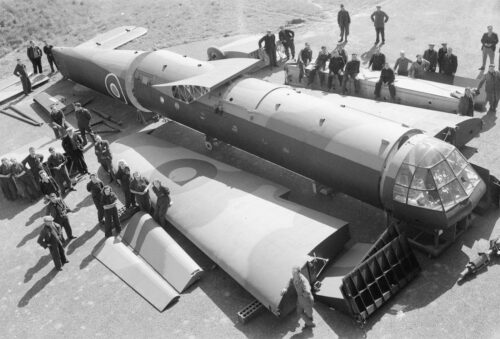
Detachable tail section for rapid unloading of guns and vehicles
The prototype flew in September 1941, towed by a Whitley bomber.
Production was widely dispersed across British industry, with final assembly often done at RAF maintenance units because many subcontractors lacked airfields.
Total production exceeded 3,600 gliders, making the Horsa one of the most numerous British aircraft of the war.
Operational Employment
Operation Freshman (1942)
The Horsa’s first combat mission was the ill‑fated attempt to sabotage the German heavy‑water plant in Norway.
Severe weather caused both gliders to crash, and the surviving troops were executed under Hitler’s “Commando Order”.
Mediterranean Theatre (1943)
Horsas were ferried to North Africa and used in the invasion of Sicily (Operation Husky).
This marked the first large‑scale Allied glider assault.
Normandy (1944)
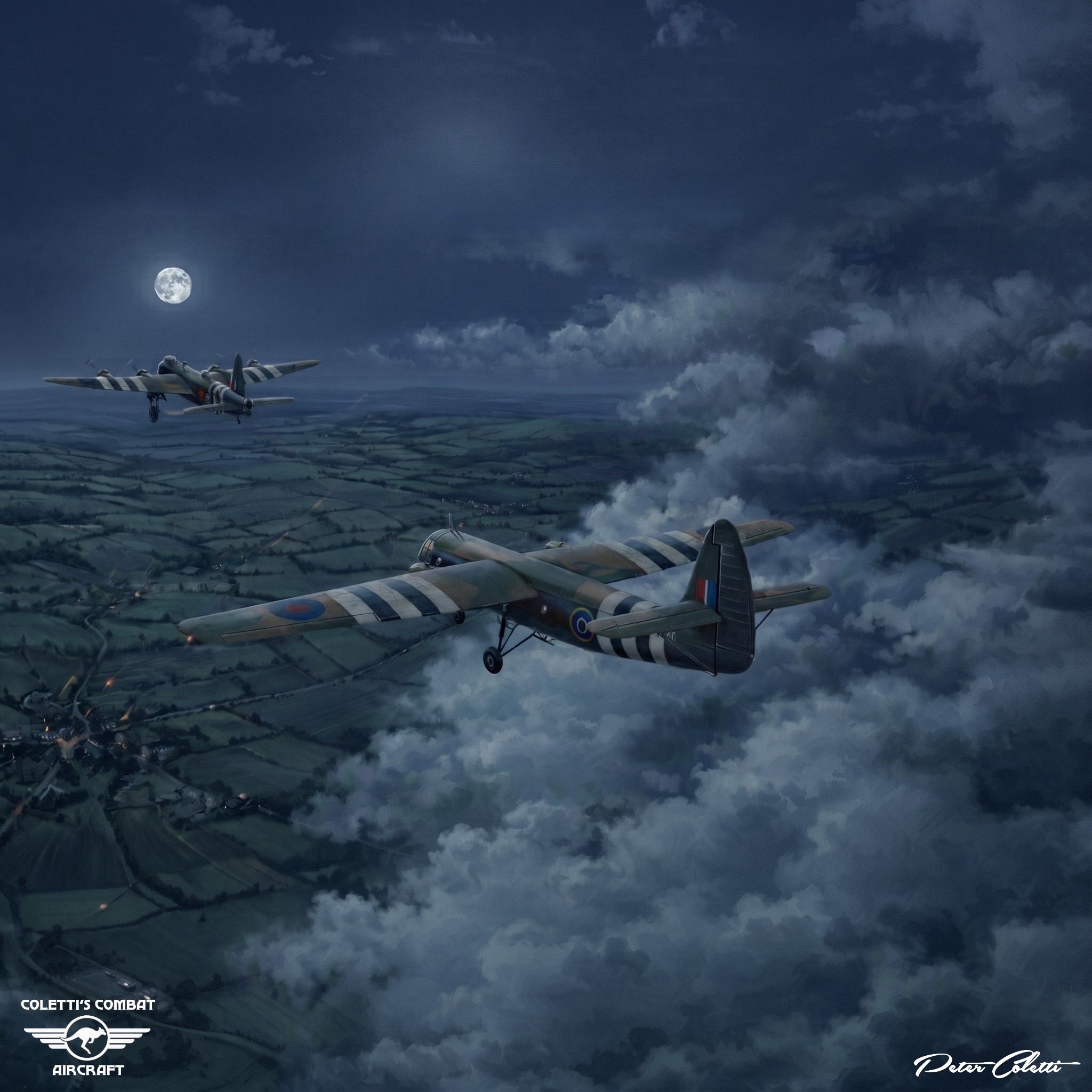
The Horsa became iconic during the D‑Day landings.
Used by both British and American airborne forces
Delivered the troops who captured Pegasus Bridge and the Orne River Bridge
Over 600 horsas were used in the first two airborne lifts alone.
Its wooden structure allowed it to absorb heavy landing forces, though many gliders were destroyed on impact — a known and accepted part of glider warfare.
Southern France, Arnhem, and the Rhine
The Horsa continued to serve in the following:
Operation Dragoon (Southern France)
Operation Market Garden (Arnhem)
Operation Varsity (Rhine crossing), where over 400 were used
By 1945, the Horsa had become the backbone of British glider operations.
Postwar Fate
After the war, most Horsas were scrapped or repurposed as sheds, caravans, or temporary housing.
A few were evaluated by the Royal Canadian Air Force and the Indian Air Force.
No complete wartime examples survive, but several full-scale replicas exist, including those built for the film A Bridge Too Far and the Pegasus Bridge museum.
Variants (AS.51 Horsa I)
Role
Standard production troop/cargo glider
Features:
Tow cable attachment points located at the upper main landing gear fittings
Fixed tricycle landing gear
Detachable tail for unloading
Capacity for troops or light vehicles
This was the primary wartime model and the version used in all major operations.
AS.52 Horsa
Role
Proposed bomb‑carrying glider concept:
Internal bomb bay for heavy ordnance
Intended to be towed to altitude and release bombs like a bomber
Outcome
Cancelled before design completion; never built.
AS.53 Horsa
Role
Proposed improved development Outcome: Project abandoned before design work progressed; no prototypes constructed.
AS.58 Horsa II
Role
Heavy‑equipment glider: improved version of the Horsa I. Key improvements:
Hinged nose section for direct loading/unloading
Twin nose wheels for ground handling
A tow cable attached to the nose‑wheel strut
Reinforced floor for vehicles
Increased maximum weight
The Horsa II was the definitive heavy‑equipment version and saw extensive operational use.
Specifications
Crew
Two
Capacity
28 troops / 2x ¼-ton trucks / 1x M3A1 howitzer + ¼-ton truck with ammunition and crew (20–25 troops) was the “standard”. Mark, I load.
Length
67 ft 0 in (20.42 m)
Wingspan
88 ft 0 in (26.82 m)
Height
19 ft 6 in (5.94 m)
Wing area
1,104 sq ft (102.6 m²)
Aspect ratio
7.2
Airfoil
Root
NACA 4419R 3.1
Tip
NACA 4415R 3.1
Empty weight
8,370 lb (3,797 kg)
Gross weight
15,750 lb (7,144 kg)
Performance
Cruise speed
100 mph (160 km/h, 87 kn) normal operational gliding speed