The Aero A.304 began life not as a military aircraft but as a civilian airliner, the Aero A.204.
When Aero Vodochody failed to attract commercial buyers, the company reworked the design into a military platform and offered it to the Czechoslovak Ministry of National Defence (MNO).
In 1936, the MNO issued requirements for a new short‑range reconnaissance and observation aircraft, designated Type III.
Three companies submitted designs:
Letov Š‑50
Praga E‑51
Aero A.304
Aero held an advantage because the MNO had already purchased the A.204 prototype and supported Aero’s ongoing projects.
Ultimately, the A.304, designed by Antonín Husník, won the competition.
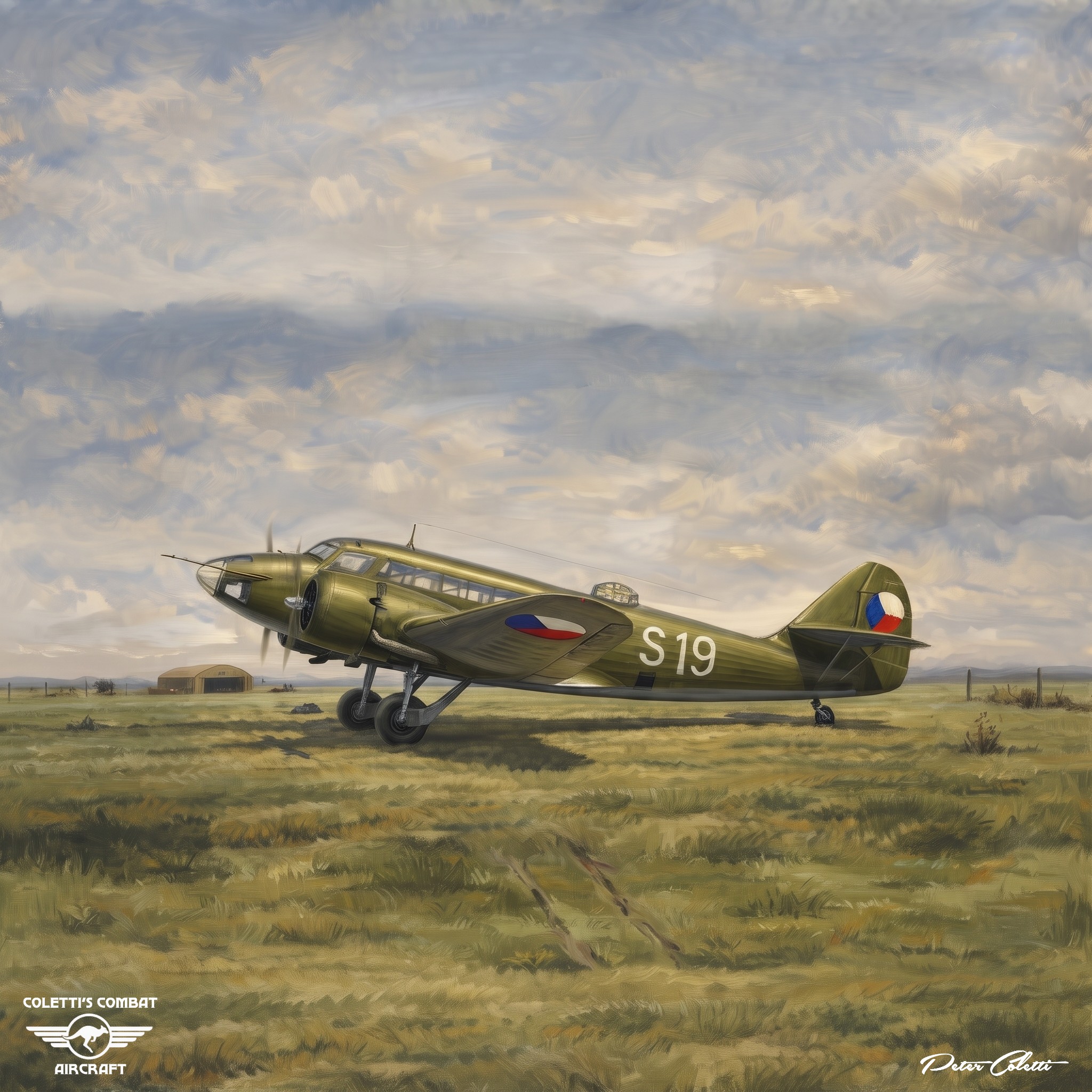
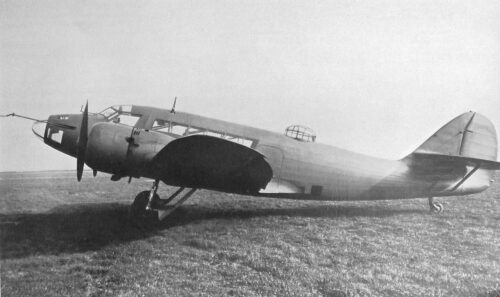
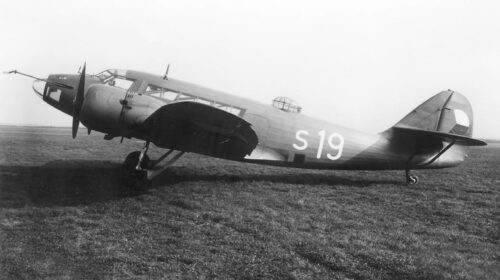
The prototype underwent testing at the VTLÚ (Military Technical and Aviation Institute) under the designation S‑19.
Design Characteristics
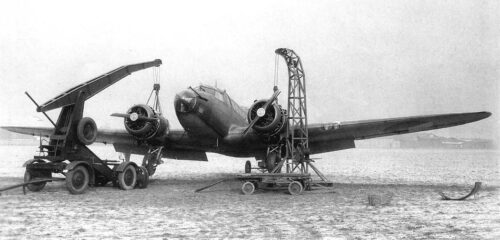
The A.304 was a twin‑engine, low‑wing monoplane with a mixed construction approach.
Fuselage
welded chromium‑molybdenum steel tube frame, partly covered with canvas and duralumin sheets
Wings
all-wood structure with plywood skin
Landing gear
retractable tailwheel configuration with oil‑pneumatic suspension on the main gear
Engines
two Walter Super Caster I‑MR radial engines, each producing 460 hp, mounted in easily removable nacelles with NACA cowlings and integrated accessories
Fuel
three wing tanks totalling 925 litres
Cabin
could carry troops or cargo; production aircraft were painted khaki with Czechoslovak markings.
Armament
The A.304 carried:
1 × 7.92 mm vz.30 machine gun in the nose
1 × 7.92 mm vz.30 in a dorsal turret
1 × 7.92 mm vz.30 in a ventral position
Up to 300 kg of bombs for light bombing missions
It also carried standard Czechoslovak radios and reconnaissance cameras.
Operational History
Czechoslovakia (1937–1939)
The A.304 first flew in 1937 and was intended to become one of the most modern aircraft in the Czechoslovak Air Force.
The MNO initially ordered 15 aircraft, later expanding the order to 19.
However, political events disrupted production:
Munich Agreement (1938)
halted export negotiations with Romania and Greece
First serial aircraft (A‑304.2)
flown on 23 February 1939
German occupation (March 1939)
Aircraft were delivered only after the occupation began on 15 March 1939.
Remaining units were completed through 1939–40.
Luftwaffe Service
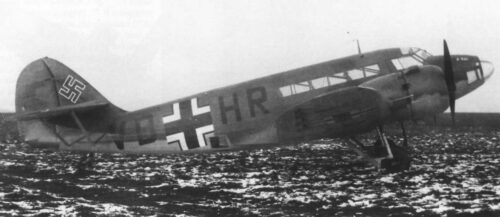
After the German occupation of Bohemia, Moravia, and Silesia, the Luftwaffe seized the A.304 fleet.
They used the aircraft primarily for:
Pilot training at Flugzeugführerschule A/B 71 in Prostějov
Courier transport
VIP transport, with modified interiors seating 6–7 passengers
Bulgarian Service
In 1941, Bulgaria purchased a single A.304, nicknamed “Pelikan”, and used it for coastal patrol duties until 1943.
Slovak Air Force
After the breakup of Czechoslovakia, Slovakia inherited some A.304s and operated them from 1939 to 1945.
Operators
Czechoslovakia: Czechoslovak Air Force
Germany: Luftwaffe (captured aircraft)
Slovakia: Slovak Air Force (1939–1945)
Bulgaria: Bulgarian Air Force (one aircraft)
Historical Significance
The Aero A.304 represents the following:
A transitional design between civilian and military aviation
One of the last domestically produced Czechoslovak aircraft before the German occupation
A rare example of a light bomber/observation aircraft adapted from an airliner
A platform that saw limited but diverse service across Central and Eastern Europe
Although produced in small numbers (19 total), the A.304 played a meaningful role in the final years of pre‑war Czechoslovak aviation and continued serving in various roles under German and Bulgarian control.
Specifications
Crew
3
Length
13.21 m (43 ft 4 in)
Wingspan
19.2 m (63 ft 0 in)
Height
3.4 m (11 ft 2 in)
Wing area
45.3 m2 (488 sq ft)
Empty weight
3,006 kg (6,627 lb)
Gross weight
4,364 kg (9,621 lb)
Powerplant
2 × Walter Super Castor IMR 9-cyl. air-cooled radial piston engine,
343 kW (460 hp) each
Performance
Maximum speed
322 km/h (200 mph, 174 kn) at 1,750 m (5,741 ft)
Cruise speed
290 km/h (180 mph, 160 kn)
Range
1,199 km (745 mi, 647 nmi)
Service ceiling
5,800 m (19,000 ft)
Rate of climb
6.75 m/s (1,329 ft/min)
Armament
Guns
1 × fixed forward-firing 7.92 mm vz-30 machine gun
1 × 7.92 mm vz-30 machine gun in dorsal turret
1 × 7.92 mm vz-30 machine gun in rearward-firing ventral position