The story of the AEKKEA‑RAAB R‑29 begins several years earlier in Germany, with the work of aircraft designer Antonius Raab at the Raab‑Katzenstein Flugzeugwerke GmbH in Kassel.
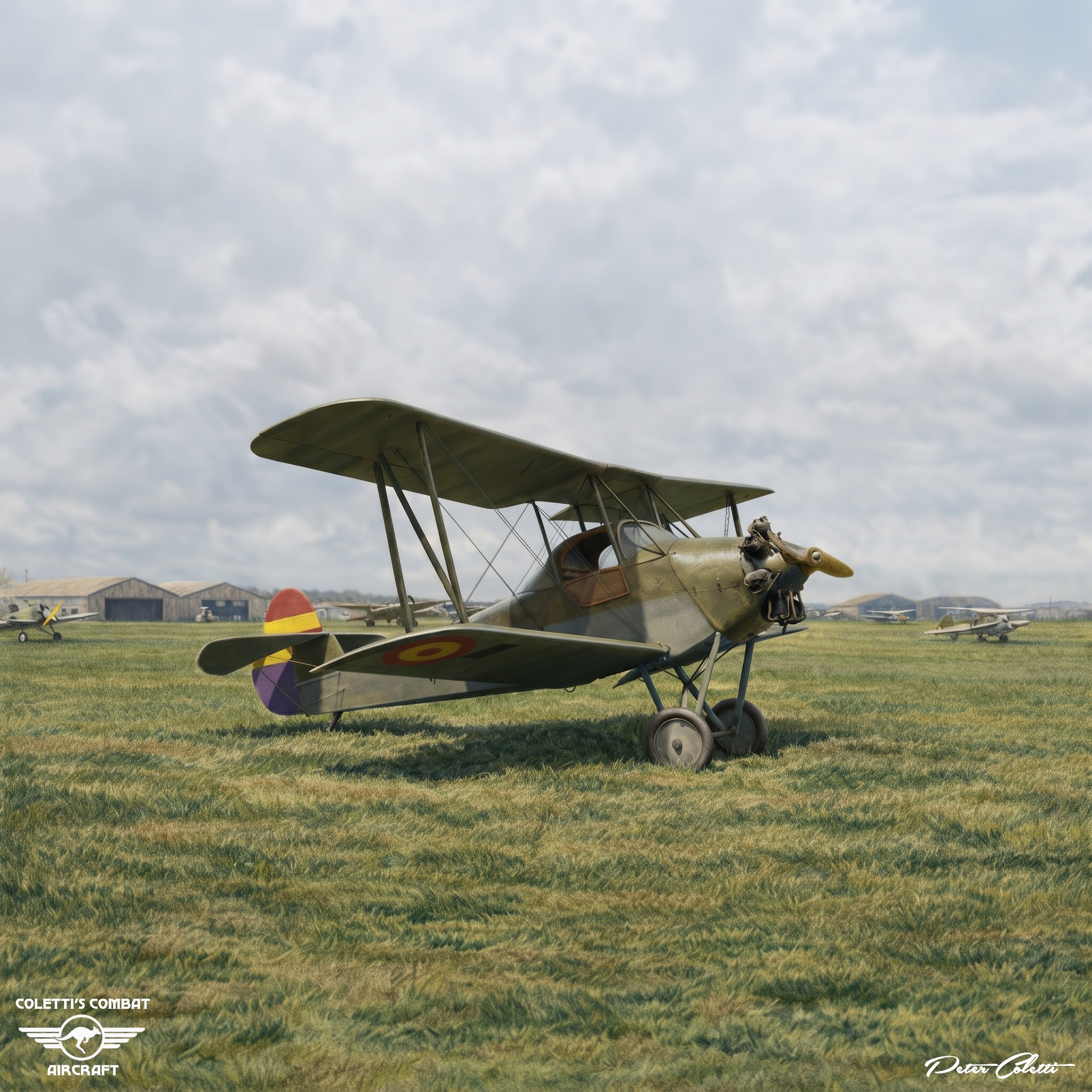
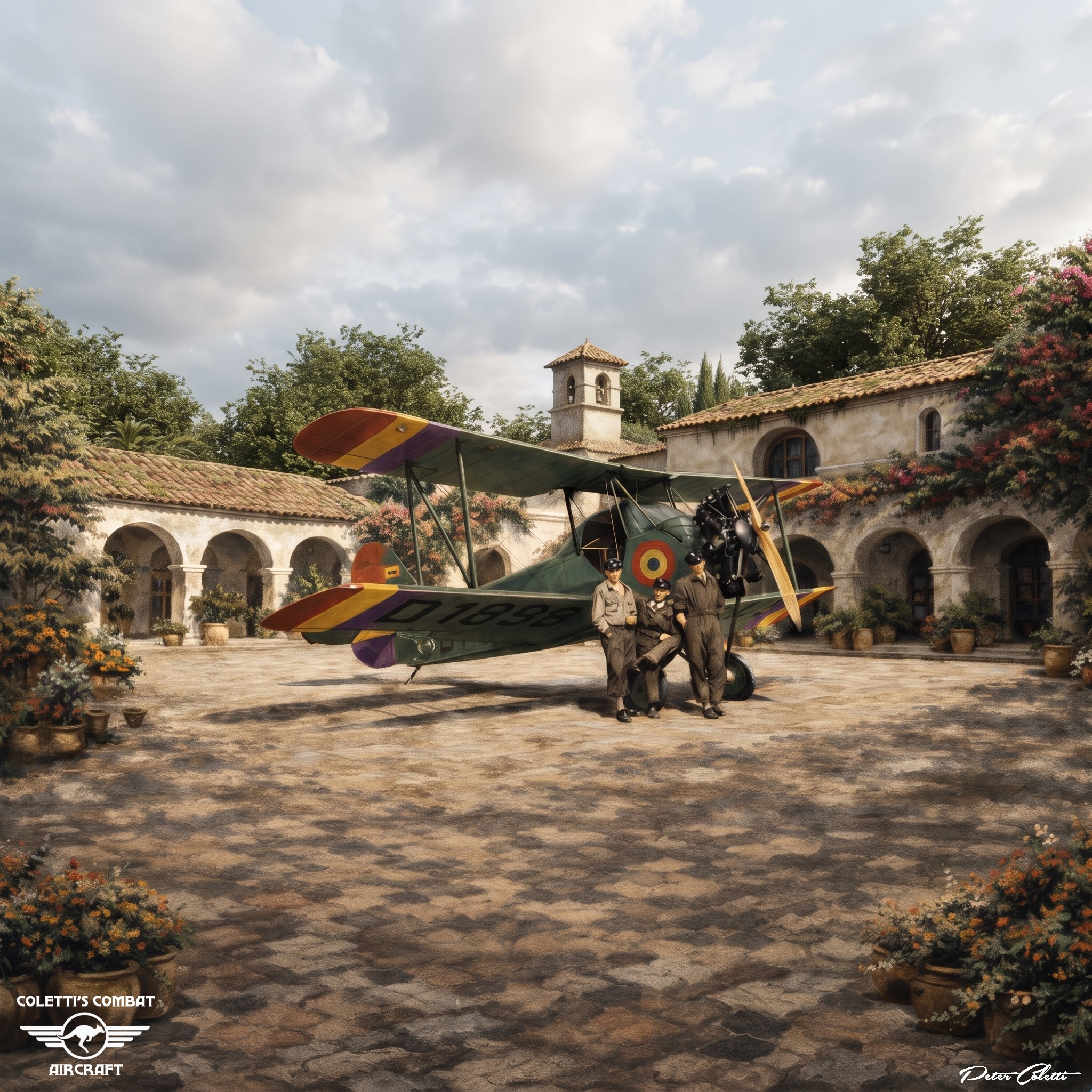
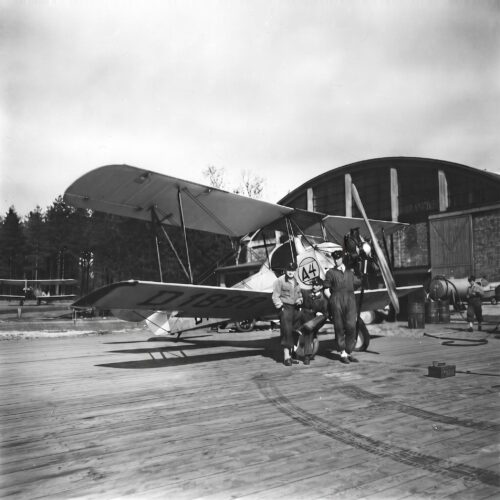
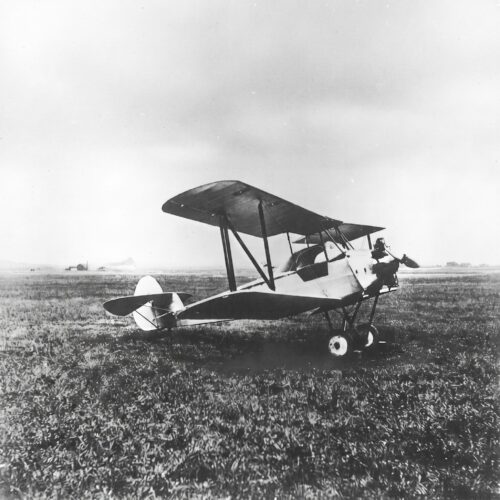
In 1930, the company produced a light multipurpose aircraft known as the RK. 29 “Deutsche Motte”.
This aircraft was a two‑ or three‑seat single‑bay biplane of mixed construction, using a metal‑tube fuselage and wooden wings.
It was powered by a seven‑cylinder Siemens‑Halske Sh.14 radial engine producing 110 horsepower.
The RK.29 was designed with a wing configuration that allowed takeoff and landing on very short airstrips, a characteristic that reflected Raab’s interest in simple, rugged, and versatile light aircraft.
Two RK.29s were built for the 1930 Internationaler Rundflug competition, registered D‑1898 and D‑1899.
Although the aircraft did not achieve notable competitive success, they demonstrated good flight characteristics and showed commercial promise.
However, Raab‑Katzenstein soon went bankrupt, and the RK.29 project ended without further development.
The collapse of the company forced Antonius Raab to leave Germany, a turning point that would eventually lead him to Greece.
After leaving Germany, Raab relocated to Greece and founded AEKKEA‑RAAB (ΑΕΚΚΕΑ‑ΡΑΑΒ), an aircraft manufacturing company intended to serve both Greek and foreign customers.
Raab brought with him the design philosophy he had developed in Germany: lightweight mixed construction, simple structures, and an emphasis on low‑cost aircraft suitable for countries with limited industrial capacity.
These ideas formed the basis for the aircraft he designed in Greece, including the R‑27 and the more ambitious R‑29.
The AEKKEA‑RAAB R‑29 was conceived in late 1936 as a single‑seat parasol‑wing monoplane.
Contemporary sources disagree on its intended role.
Jane’s All the World’s Aircraft described it as a light fighter, while Raab himself later referred to it as a ‘trainer’.
This ambiguity likely reflects the flexible nature of the design and the uncertain procurement environment of the time.
The R‑29 was structurally a new aircraft, but it clearly inherited the construction principles Raab had refined on the RK‑series: a metal-tube fuselage, wooden wings, and a lightweight overall structure.
The R‑29 was designed to use a power plant in the 250‑ to 300‑horsepower class.
Some later secondary sources incorrectly claim that it was intended to use a 280‑horsepower Ranger inline engine, but this is historically impossible.
Ranger engines did not exist in 1936, and AEKKEA had no access to American powerplants.
Based on Raab’s earlier work and the engines available in Europe at the time, the R‑29 was almost certainly designed for a European radial engine such as the Walter Castor or the Siemens‑Halske Sh.20 or Sh.21, all of which produced between 240 and 300 horsepower and were widely used in light military aircraft of the period.
These engines were consistent with Raab’s design habits and with the procurement patterns of both Greece and the Spanish Republic, the intended customers.
The R‑29 featured retractable landing gear, a modern feature that marked a clear technological progression from Raab’s earlier biplanes.
Armament was planned to consist of two fuselage‑mounted machine guns.
With a suitable radial engine, the aircraft was expected to achieve performance competitive with other light fighters and advanced trainers of the mid‑1930s.
AEKKEA‑RAAB intended to produce the R‑29 in Greece and export it to the Spanish Republic during the Spanish Civil War.
The plan was to manufacture components in Greece and ship them to Spain for final assembly by a subsidiary company.
Production goals varied by source, with some accounts mentioning 30 airframes and others suggesting as many as 40.
What is certain is that all airframes shipped to Spain were incomplete.
They lacked engines, armament, and other essential equipment, largely due to procurement difficulties and the chaotic wartime environment.
According to Raab’s later recollections, the Spanish Republican authorities eventually transferred the incomplete R‑29 airframes, along with other AEKKEA‑RAAB aircraft such as the Tigerschwalbe 33, to the Soviet Union as part of a broader evacuation of industrial assets.
Raab claimed that around 60 incomplete airframes and associated documentation were shipped to the USSR, though no Soviet records have been found to confirm what became of them.
The R‑29 therefore remains a lost aircraft: designed, partially built, but never flown and never photographed in a confirmed manner.
The destruction of AEKKEA‑RAAB’s archives during World War II further obscured its history.
What survives today are technical descriptions, scattered references in period publications, and Raab’s own later accounts.
Despite its incomplete fate, the R‑29 is historically significant.
It represents the final stage of Antonius Raab’s aircraft design lineage, beginning with the RK‑series in Germany and ending with his Greek work at AEKKEA.
The RK.29 “Deutsche Motte” provided the structural philosophy and design approach that Raab carried with him to Greece, while the R‑29 shows how he attempted to adapt those ideas into a modern monoplane suitable for military use.
Together, the RK.29 and R‑29 illustrate the evolution of Raab’s design thinking and the ambitions of the Greek aviation industry in the interwar period.
Digital Artworks by Peter Coletti.
Notice:
I have added this aircraft due to seeing it in a pilot’s flight logbook of 1940, which shows one flight of an R-29 from Burgos to Lugo in Spain on 11th Sept. 1940.
R-29, of course, could be something else; if you know any details, let me know.