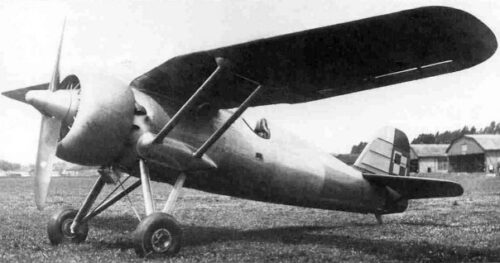
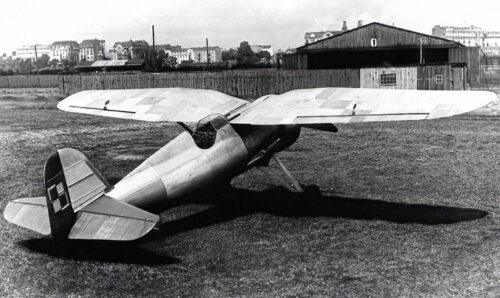
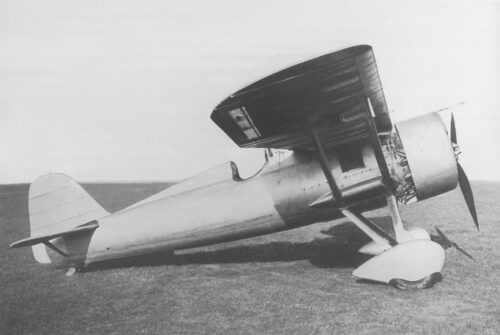
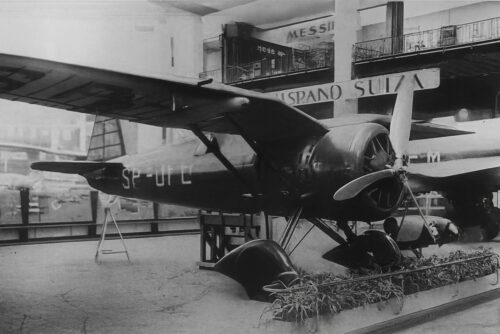
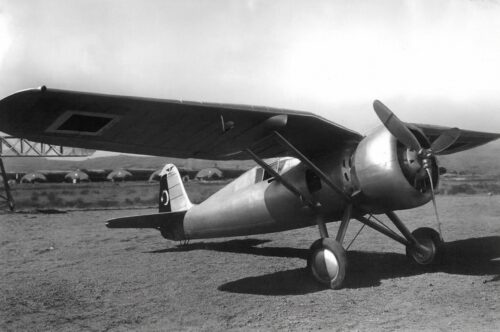
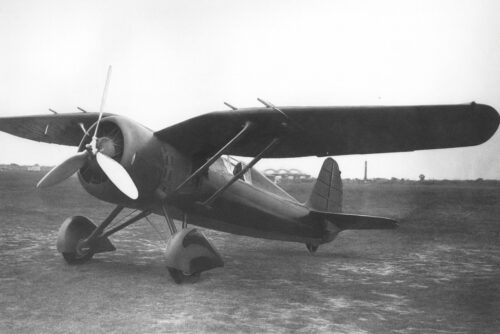
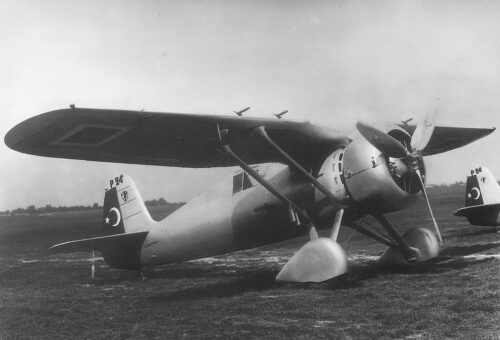
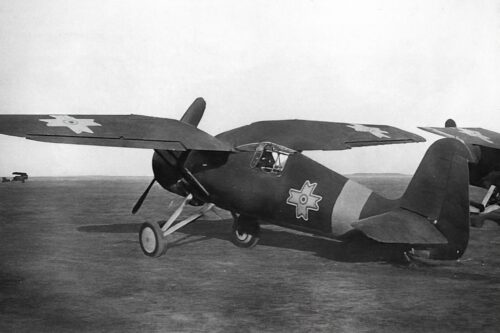
The PZL P.24, although one of Poland’s most successful export fighters of the late 1930s, saw its wartime service entirely in the hands of foreign operators.
Poland itself never fielded the type operationally.
Its combat history during World War II is therefore centred on Greece, Romania, Bulgaria, and a single isolated Polish example.
Poland
Poland did not adopt the P.24 because the Air Force prioritised the inline‑engine P.11 successor programme.
However, one P.24 prototype remained in the country in 1939.
During the September Campaign, it was flown in an ad‑hoc capacity and is credited with two aerial victories against the Luftwaffe on 14–15 September.
This was the only Polish combat use of the type.
Greece
The Primary Wartime Operator
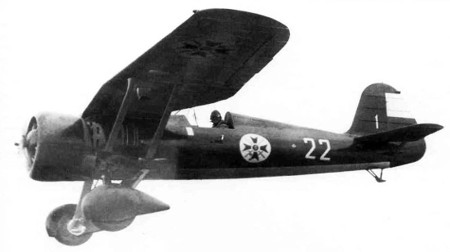
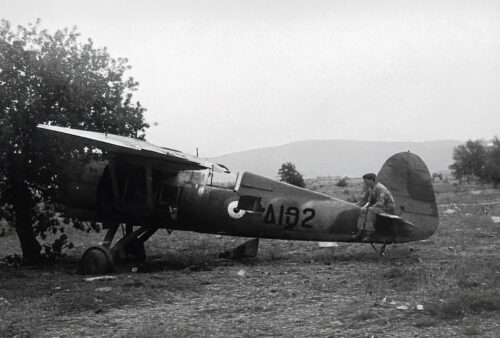
Greece was the largest and most active user of the P.24 during WWII.
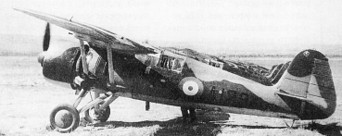
By October 1940, when Italy invaded, the Royal Hellenic Air Force operated 36 P.24s (mostly P.24F and P.24G variants).
Italian Campaign (1940–1941)
P.24s equipped 21, 22, and 23 Mira (fighter squadrons).
They flew defensive patrols, bomber escort, and ground‑attack missions.
On 1 November 1940, a P.24 from 21 Mira scored Greece’s first confirmed aerial victory of the war, downing an Italian aircraft over Ioannina.
Despite being technologically outdated compared to Italian monoplanes, the P.24s performed effectively thanks to a good climb rate, heavy armament (machine guns or 20 mm cannon), and skilled Greek pilots.
German Invasion (April 1941)
Against the Luftwaffe, the P.24 was outclassed.
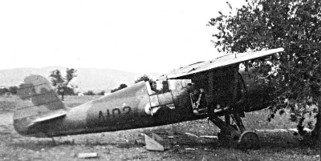
Many aircraft were destroyed on the ground during the opening attacks.
Remaining fighters flew brief defensive sorties but suffered heavy losses.
A few airframes were captured intact by German forces after the Greek capitulation.
Greece remains the only nation to use the P.24 in sustained, large‑scale combat.
Romania
Romania operated the P.24E, using it primarily for air defence duties.
Early War Period
Before 1941, P.24s served as frontline fighters guarding Romanian industrial regions and oil facilities.
Eastern Front (1941–1942)
After Romania joined Operation Barbarossa, P.24s were deployed in local defence roles rather than frontline escort or offensive missions.
They protected airfields, supply depots, and rear‑area infrastructure from Soviet air raids.
By 1942, the type was withdrawn from combat as more modern fighters (IAR‑80 and Bf 109E/F) became available.
Bulgaria
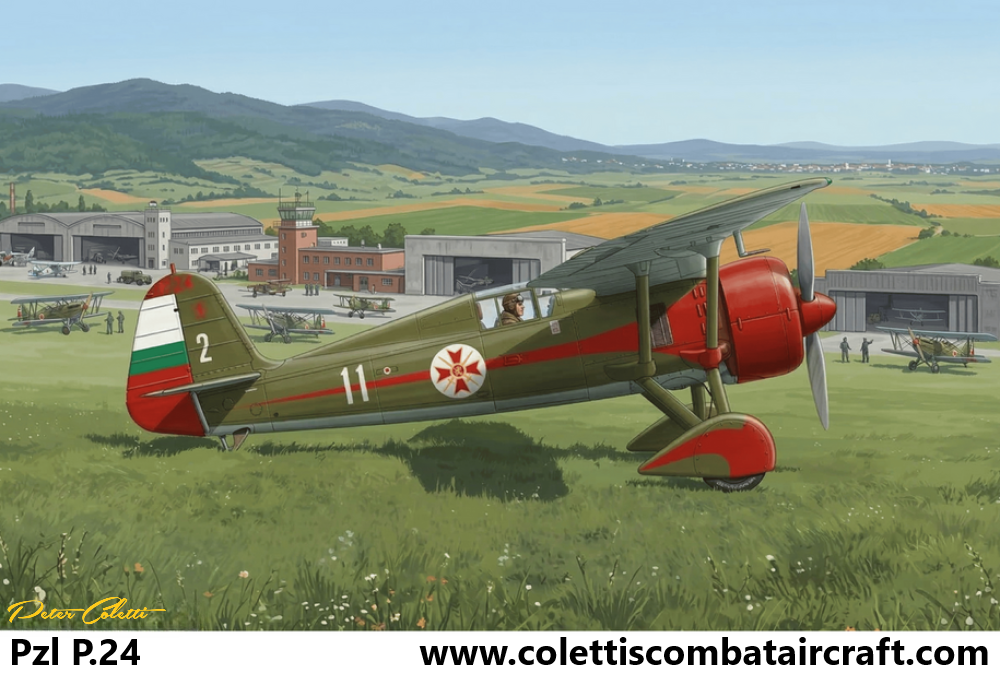
Bulgaria purchased the P.24B and P.24C variants before the war.
Wartime Service
Bulgarian P.24s were used mainly for homeland air defence.
They did not participate in offensive operations.
When Allied bombing of the Balkans intensified in 1943–1944, the P.24 was already obsolete and relegated to training and secondary duties.
No confirmed aerial victories are attributed to Bulgarian P.24s during WWII.
Turkey
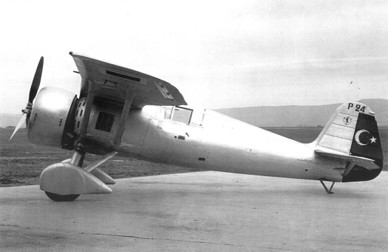
Turkey operated a large number of P.24s but remained neutral for most of the war.
Turkish P.24s saw no combat, serving only in patrol and training roles.
Summary
Most active combat use:
Greece (1940–41), including confirmed victories.
Secondary combat use:
Romania (defensive duties on the Eastern Front).
Limited/none:
Bulgaria (air defence only), Turkey (no combat), Poland (one aircraft, two kills).
The P.24’s WWII service was respectable but limited by its obsolescence by 1940.
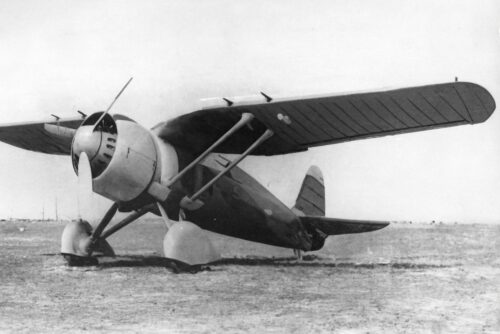
P.24/I
The first prototype, essentially a Gnome‑Rhône‑powered derivative of the P.11a, was fitted with the 760 hp Gnome‑Rhône 14Kds.
Armament consisted of two 7.92 mm Vickers wz. E machine guns mounted in the forward fuselage.
It served primarily as a structural and aerodynamic testbed.
P.24–II Super P.24
The second prototype, initially retaining the 14Kds engine before being re-engined with the 930 hp Gnome‑Rhône 14Kfs.
It introduced the full export-standard armament of two 20 mm Oerlikon F cannons and two 7.92 mm Vickers wz. E machine guns.
This aircraft set a world speed record for radial‑engined fighters and defined the configuration for early production models.
P.24–III Super P.24 bis
The third prototype, powered from the outset by the 14Kfs.
It carried the improved Oerlikon FFS cannon paired with two Vickers Wz. E machine guns.
This airframe represented the fully matured prototype standard and was widely demonstrated to foreign delegations.
P.24A
The first production configuration, closely following the P.24/III armament of two cannon and two machine guns.
Built for Turkey, it incorporated the enclosed cockpit and refined wing structure introduced on the pre‑production batch.
P.24B
A companion Turkish production model, armed with four machine guns in place of the mixed cannon-and-machine-gun battery.
Intended for customers preferring simpler logistics and lighter wing loading.
P.24C
A further Turkish variant featuring aerodynamic refinements and the four‑machine‑gun armament.
It was also cleared to carry two 50 kg bombs, giving it a limited fighter‑bomber capability.
P.24E
A Romanian‑specific model, licence‑built by Industria Aeronautică Română as the IAR P.24E.
It retained the mixed cannon‑and‑machine‑gun armament and incorporated local equipment, structural refinements, and compatibility with Romanian‑built Gnome‑Rhône engines.
P.24F
A more powerful development was fitted with the 970 hp Gnome‑Rhône 14N‑07.
Armament comprised two cannons and two machine guns, with provision for bombs.
P.24g
The final production standard, also powered by the 14N‑07.
Armed with four machine guns and capable of carrying bombs, it represented the last major evolution of the P.24 line before the outbreak of war halted further development.
The PZL P.24d, P.24h & P.24j remained unbuilt variants.