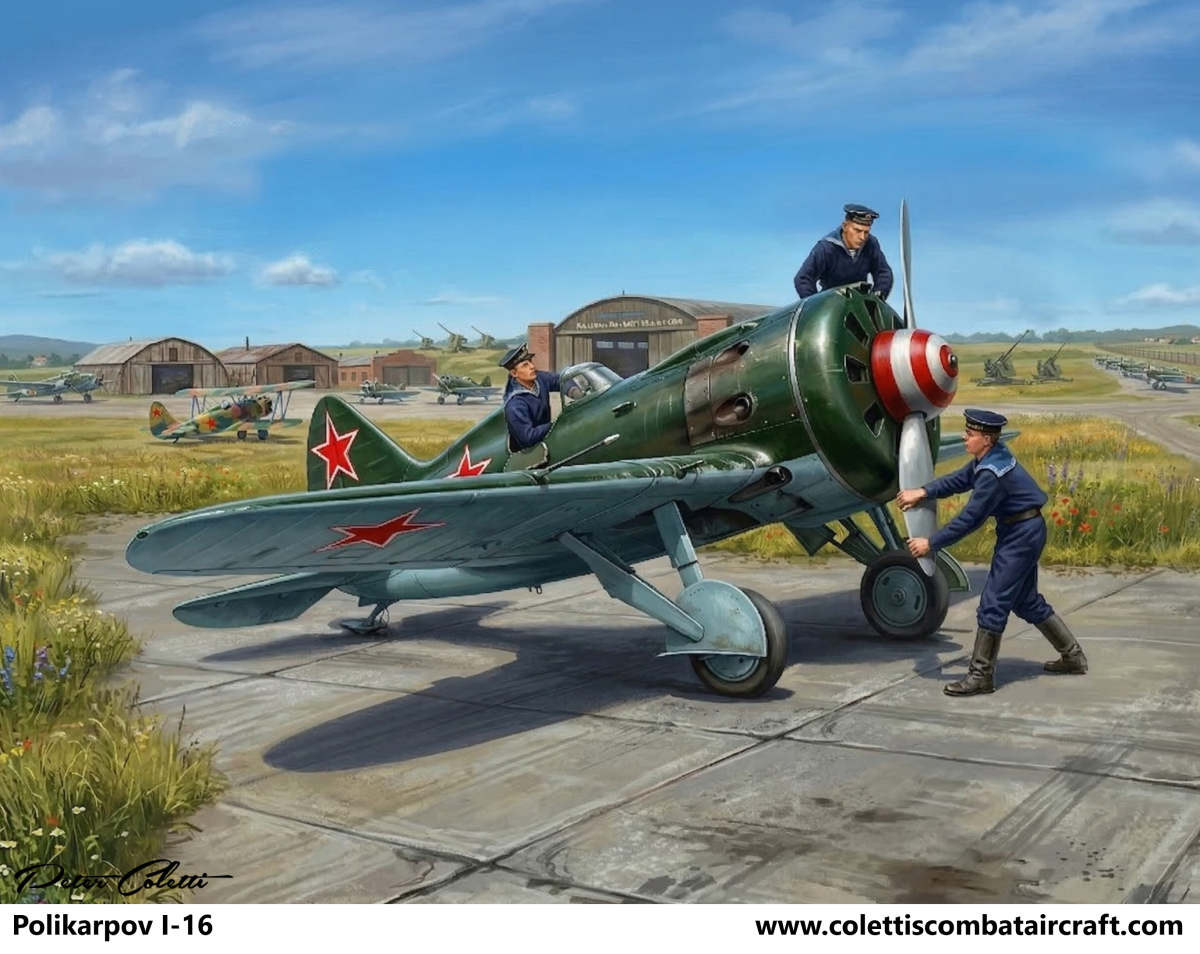
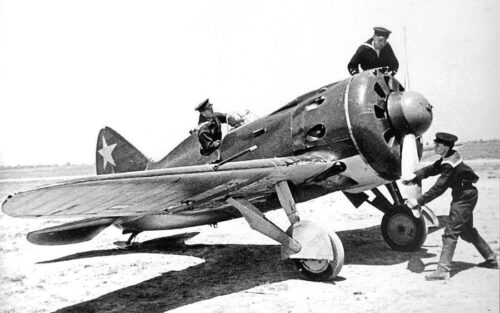
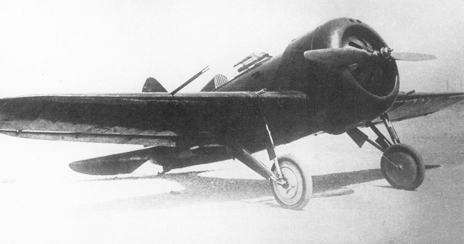
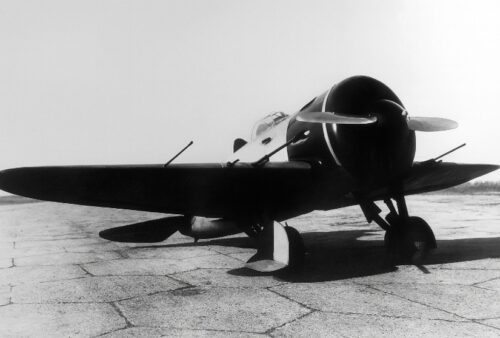
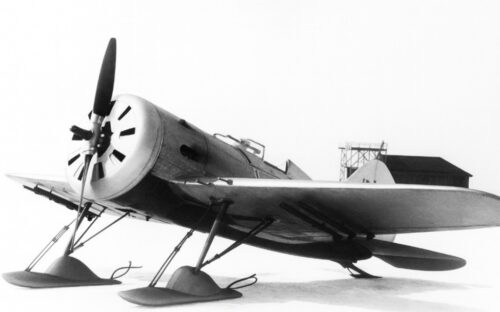
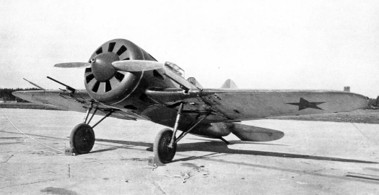
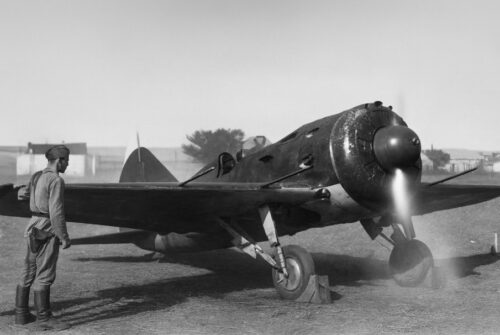
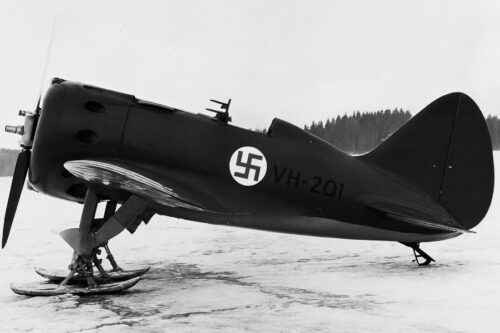
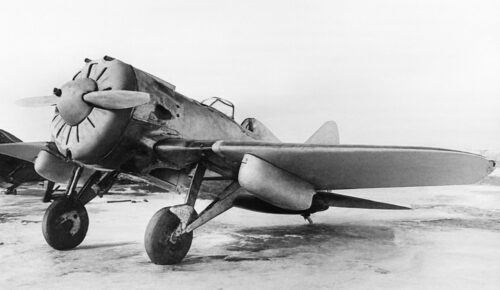
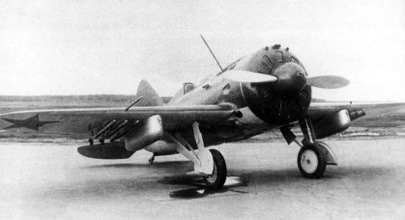
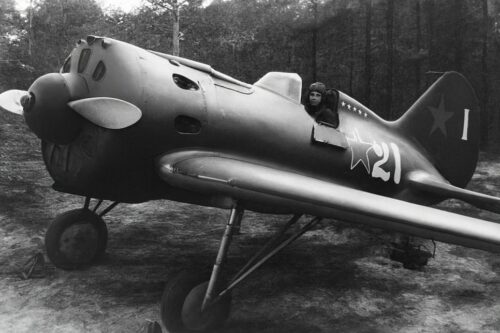
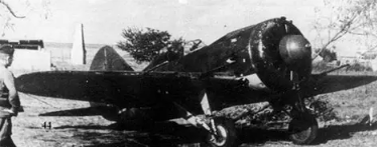
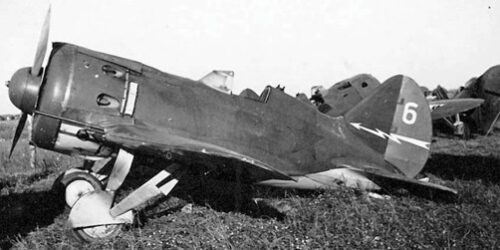
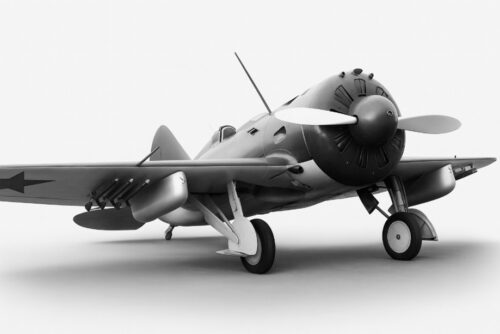
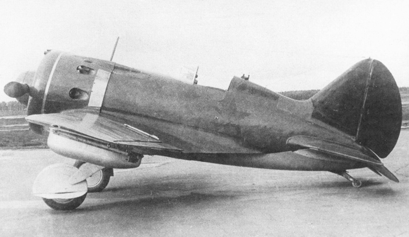
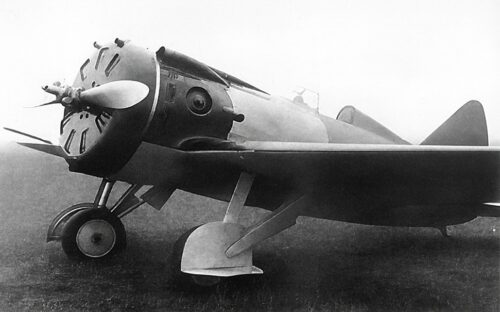
Although designed in the early 1930s, the Polikarpov I‑16 entered World War II with an unusually rich combat pedigree.
It had already fought in three major conflicts:
Spanish Civil War (1936–1939)
The I‑16’s first combat deployment occurred in late 1936, when the USSR delivered several hundred Type 5 and Type 6 fighters to the Spanish Republic.
In its early months, the I‑16 dominated Nationalist biplanes such as the Heinkel He 51 and the Arado Ar 68.
Its speed, roll rate, and monoplane configuration were revolutionary for the theatre.
By 1937, however, the arrival of the Messerschmitt Bf 109B/D eroded this advantage.
The I‑16 remained competitive in turning combat but was outclassed in climb, speed, and firepower.
By war’s end, 276 I‑16s had been delivered; 187 were lost to combat, accidents, or ground destruction.
Second Sino‑Japanese War (1937–1945)
Beginning in late 1937, the USSR supplied China with hundreds of I‑16s (Types 5, 10, and later cannon‑armed variants).
Soviet volunteer pilots initially flew many of the aircraft.
The I‑16 performed well against early Japanese types, but by 1939 it was increasingly outmatched by the Nakajima Ki‑27, which possessed superior climb and low‑speed manoeuvrability.
The aircraft nevertheless produced several Chinese aces and remained in service into the early 1940s.
Battles of Khalkhin Gol (Nomonhan Incident, 1939)
Roughly 500 I‑16s were committed to the fighting against Japan.
Losses were heavy—112 aircraft destroyed, 88 in air combat—primarily to the Ki‑27.
The campaign revealed the I‑16’s declining competitiveness and prompted Soviet efforts to up‑gun the type with a 20mm ShVAK cannon and RS‑82 rockets.
These pre-war experiences shaped the aircraft’s reputation: fast-rolling, rugged, and dangerous in the hands of experts, but increasingly obsolete as newer monoplane fighters appeared.
The I‑16 at the Outbreak of Operation Barbarossa (June 1941)
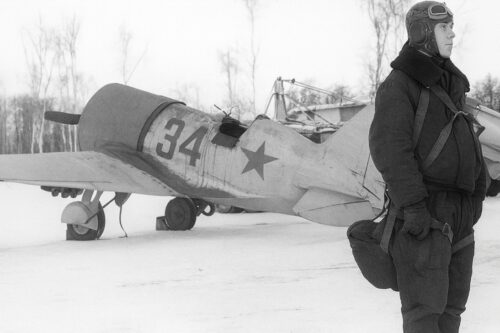
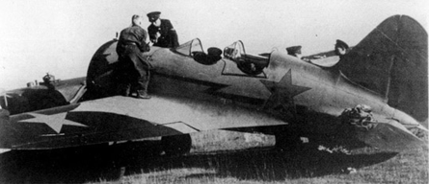
When Germany invaded the Soviet Union on 22 June 1941, the I‑16 was still the backbone of the VVS fighter force:
1,635 I‑16s were in frontline units out of 4,226 total VVS aircraft.
57 fighter regiments in the western districts operated the type.
The Western Special Military District alone fielded 361–424 I‑16s.
Catastrophic Early Losses
The Luftwaffe targeted Soviet airfields in the opening hours.
Within 48 hours, the I‑16 force had been reduced from 1,635 to 937 airworthy aircraft.
By 30 June, only 873 remained, with nearly 100 requiring repair.
Combat Performance Against the Bf 109
The I‑16 could still out‑turn the Bf 109E, and skilled Soviet pilots exploited this.
However, the German fighter held decisive advantages:
Higher speed (560–570km/h vs. 450–470km/h for most I-16 variants)
Superior climb and dive
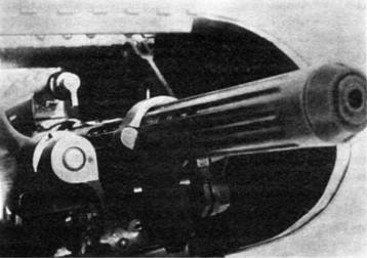
Heavier armament (20 mm MG FF cannon vs. 7.62 mm ShKAS)
Better high‑altitude performance
As a result, German pilots dictated the terms of engagement, attacking from above and disengaging at will.
Soviet pilots often resorted to Taran (aerial ramming) to counter the Luftwaffe’s superiority.
Operational Use During 1941–1942
Despite heavy losses, the I‑16 continued to serve widely through 1942.
Roles and Missions
Frontline fighter in the early months of Barbarossa
Ground‑attack platform, especially in cannon‑armed or rocket‑equipped variants
Point‑defence interceptors for key cities and industrial sites
Escort fighter for short‑range missions
Night harassment fighter in some units
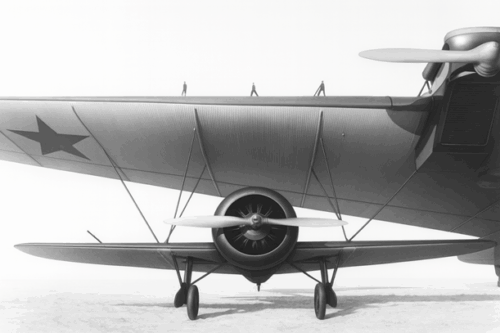
Zveno “Parasite Fighter” Operations
A small number of I‑16s were modified for the Zveno project, carried aloft by TB‑3 bombers and released as dive‑bombers carrying two 250 kg bombs—far more than they could lift on their own.
These missions were used operationally against Romanian targets in 1941.
Captured and Foreign Use
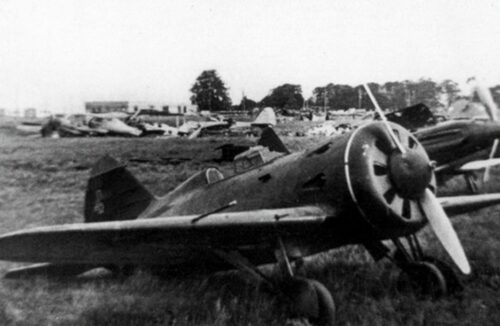
The Luftwaffe tested captured I‑16s at Rechlin.
Japan, Finland, and Romania also evaluated captured examples.
Finland restored several to flying condition for testing.
Decline and Withdrawal (1943–1945)
By 1943, the I‑16 was hopelessly outdated compared to the Bf 109F/G, Fw 190A, and even newer Soviet fighters such as the La‑5 and Yak‑1/7/9.
Nevertheless, hundreds of I‑16s were still in service in 1943.
They were gradually relegated to training, liaison, and secondary defence roles.
The type was officially retired from the Soviet Air Force in 1945.
Spain, which had built and captured many I‑16s, continued operating them until 1953.
Summary Assessment
The Polikarpov I‑16 entered World War II as a revolutionary design from the mid‑1930s but was technologically outpaced by 1941.
Its operational history reflects
Early dominance in Spain
Hard‑fought parity in China and Khalkhin Gol
Severe attrition in the opening phase of Barbarossa
Stubborn longevity, serving in large numbers until 1943 and in foreign service for years afterward
Despite its shortcomings, the I-16 remains one of the most iconic fighters of the interwar and early WWII period—a machine whose performance depended heavily on pilot skill, tactical employment, and the rapidly changing technological landscape of the late 1930s.
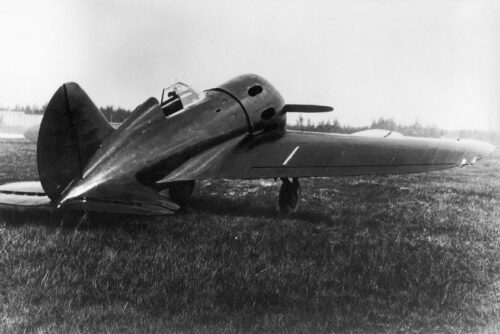
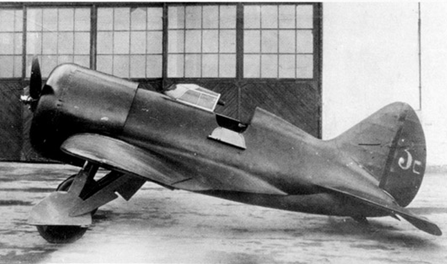
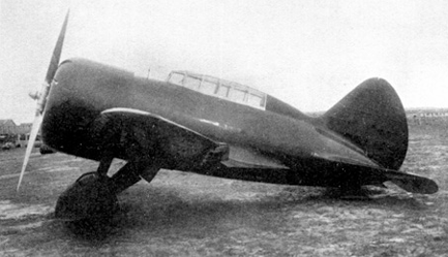
TsKB‑12
First prototype of the I‑16 series.
Engine
M‑22, 336 kW (450 hp)
Armament
Two unsynchronized wing‑mounted
ShKAS machine guns (900 rpg)
TsKB‑12P (I‑16P)
Cannon‑armed prototype.
Armament
Two wing‑mounted
ShVAK cannon (150 rpg)
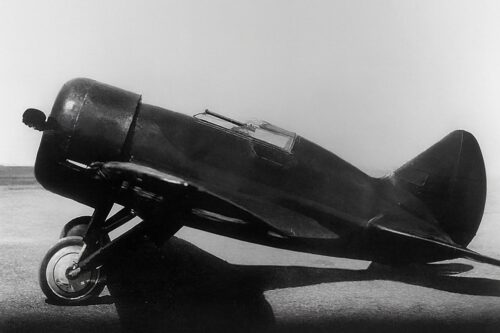
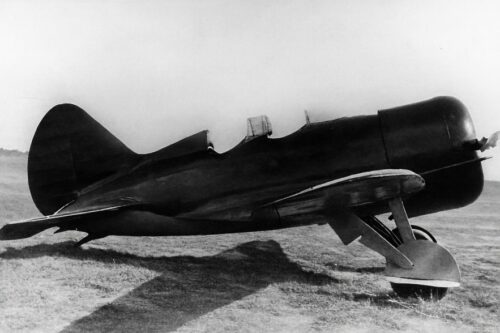
TsKB‑12bis
Second prototype.
Engine
Wright SGR‑1820‑F‑3 Cyclone,
533 kW (715 hp)
TsKB‑18
Ground‑attack development of the TsKB‑12.
Engine
M‑22
Features
Armoured cockpit
Armament
Four ShKAS or PV‑1 machine guns;
up to 100 kg (220 lb) of bombs
Two additional Type 5 airframes were experimentally fitted with six ShKAS, four of which could depress 20° for strafing.
TsKB‑29 (SPB)
Dive‑bomber prototype for the Zveno project.
Engine
Wright Cyclone
Features
Pneumatic landing gear and flaps
Armament
Two ShKAS machine guns
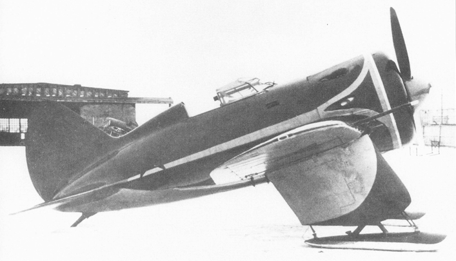
I‑16 Type 1
Pre‑production series.
Engine
M‑22
358 kW (480 hp)
I‑16 Type 4
First full production model.
Engine
M‑22
I‑16 Type 5
Improved Type 4 with major aerodynamic refinements.
Engine
Shvetsov M‑25, 522 kW (700 hp)
Notes
Two prototypes were also tested with the M‑62.
Status
Mass‑produced
I‑16 Type 6
Lightened version of the Type 5.
Engine
Shvetsov M‑25B, 545 kW (730 hp)
Weight
Reduced to 1,383 kg
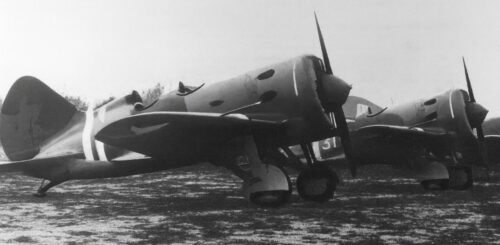
I‑16 Type 10
Heavily armed and widely produced variant.
Armament
Four ShKAS (two synchronized in the fuselage, two in the wings)