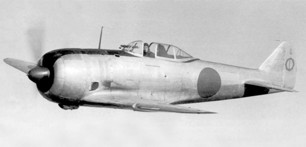
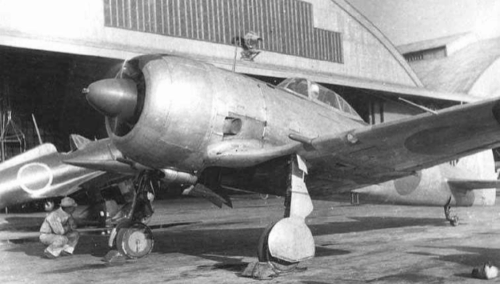
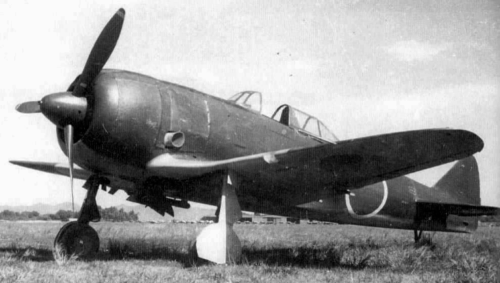
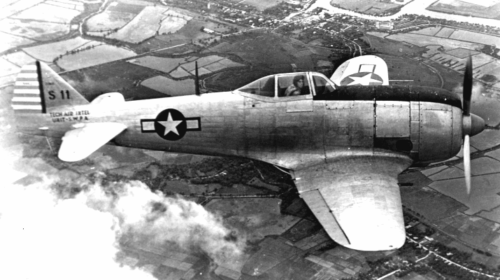
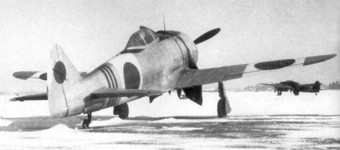
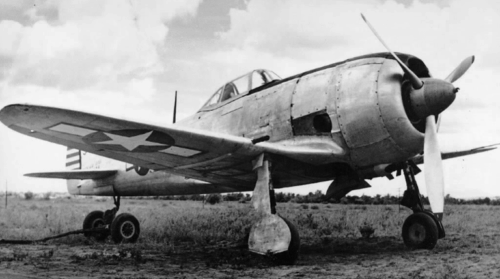
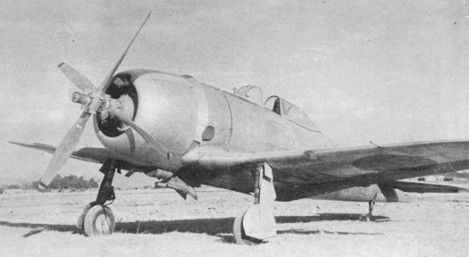
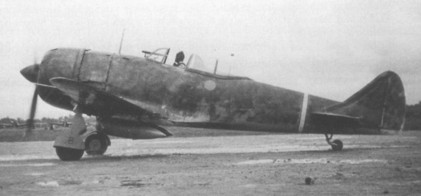
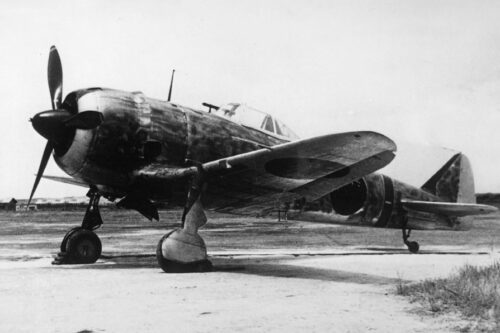
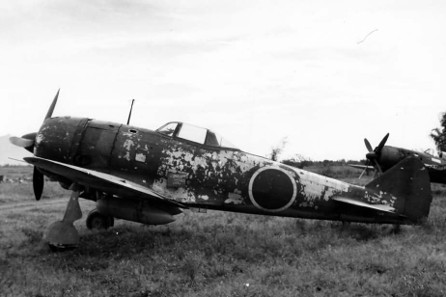
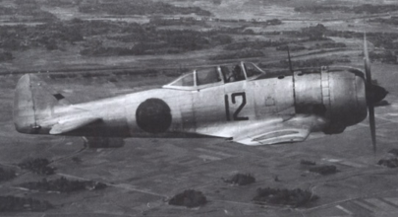
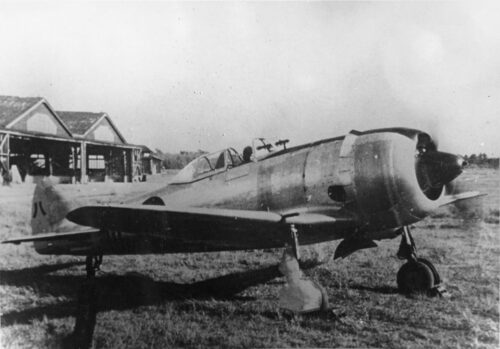
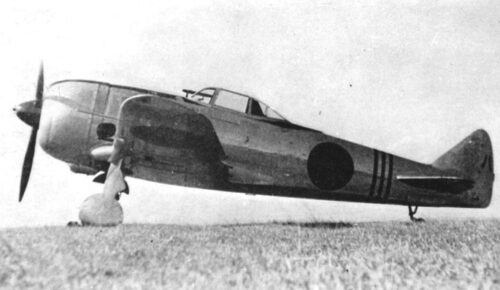
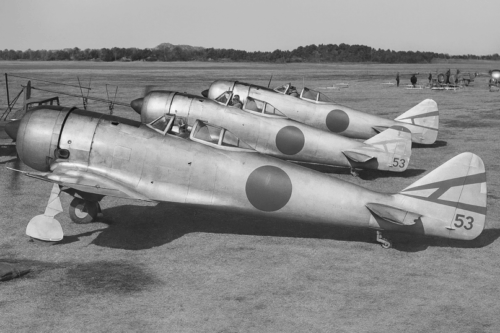
Nakajima Ki-44

Nakajima Ki‑44 Shōki

Strategic Background

By 1938–39, the Imperial Japanese Army Air Force (IJAAF) recognised that its doctrine of ultra‑light, highly manoeuvrable fighters (Ki‑27, early Ki‑43) was becoming obsolete.

Encounters with Soviet aircraft at Khalkhin Gol and intelligence on Western bomber development pushed the Army to demand a fast‑climbing interceptor capable of destroying modern, well‑built aircraft.

Nakajima’s answer was the Ki‑44 Shōki, the first IJAAF fighter to prioritise the following:

High speed, high climb rate, heavy armament, energy fighting.

This made it a radical departure from Japanese design philosophy.

Early Service (1941–1942)

Pre‑Production Combat Trials

Before formal acceptance, the IJAAF deployed prototype and pre‑production Ki‑44s to the 47th Independent Chutai in Indochina in late 1941.

This was an unusual step, reflecting the urgency of evaluating the new interceptor in real combat.

Operational Use

Point‑defence of Saigon and forward bases

Interception of Allied reconnaissance aircraft

Escort missions during the Malaya and Burma offensives

Pilots initially disliked the high wing loading and unforgiving landing characteristics, but the aircraft’s speed and climb rate were immediately appreciated.

Expansion of Combat Use (1942–1943)

China Theatre

The Ki‑44 saw extensive early service in China with units such as the following:
9th Sentai, 22nd Sentai, 23rd Sentai, 64th Sentai.

Roles

Interception of Chinese Air Force and AVG aircraft

Escort of Army bombers

Airfield defence around Hankow, Nanking, and Shanghai

The Ki‑44 proved effective against P‑40s and Soviet‑supplied fighters due to its superior climb and dive performance.

Burma & South-east Asia

In Burma, Ki‑44s supported operations around:

Rangoon, Mandalay & Lashio.

They were used primarily as interceptors and bomber destroyers, countering RAF Blenheims, Hurricanes, and later B‑25s.

Defence of the Dutch East Indies

The 87th Sentai used the Ki‑44 to defend the vital oil installations at Palembang in Sumatra.

Here the Shōki’s rapid scramble capability made it one of the most valuable IJAAF fighters in the region.

The Ki‑44‑II and Mid‑War Service (1943–1944)

The improved Ki‑44‑II series became the backbone of IJAAF interceptor forces.

Key Improvements

More powerful Ha‑109 engine

Strengthened airframe

Increased fuel capacity

Options for heavier armament

Operational Deployment

The Ki‑44‑II aircraft served in the following:

China (continued heavy use), Burma, Thailand, Sumatra, The Philippines & Korea

By 1943, the Ki‑44 was one of the few Japanese fighters capable of challenging Allied medium bombers and late‑model P‑40s, P‑38s, and P‑47s.

Home Defence and the B‑29 Campaign (1944–1945)

Japan’s Primary High‑Altitude Interceptor

When B‑29 raids began from China in mid‑1944, the Ki‑44 was the only IJAAF fighter with the climb rate to intercept them.

Despite struggling above 30,000 ft, it remained the most effective Army interceptor until the Ki‑84 became available in numbers.

Units involved included:

47th Sentai, 70th Sentai, 85th Sentai, 104th Sentai, 246th Sentai,

These units defended Tokyo, Nagoya, Osaka, and other industrial centres.

Heavy Armament Experiments

To increase lethality against B‑29s, several Ki‑44‑II Otsu aircraft were fitted with the following:

40 mm Ho‑301 caseless‑ammunition cannons

37 mm Ho‑203 cannons (limited trials)

The Ho‑301’s extremely short effective range forced pilots to close to near-ramming distance.

Some pilots, after expending ammunition, did attempt ramming attacks, though these were not formal kamikaze missions.

Late‑War Attrition

By early 1945:

Fuel shortages, pilot losses, wear on airframes, and increasingly superior Allied fighters.

…all reduced the Ki‑44’s effectiveness.

Still, it remained in frontline service until the end of the war, especially in the Tokyo region.

Post‑War Service (1945–1950s)

China

Large numbers of Ki‑44s were captured in China and Manchuria.

PLAAF (Communist)

Operated ex‑IJAAF Ki‑44s during the Chinese Civil War.

Used them into the early 1950s

Employed Japanese volunteer pilots in some cases

ROCAF (Nationalist)

Operated Ki‑44s left behind by retreating Japanese units

Used them in combat against Communist forces

The Ki‑44 was one of the few Japanese fighters to see significant post‑war combat.

Overall Assessment

The Ki‑44 was:

Japan’s first true interceptor

One of the few IJAAF fighters capable of challenging B‑29s

Widely deployed across Asia

A significant post‑war combat aircraft in China

Pilots respected its power but feared its unforgiving handling.

Strategically, it filled a critical gap at a time when Japan desperately needed high‑performance interceptors.

Ki‑44 (Prototype & Pre‑Production)

Limited combat evaluation in Indochina

Mixed armament (7.7 mm + 12.7 mm)

Used only by the 47th Independent Chutai

Ki‑44‑I

Early combat in China and Burma

Lightest and most agile version

Used for bomber interception and escort

Ki‑44‑II Ko

First major production model

Widespread deployment across Asia

Standard interceptor of 1942–43

Ki‑44‑II Otsu

Optional 40 mm HO-301 cannons

Used by special high‑altitude interception flights

Key role in B‑29 defence

Ki‑44‑II Hei

Four 12.7 mm guns

Most common late‑war variant

Backbone of home-defence Sentai

Ki‑44‑III (Prototype)

Intended for 20 mm or 37 mm armament

Improved aerodynamics

Never entered service

Specifications (Ki-44-II Otsu)

Crew

One

Length

8.84 m (29 ft 0 in)

Wingspan

9.45 m (31 ft 0 in)

Height

3.25 m (10 ft 8 in)

Wing area

15 m² (160 sq ft)

Airfoil

Root

NN-2 mod. (14.8%)

Tip

NN-2 mod. (9%)

Empty weight

2,106 kg (4,643 lb)

Gross weight

2,764 kg (6,094 lb)

Max take-off weight

2,993 kg (6,598 lb)

Powerplant

1 × Nakajima Ha-109

(Army Type 2, 1,450 hp Air-Cooled Radial / unified – Nakajima Ha-34)

14-cylinder air-cooled radial piston engine,

1,133 kW (1,519 hp) for take-off

1,070 kW (1,440 hp) at 2,150 m (7,050 ft)

980 kW (1,320 hp) at 5,250 m (17,220 ft)

Propellers

3-bladed constant-speed metal propeller

Performance

Maximum speed

605 km/h (376 mph, 327 kn) at 5,200 m (17,100 ft)

Cruise speed

400 km/h (250 mph, 220 kn) at 4,000 m (13,000 ft)

Stall speed

150 km/h (93 mph, 81 kn)

Range

1,200 km (750 mi, 650 nmi)

Ferry range

1,600 km (990 mi, 860 nmi)

Service ceiling

11,200 m (36,700 ft)

Time to altitude

5,000 m (16,000 ft) in 4 minutes 17 seconds

Wing loading

184 kg/m² (38 lb/sq ft)

Power/mass

0.38 kW/kg (0.23 hp/lb)

Armament

Guns

2x fixed, forward-firing,

synchronised 12.7 mm (0.500 in) Ho-103 machine guns

+ 2x wing-mounted 12.7 mm (0.500 in) HO-103 machine guns

Optional provision for two

40 mm (1.575 in) Ho-301 cannon in the wings,

firing caseless ammunition.

Hardpoints

2 with a capacity of 2x 130 L (34 US gal; 29 imp gal) drop tanks.


Share on facebook