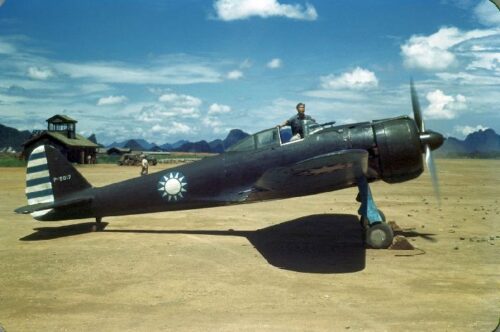
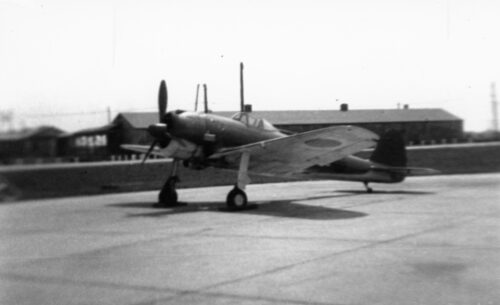
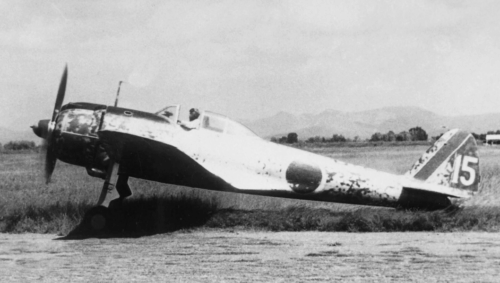
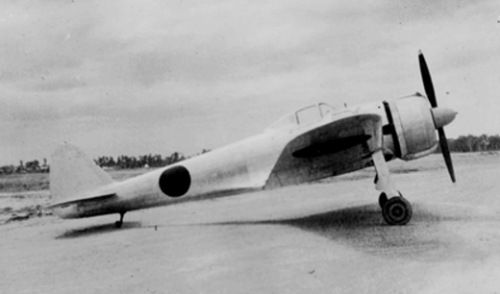
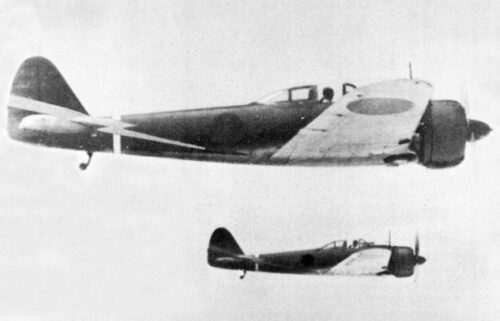
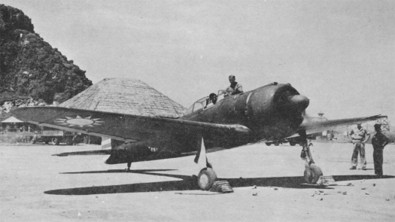
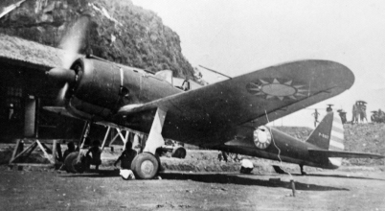
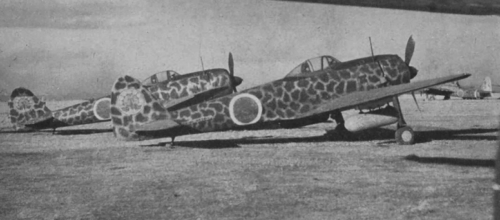
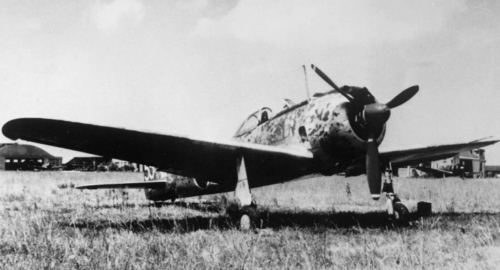
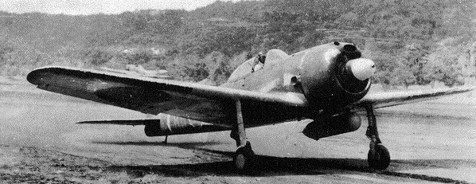
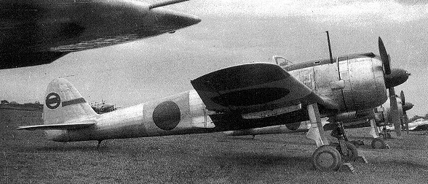
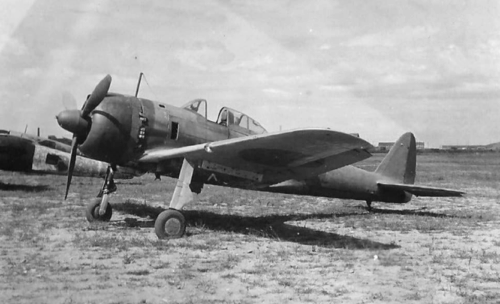
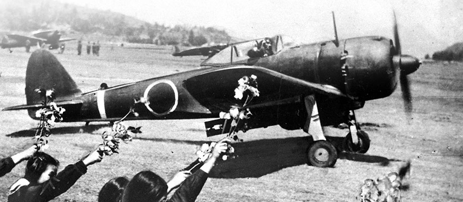
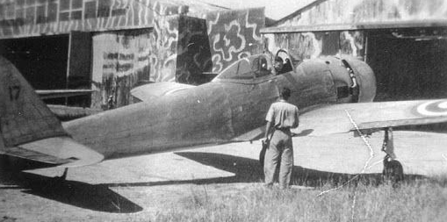
The Ki‑43 entered frontline service in October 1941, just weeks before the outbreak of the Pacific War.
Designed as the successor to the Ki‑27, it emphasised extreme manoeuvrability, light weight, and long range—traits that initially gave Japanese pilots a decisive edge.
Early War Dominance (1941–1942)
China & South-east Asia
The Ki‑43 first saw action in China, where its agility and climb rate allowed Japanese Army pilots to dominate early engagements.
When Japan launched its offensives into South-east Asia, the Ki‑43 became the spearhead fighter of the IJA.
Malaya, Burma, and the Dutch East Indies
During the rapid Japanese advances of late 1941–early 1942, Ki‑43 units achieved air superiority over British, Dutch, and American forces.
Allied pilots frequently mistook it for the Navy’s A6M Zero, calling it the “Army Zero”.
Its combination of:
superb turning ability,
excellent range,
and experienced Japanese pilots
made it a formidable opponent during this phase.
Peak Combat Effectiveness (1942–1943)
By late 1942, the Ki‑43 had become the most successful Japanese Army fighter in terms of total enemy aircraft shot down, particularly in the South-west Pacific.
Its dominance was especially noted in New Guinea and Burma.
New Guinea Campaign
Ki‑43s operated from forward, often primitive airstrips, supporting Japanese ground forces and intercepting Allied bombers and fighters.
Their light construction allowed them to operate where heavier Allied fighters could not.
Burma Front
The aircraft’s range and manoeuvrability made it ideal for the long, winding air battles over Burma.
It remained the mainstay of Japanese Army fighter units throughout 1943.
Decline Against Modern Allied Fighters (1943–1944)
As the war progressed, the Ki‑43’s weaknesses became increasingly fatal:
light armament (initially two 7.7 mm guns),
lack of armour,
no self‑sealing fuel tanks,
limited speed and dive performance.
Against newer Allied fighters—the P‑38 Lightning, P‑40 Warhawk, F6F Hellcat, and P‑47 Thunderbolt—the Ki‑43 was outclassed in speed, firepower, and survivability.
Despite upgrades (notably the Ki‑43‑II with a more powerful engine and 12.7 mm guns), the aircraft could not match the performance of its opponents.
Late War Service (1944–1945)
Defence of the Philippines & Home Islands
Ki‑43 units fought desperately in the Philippines, suffering heavy losses.
By 1945, the type was increasingly relegated to the following:
point‑Defence interception,ground‑attack missions,and ultimately kamikaze operations, due to its obsolescence and the scarcity of more modern fighters.
Widespread Use Despite Obsolescence
Even as late as 1945, the Ki‑43 remained in frontline service simply because it was available in huge numbers—nearly 6,000 built, second only to the A6M Zero among Japanese fighters.
Post‑War Use
After Japan’s surrender, surviving Ki‑43s were used by:
China (until 1952), Thailand & Indonesia.
These were often in local conflicts and early post‑war air forces.
Summary
The Nakajima Ki‑43 Hayabusa was Japan’s most numerous Army fighter,highly effective early in the war,increasingly obsolete by 1944, yet it fought to the very end due to its availability and the skill of its pilots.
Its operational history mirrors the trajectory of Japan’s air war: early dominance through agility and pilot skill, followed by rapid decline as Allied technology and tactics overtook it.
Ki‑43 (Prototype Series)
Thirteen prototypes and pre‑production aircraft were built between 1938 and 1940.
These progressively introduced weight‑reduction measures, revised tail surfaces, a new canopy, and—critically—the “butterfly” maneuvering flaps that defined the Hayabusa’s handling.
Ki‑43‑I Series (Army Type 1 Fighter Model 1)
Ki‑43‑Ia (kō)
Initial production model armed with 2 × 7.7 mm Type 89 machine guns.
This configuration was the most common at the outbreak of the Pacific War.
Ki‑43‑Ib (otsu)
Mixed-calibre armament: 1 × 12.7 mm Ho‑103 and 1 × 7.7 mm Type 89.
Introduced to improve lethality against early Allied fighters.
Ki‑43‑Ic (hei)
Final Ki‑43‑I armament standard with 2 × 12.7 mm Ho‑103 machine guns and provision for 2 × 30 kg bombs under the wings.
All earlier Ia and Ib aircraft were progressively upgraded to this standard as Ho‑103 production increased.
Ki‑43‑II Series (Army Type 1 Fighter Model 2)
Ki‑43‑II (Preproduction)
Five prototypes introducing the Nakajima Ha‑115 engine with a two‑stage supercharger, strengthened and slightly shortened wings, self‑sealing fuel tanks, 13 mm pilot armour, a reflector sight, a taller canopy, and a three‑bladed constant‑speed propeller.
Ki‑43‑IIa (kō)
First full production model incorporating all prototype improvements.
Rated to carry up to 500 kg (1,100 lb) of bombs.
Later production adopted a honeycomb oil cooler under the nose and an improved landing light.
Ki‑43‑IIb (otsu)
Refined production standard.
Fuel‑cooling system fitted on some aircraft.
Both exhaust pipes angled rearwards to provide marginal thrust augmentation.
Universal drop-tank racks moved outboard of the landing gear on later batches
(earlier aircraft had centreline or inboard mounts).
Ki‑43‑II‑Kai (kai)
Late‑production development.
Drop‑tank stations strengthened to carry bombs.
Tested with ski landing gear for winter operations in Manchuria.
Fitted with ejector exhausts (approx. +30 hp) and an additional 540‑L fuselage fuel tank on some examples.
Ki‑43‑III Series (Army Type 1 Fighter Model 3)
Ki‑43‑III (Prototypes)
Powered by the Ha‑115‑II engine (920 kW / 1,230 hp).
Revised exhaust layout.
Water‑methanol injection added to improve high‑altitude performance.
Ki‑43‑IIIa (kō)
The main production version of the III‑series, built exclusively by Tachikawa.
Some aircraft are equipped with skis for snow operations.
Represented the final operational Hayabusa variant.
B.Kh.13
Royal Thai Air Force designation for the Ki‑43‑II.
Specifications(Ki-43-IIb)
Crew
One
Length
8.92 m (29 ft 3 in)
Wingspan
10.84 m (35 ft 7 in)
Height
3.27 m (10 ft 9 in)
Wing area
21.4 m² (230 sq ft)
Airfoil
Root
NN-12 mod. (18%)
Tip
NN-12 mod. (8%)
Empty weight
1,910 kg (4,211 lb)
Gross weight
2,590 kg (5,710 lb)
Max takeoff weight
2,925 kg (6,449 lb)
Fuel capacity
550 L (120 imp gal)
plus
2 × 200 L (53 US gal; 44 imp gal) drop tanks
Powerplant
1 × Nakajima Ha-115,
14-cylinder air-cooled radial piston engine,
970 kW (1,300 hp) for take-off
890 kW (1,200 hp) at 3,000 m (9,800 ft)
820 kW (1,100 hp) at 6,200 m (20,300 ft)
Propellers
3-bladed metal constant-speed propeller,
2.79 m (9 ft 2 in) diameter
Performance
Maximum speed
530 km/h (330 mph, 290 kn) at 4,000 m (13,000 ft)
Cruise speed
440 km/h (270 mph, 240 kn)
Range
1,760 km (1,090 mi, 950 nmi)
Ferry range
3,200 km (2,000 mi, 1,700 nmi)
Service ceiling
11,200 m (36,700 ft)
Time to altitude
5,000 m (16,000 ft) in 5 minutes, 49 seconds
Wing loading
121 kg/m² (25 lb/sq ft)
Power/mass
0.33 kW/kg (0.20 hp/lb)
Armament
Guns
2 × 12.7 mm (0.500 in) HO-103s in the forward fuselage.