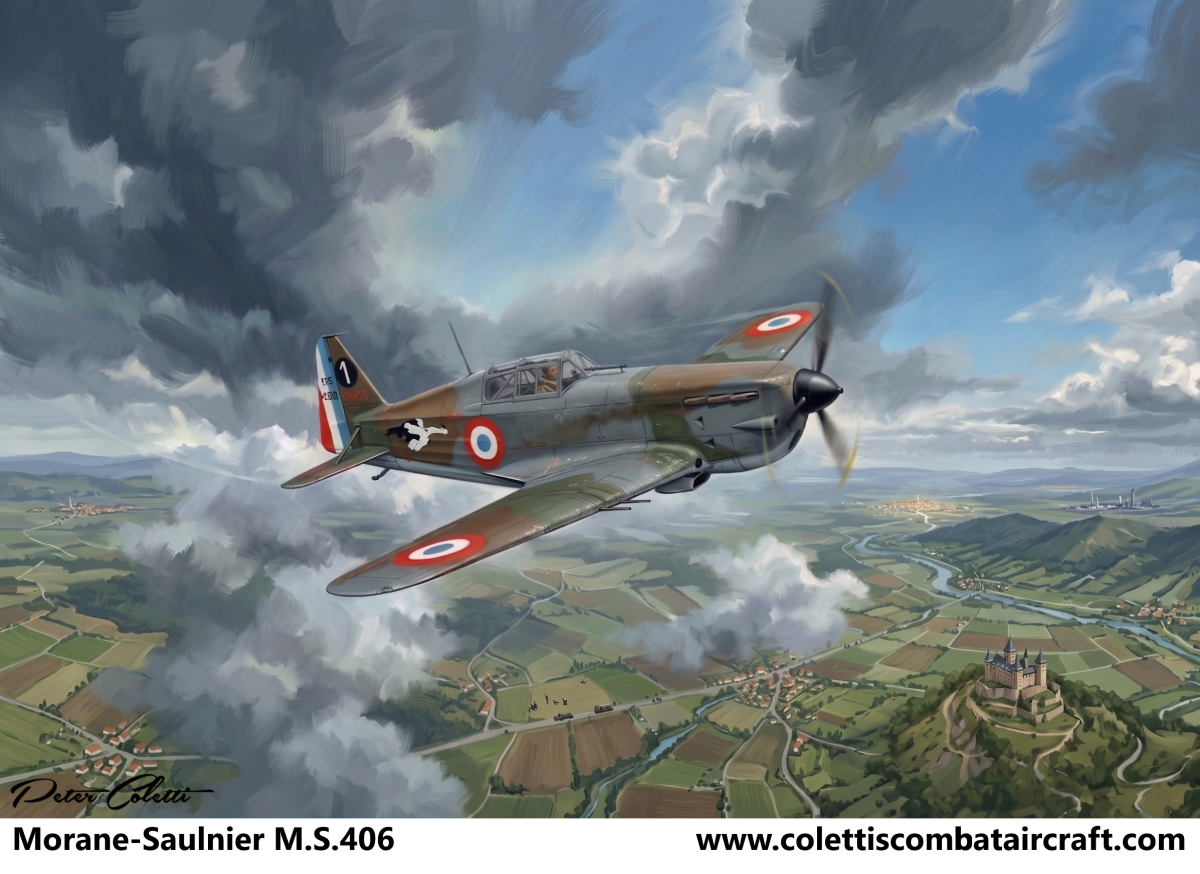
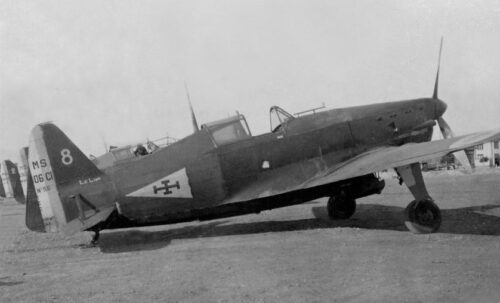
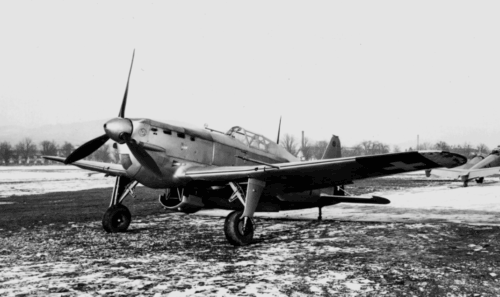
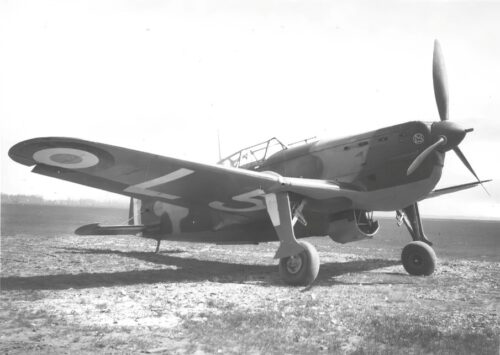
In May 1938 the 2nd Escadrille of the 7th Groupe de Chasse at Reims carried out operational trials with a small batch of pre-production M.S. 406 fighters.
Pilots generally praised the aircraft’s handling despite several accidents.
Modifications introduced by mid‑1939 included a strengthened undercarriage and a reinforced cabin hood.
Complaints about the forward fuselage exterior covering and engine mountings were recorded but not formally corrected.
Production examples followed quickly after the trials.
Expansion and peacetime deployment
From December 1938 into January 1939, frontline units began replacing obsolete Loire 46 fighters with the M.S.406, and other units adopted the type in rapid succession.
By 14 July 1939, enough aircraft had been delivered for an MS.406 formation to participate in the Paris fly‑past.
At its peak the type equipped 16 Groupes de Chasse and three Escadrilles, serving in metropolitan France and overseas territories; twelve of those groups later saw combat against the Luftwaffe.
M.S. 406
Mobilisation and the Phoney War
On 23 August 1939, all French Air Force units were mobilised as tensions rose over the invasion of Poland.
M.S.406 units were deployed along the German border from Luxembourg to Switzerland to provide air support for French ground forces.
During the Phoney War the type’s primary tasks were air defence, interception of enemy reconnaissance and probing flights, and escorting friendly reconnaissance aircraft.
M.S.406s flew roughly half of the 10,119 fighter sorties recorded over the army zones on the border.
Skirmishes with Luftwaffe fighters, including early Messerschmitt Bf 109s, produced mixed results: M.S.406 units claimed a number of victories but also sustained losses in combat and from other causes.
Battle of France and operational performance
Efforts to replace the M.S.406 with a more capable fighter were not completed before the German invasion of May 1940.
On the eve of the offensive, ten Groupes de Chasse still operated the M.S.406, and many defensive units relied almost entirely on the M.S.406 or the Bloch MB.152.
During the Battle of France, the type suffered heavy attrition; large numbers were lost in action, and many more were written off for non‑combat reasons as rapid German advances forced retreats and base abandonments.
Ground crews frequently destroyed aircraft to prevent capture.
Although the M.S.406 was highly manoeuvrable and could absorb considerable damage, it was hampered by shortcomings that affected combat effectiveness, including limited armour, unreliable guns and radios, high engine wear, and structural and maintenance issues.
Aftermath and later use
Following the armistice, most M.S.406s were withdrawn from frontline service.
Only one Vichy unit, GC 1/7, continued to operate the type.
The aircraft’s role thereafter was largely secondary, with many airframes used for training in mainland France.
A small number of Syrian M.S.406s escaped to Egypt and served briefly with the Royal Air Force and Free French forces until they became unserviceable.
M.S.406s remaining under Vichy control saw action in Syria and Madagascar, where they suffered heavy losses against Allied aircraft.
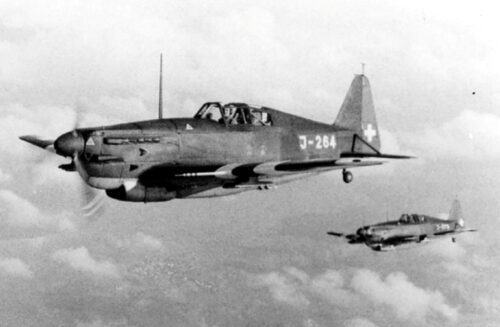
Germany captured large numbers of M.S.406 and later M.S.410 fighters; the Luftwaffe used some for training, and others were sold to third parties.
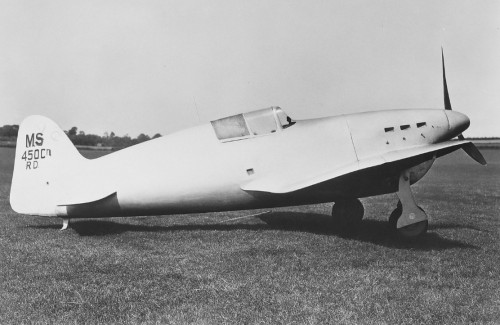
M.S. 450 C.1, No. 1
In Finnish Service
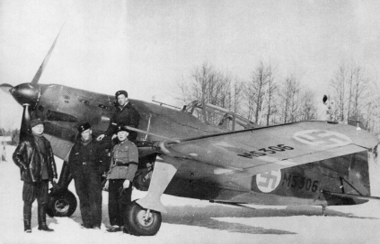
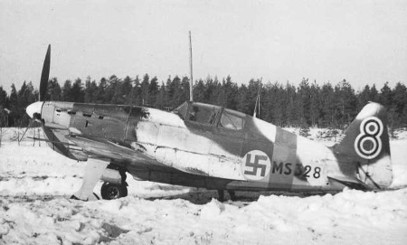
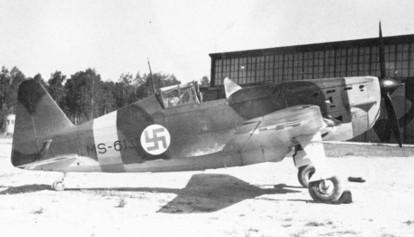
Finland operated the Morane-Saulnier MS.406 extensively alongside its French service career.
The first batch of 30 aircraft arrived in February 1940 and was assigned to LeLv 28 under the command of Major Jusu.
These fighters were redesignated MS‑301 through MS‑330 in Finnish service.
The unit committed its Moranes to combat during the Winter War, flying 259 operational sorties and claiming 16 Soviet aircraft destroyed.
Modified variants of the type continued to serve during the Continuation War, where LeLv 28 achieved a total of 118 aerial victories between November 1939 and 4 September 1944.
The unit lost 15 aircraft during this period, while overall Finnish claims in the M.S.406 reached 121 victories.
The highest‑scoring Morane pilot in any theatre was Warrant Officer Urho Lehtovaara, who achieved 15 of his 44.5 confirmed victories while flying the type.
Finnish personnel coined several nicknames for the aircraft: ‘Murjaani’, a playful distortion of ‘Morane’; and ‘Mätimaha’ and ‘Riippuvatsa’, both referencing the fighter’s distinctive bulged lower fuselage.
M.S. 405
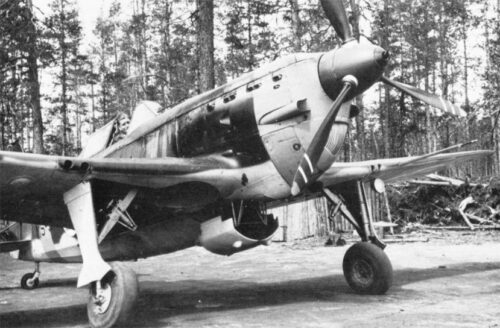
The M.S.405 was a low‑wing monoplane of mixed construction, built around a duralumin‑tube fuselage covered with ‘Plymax’, a bonded metal‑and‑wood skin consisting of a thin duralumin sheet laminated to thicker plywood.
The tail unit remained fabric‑covered wood.
It was Morane‑Saulnier’s first low‑wing monoplane, the first to feature an enclosed cockpit, and the company’s first design with retractable landing gear.
The initial prototype, M.S.405‑01, was powered by 640 kW (860 hp).
The Hispano‑Suiza 12Ygrs engine driving a two‑pitch Chauvière propeller.
It made its maiden flight on 8 August 1935.
The second prototype, M.S.405‑02, flew on 20 January 1937, equipped with the improved 670 kW (900 hp) Hispano‑Suiza 12Ycrs engine.
With this power plant, the aircraft achieved a top speed of 443 km/h (275 mph; 239 kn).
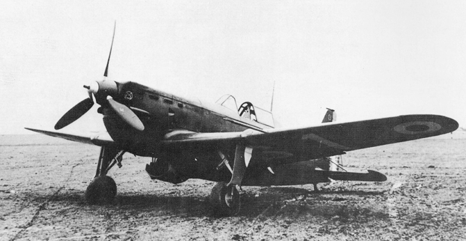
M.S. 406
The M.S.406 designation marked the transition from the earlier M.S.405 prototypes to a refined production standard.
Key changes included a redesigned, weight‑saving wing structure and the adoption of a retractable radiator, both of which improved overall performance.
Powered by the 641.3 kW (860 hp) Hispano‑Suiza 12Y‑31, the M.S.406, gained a modest but measurable speed advantage over the M.S.405, reaching 489 km/h (304 mph; 264 knots) in level flight.
In testing, it could safely attain 730 km/h (454 mph; 394 kn) in a dive.
Standard armament comprised a 20 mm Hispano‑Suiza HS.9 or HS.404 cannon with 60 rounds mounted between the cylinder banks and firing through the propeller hub, supplemented by two 7.5 mm MAC 1934 machine guns, one in each wing, each supplied with 300 rounds.
M.S. 410
As the M.S.406 began entering squadron service in 1939, Morane‑Saulnier initiated a programme of incremental improvements intended to remedy the type’s early shortcomings.
The resulting variant, the M.S.410, incorporated a strengthened wing, a simplified fixed radiator replacing the earlier retractable unit, and a revised armament layout featuring four belt‑fed MAC machine guns.
These guns were heated by hot air to eliminate the chronic cold-weather jamming that plagued the MS.406’s drum-fed wing guns.
The installation of exhaust ejectors provided additional thrust.
These refinements increased the aircraft’s top speed to 509 km/h (316 mph; 275 kn) at 4,000 m (13,000 ft)—an improvement of roughly 40 km/h (25 mph; 22 kn) over the MS.406 at the same altitude.
Production of the M.S.410 had only just begun in May 1940 when the German invasion halted the programme; only five new-build examples were completed.
Under German supervision, limited work continued, converting existing M.S.406 airframes to M.S.410 standard, though many received only the new wings.
In total, 74 aircraft were modified.
M.S.411, M.S.412, and M.S.450
Development work on the Morane‑Saulnier line continued through a series of experimental conversions aimed at extracting greater performance from the basic M.S.406 airframe.
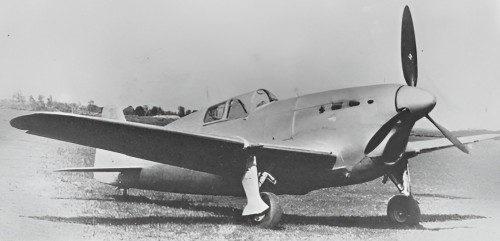
The first of these, the M.S.411, was created by modifying the twelfth pre-production aircraft with the standard 406 wing and the more powerful 750 kW (1,000 hp) Hispano-Suiza 12Y-45 engine.
This one‑off prototype served as a stepping stone to a further refinement, the M.S.412, which was intended to mount the 780 kW (1,050 hp) Hispano‑Suiza 12Y‑51.
Work on the M.S. 412 was still underway when the war ended, and the aircraft was never completed.
Parallel to these efforts, Hispano‑Suiza began delivering prototype examples of the new 12Z engine in 1939, rated at 970 kW (1,300 hp).
One of these powerplants was installed in a modified M.S.410 to produce the M.S.450, which demonstrated a marked improvement in performance, particularly at altitude.
Despite its promise, the 12Z did not reach production before the fall of France, and the similarly re-engined Dewoitine D.520—designated D.523—was ultimately regarded as the more suitable platform for the new engine.
M.S.430 and M.S.435
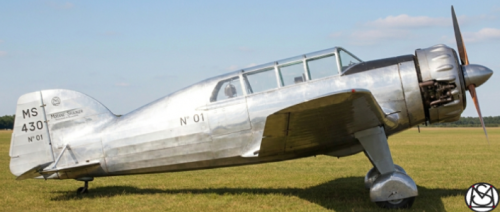
The M.S.430 was developed as a two-seat trainer by inserting a fuselage plug to accommodate a second cockpit for the trainee pilot.
To reduce cost and complexity, it was powered by the much less potent 390 hp (291 kW) Salmson 9AG radial engine.
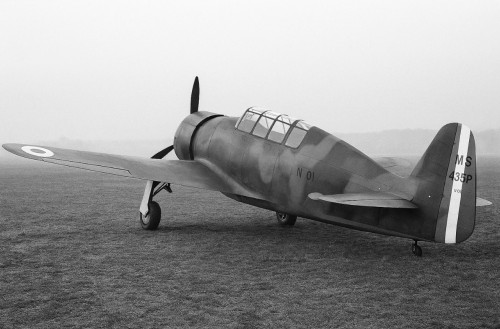
MS435
Its successor, the M.S.435, retained the two‑seat training configuration but introduced a significant power increase through the installation of the 550 hp (410 kW) Gnome‑Rhône 9K radial engine, giving the aircraft markedly improved performance over the M.S.430.