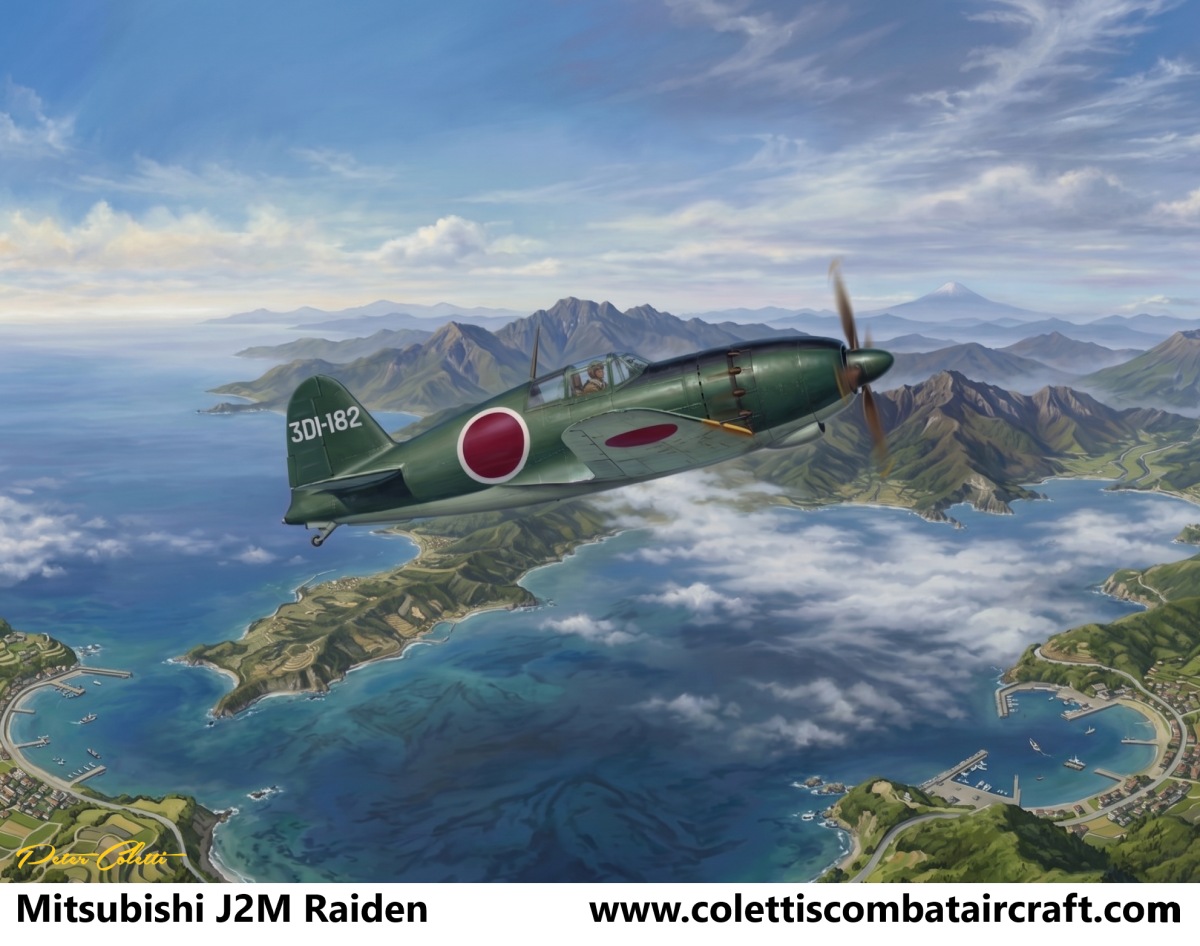
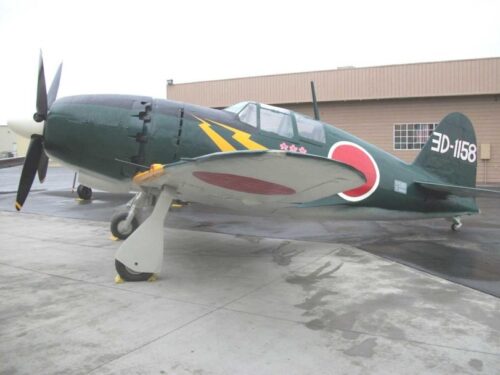
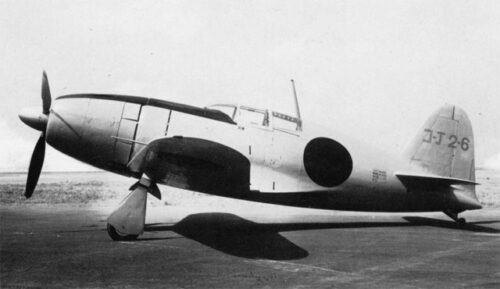
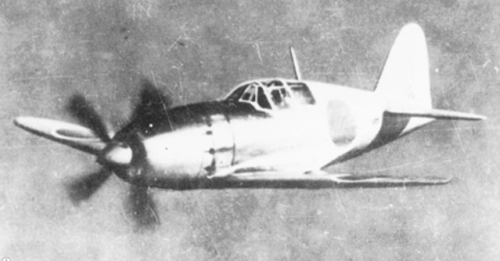
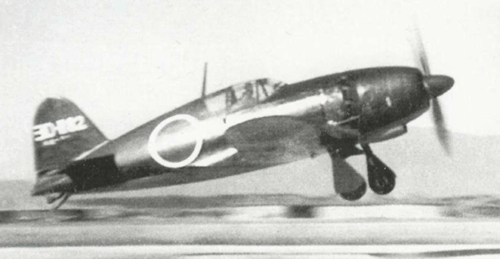
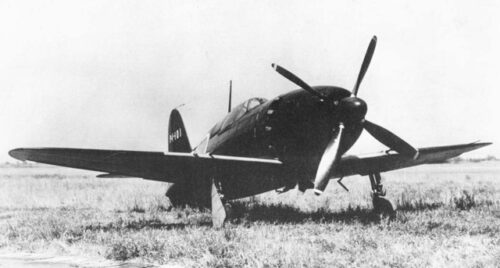
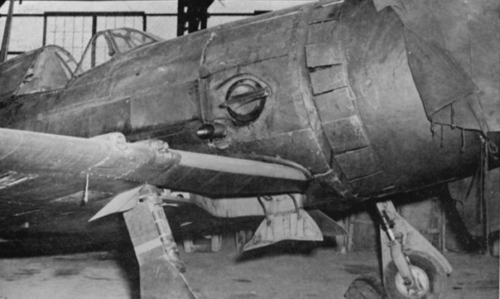
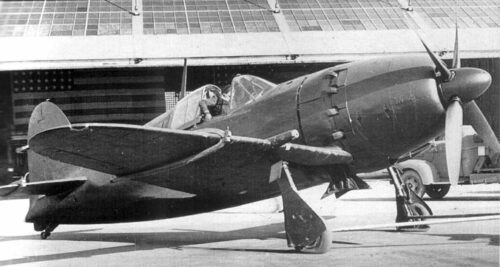
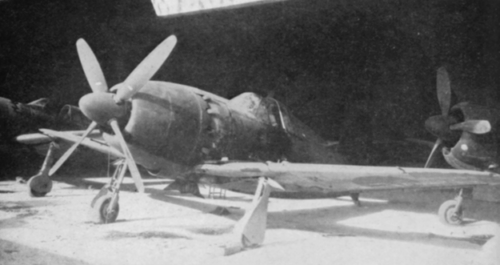
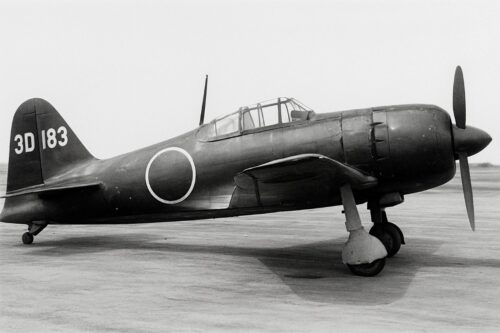
The Mitsubishi J2M Raiden (“Thunderbolt”), codenamed “Jack” by the Allies, was a land-based interceptor developed for the Imperial Japanese Navy.
Designed by Jirō Horikoshi, the creator of the A6M Zero, it was conceived under the 14-Shi specification of 1939 as a local-defence fighter.
Unlike the Zero, which emphasised range and manoeuvrability, the Raiden prioritised speed, climb rate, and heavy armament to counter high-altitude bombers such as the Boeing B-29 Superfortress.
Development and Introduction
First flight
20 March 1942.
Entry into service
December 1942.
Production
Approximately 621 aircraft built across all variants.
Development was plagued by engine cooling issues, turbocharger failures, and poor visibility, delaying frontline deployment.
Combat Service
Early Deployment (1943)
The Raiden entered limited service in 1943, initially with home defence units.
Its performance at low altitude was adequate, but reliability problems and limited numbers restricted its early impact.
Defence of the Home Islands (1944–45)
The J2M came into its own during the strategic bombing campaign against Japan.
Units equipped with the Raiden were tasked with intercepting B-29 Superfortresses conducting high-altitude raids.
The aircraft’s powerful armament of 20 mm cannon made it a formidable bomber destroyer when it could reach altitude in time.
However, the Raiden’s climb rate and ceiling were inferior to expectations, and it struggled against the B-29’s operational altitudes of 9,000–10,000 m.
Tactical Effectiveness
Against medium-altitude raids, the Raiden proved more effective, using its speed and firepower to inflict losses on bomber formations.
In fighter-versus-fighter combat, it was less successful.
The Raiden lacked the agility of the Zero and was outclassed by late-war Allied fighters such as the F6F Hellcat, F4U Corsair, and P-51 Mustang.
Strengths and Weaknesses
Strengths
Heavy armament (up to four 20 mm cannon).
Good speed and dive performance at medium altitude.
Purpose-built as a bomber interceptor.
Weaknesses
Engine reliability issues and persistent cooling problems.
Poor high-altitude performance compared to Allied bombers.
Limited manoeuvrability in dogfights.
Produced in relatively small numbers, limiting strategic impact.
Legacy
The J2M Raiden was Japan’s first dedicated interceptor, representing a shift from long-range naval fighters to specialised homeland defence aircraft.
While it never achieved the fame of the Zero, it played a critical role in the defence of the Japanese home islands during the final phase of the war.
Its operational record was mixed: effective against bombers under favourable conditions, but ultimately unable to alter the course of the air war over Japan.
J2M1 Prototype
The initial prototype was powered by the 1,044 kW (1,400 hp) Mitsubishi MK4C Kasei 13 fourteen-cylinder air-cooled radial engine. Armament consisted of two 7.7 mm Type 97 machine guns mounted in the upper fuselage
&
two 20 mm Type 99 Model II cannons in the wings.
A total of eight prototypes were completed.
J2M2 Model 11
The first production version is fitted with the 1,379 kW (1,850 hp) Mitsubishi MK4R-A Kasei 23A radial engine.
Armament remained identical to the J2M1, with two fuselage-mounted 7.7 mm machine guns and two wing-mounted 20 mm cannon.
J2M3 Model 21
The most widely produced version of the Raiden.
Armament was standardised to two wing-mounted 20 mm Type 99 Model II cannons and two wing-mounted 20 mm Type 99 Model I cannons, giving it heavier firepower against bombers.
J2M3a Model 21A
A refinement of the J2M3, this variant carried four wing-mounted 20 mm Type 99 Model II cannon, providing a uniform and more powerful armament package.
J2M4 Model 32
Experimental high-altitude prototype powered by the 1,357 kW (1,820 hp) Mitsubishi MK4R-C Kasei 23c engine with a turbocharger.
Several armament layouts were tested, including an upward-firing oblique 20 mm cannon in the fuselage combined with wing-mounted 20 mm cannon of both Model I and Model II types.
Chronic turbocharger problems limited the project, and only two prototypes were built.
J2M5 Model 33
A high-altitude interceptor variant fitted with the 1,357 kW (1,820 hp) Mitsubishi MK4U-A Kasei 26a engine and a mechanically driven supercharger.
This improved performance at altitude but reduced range.
Armament comprised two fuselage-mounted 20 mm cannon and two wing-mounted 20 mm Type 99 Model II cannon.
J2M5a Model 33A
An alternative armament configuration of the J2M5, equipped with four wing-mounted 20 mm Type 99 Model II cannon.
Each gun carried 200 rounds, and the weapons were harmonised for consistent trajectory and ballistics.
J2M6a Model 31A
Parallel to the J2M6, this variant was based on the J2M3a.
It also featured the widened cockpit and bubble canopy.
Only a single J2M6a was completed.
J2M6 Model 31
Developed earlier than the J2M4 and J2M5, this version was based on the J2M3 but introduced a wider cockpit and a new bubble canopy.
These improvements were later incorporated into J2M3 production aircraft from July 1943 onward.
Specifications (J2M3)
Crew
1
Length
9.945 m (32 ft 8 in)
Wingspan
10.8 m (35 ft 5 in)
Height
3.81 m (12 ft 6 in)
Wing area
20.05 m² (215.8 sq ft)
Empty weight
2,839 kg (6,259 lbs)
Gross weight
3,211 kg (7,079 lbs)
Powerplant
1 × Mitsubishi MK4R-A Kasei 23a,
14-cylinder air-cooled radial piston engine,
1,300 kW (1,800 hp) for take-off
1,174 kW (1,575 hp) at 1,800 m (5,900 ft)
1,051 kW (1,410 hp) at 4,800 m (15,700 ft)
Propellers
4-bladed constant-speed metal propeller
Performance
Maximum speed
587 km/h (365 mph, 317 kn) at 5,300 m (17,400 ft)
Cruise speed
351 km/h (218 mph, 190 kn)
Range
1,898 km (1,179 mi, 1,025 nmi)
Service ceiling
11,700 m (38,400 ft)
Time to altitude
6,000 m (20,000 ft) in 6 minutes 14 seconds
Wing loading
171.3 kg/m² (35.1 lbs/sq ft)
Power/mass
0.391 kW/kg (0.238 hp/lb)
Armament
2x 20 mm (0.787 in) Type 99 Mark 2 machine gun inboard wing-mounted with 190 rpg
2x Type 99 Mark 1 machine gun outboard wing-mounted with 210 rpg
2 × 60 kg (132 lbs) bombs
or
2 × 200 L (53 US gal; 44 imp gal) drop tanks or a larger central drop tank.