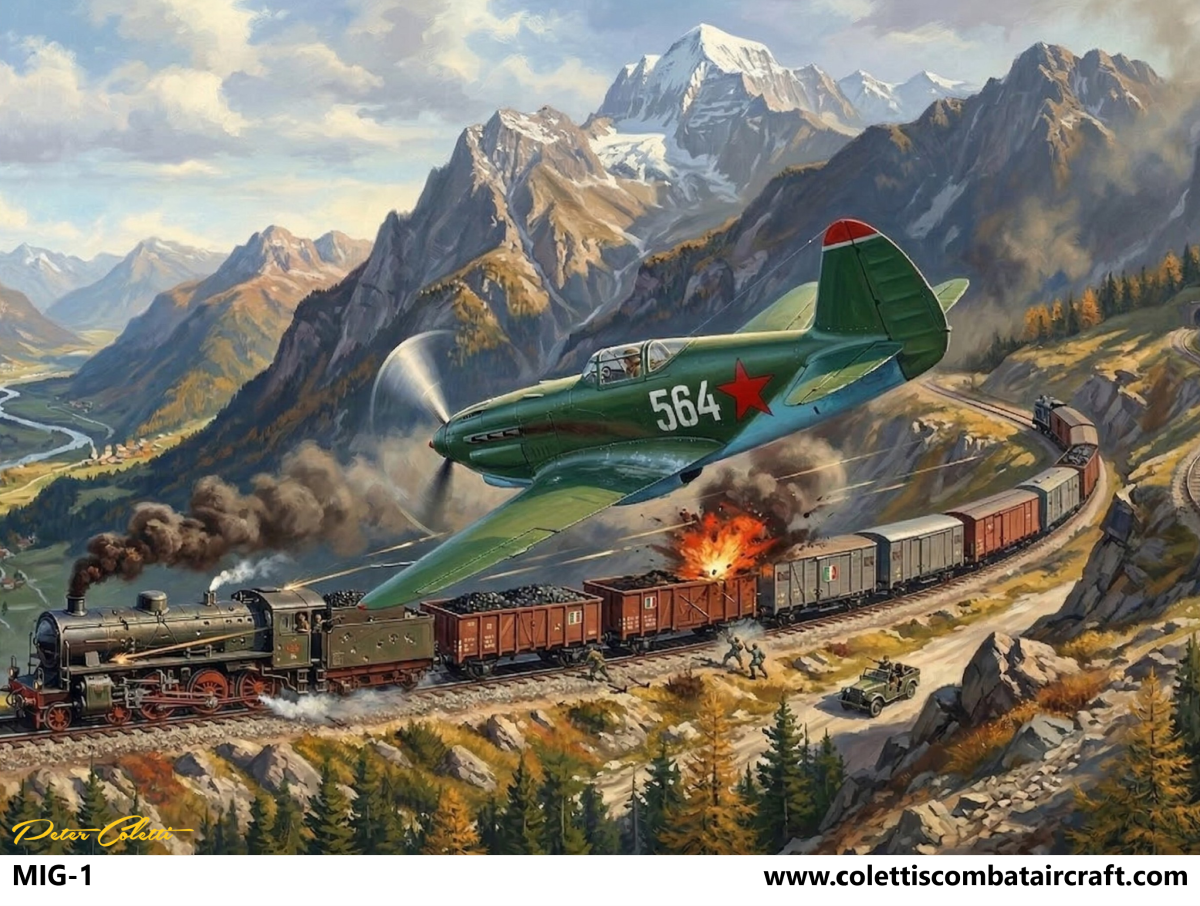
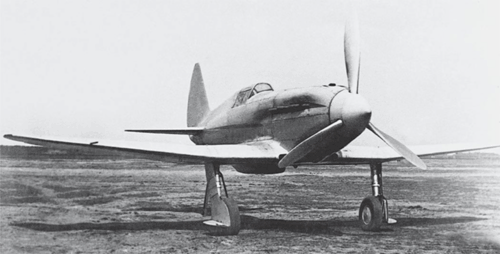
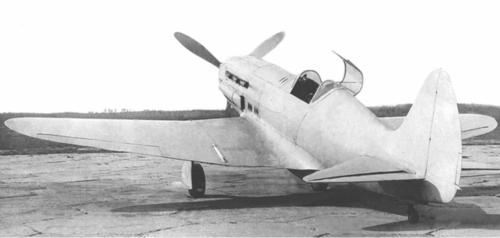
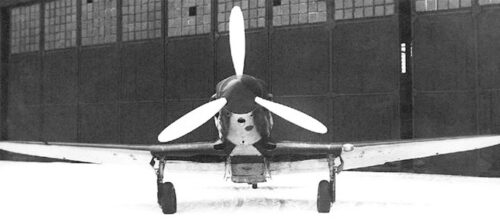
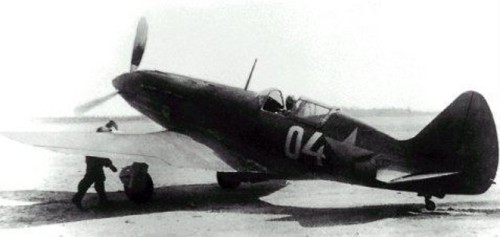
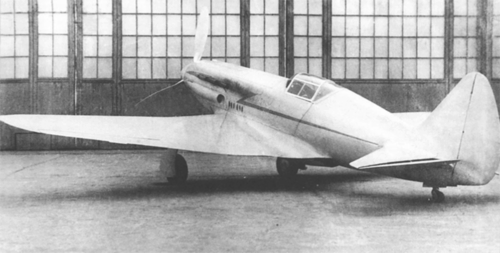
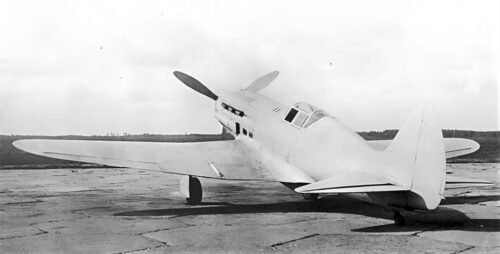
The Mikoyan-Gurevich MiG-1 was introduced into Soviet service in 1940 as a high-speed, high-altitude interceptor.
Designed to meet a 1939 requirement for a fast fighter capable of engaging enemy bombers at altitude, the MiG-1 was rushed into production despite unresolved stability and control issues.
Only 100 production aircraft were built before the improved MiG-3 replaced it.
Operational deployment began in early 1941, with MiG-1s assigned to several fighter regiments across Soviet-occupied territories.
Units included the 41st Fighter Regiment in Crimea, the 89th Fighter Regiment in Kaunas (Lithuania), and the 146th Fighter Regiment in Yevpatoria.
By June 1941, just before Operation Barbarossa, 77 MiG-1s were on hand, but only 55 were considered operational.
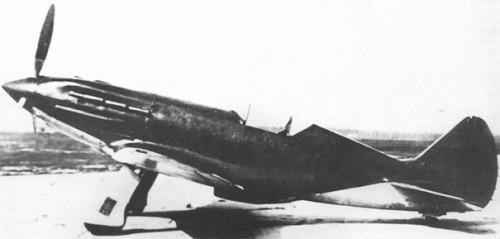
I-200 V3
During the opening phase of the German invasion, many MiG-1s were destroyed on the ground or lost in combat.
The aircraft’s poor low-altitude manoeuvrability, limited armament, and short range made it ill-suited for the fast-paced, low-level dogfights that dominated the Eastern Front.
Although it was fast at altitude, its performance advantages were rarely exploited due to the nature of the conflict.
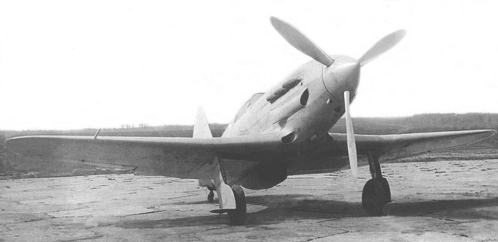
I-200 Prototype v2
By late 1941, surviving MiG-1s were withdrawn from frontline service or relegated to training roles.
The MiG-3, which addressed many of the MiG-1’s shortcomings, became the primary successor and saw broader combat use.
The MiG-1’s operational history is thus brief and largely overshadowed by its successor, but it remains significant as the first fighter produced by the Mikoyan-Gurevich design bureau and a stepping stone in Soviet high-altitude fighter development.
The Prototype Variants
Samolet Kh (Самолет Х)
This was the earliest internal designation used by the Mikoyan-Gurevich design bureau for the prototype that would become the MiG-1.
The term ‘Samolet Kh’ (literally ‘Aircraft X’) denoted a conceptual stage in the aircraft’s development, used during preliminary design reviews and aerodynamic testing in 1939.
It marked the beginning of the bureau’s effort to produce a high-speed, high-altitude interceptor for the Soviet Air Force.
Izdeliye-61
An internal product code assigned to the I-200 prototype within the OKB’s cataloguing system.
Izdeliye (Изделие) was a standard term used by Soviet design bureaux to track experimental and production items.
Izdeliye-61 specifically referred to the first flight-capable prototype equipped with the Mikulin AM-35A engine.
This designation was used for internal logistics, component tracking, and factory coordination during the prototype phase.
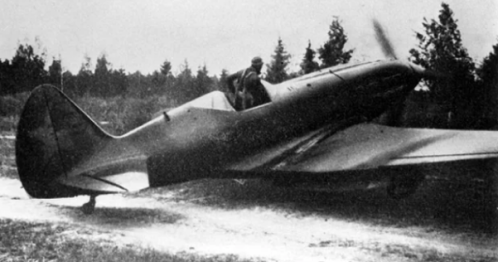
I-200
The official prototype designation for the aircraft that preceded the MiG-1.
Three I-200 units were constructed between late 1939 and early 1940.
Designed as a high-altitude interceptor, the I-200 featured a streamlined fuselage, thin wings, and a powerful inline engine.
It achieved speeds exceeding 650 km/h in testing, making it one of the fastest Soviet fighters of its time.
The I-200’s performance validated the concept and led directly to the MiG-1’s limited production run.
The Production Variant
MiG-1
The first operational fighter produced by the Mikoyan-Gurevich design bureau, entering service in mid-1940.
A single-seat, high-speed interceptor intended for the Soviet Air Force, the MiG-1 was optimised for altitude performance and straight-line speed.
However, it suffered from poor handling characteristics, especially at low altitudes and during manoeuvring.
Only 100 units were built before production shifted to the improved MiG-3.
Despite its limitations, the MiG-1 laid the groundwork for a lineage of Soviet high-performance fighters and marked the debut of the MiG brand in military aviation.
Specifications (MIG-1)
Crew
1
Length
8.155 m (26 ft 9 in)
Wingspan
10.2 m (33 ft 6 in)
Height
2.62 m (8 ft 7 in)
Wing area
17.44 m² (187.7 sq ft)
Airfoil
Root
Clark YH (14%)
Tip
Clark YH (8%)
Empty weight
2,602 kg (5,736 lbs)
Gross weight
3,099 kg (6,832 lbs)
Max takeoff weight
3,319 kg (7,317 lbs)
Powerplant
1 × Mikulin AM-35A V-12
liquid-cooled piston engine,
1,007 kW (1,350 hp) reduction gear: 0.902
Propellers
3-bladed variable-pitch propeller
VISH-22E, 24-44°, 3.0 m (9 ft 10 in) diameter
Performance
Maximum speed
628–636 km/h (390–395 mph, 339–343 kn)
Stall speed
180–190 km/h (110–120 mph, 97–103 kn)
Never exceed speed
630 km/h (390 mph, 340 kn)
Range
580 km (360 mi, 310 nmi) Vmax 0.9
Service ceiling
12,000 m (39,000 ft)
Rate of climb
16.8 m/s (3,310 ft/min)
Wing loading
177.7 kg/m² (36.4 lbs/sq ft)
Power/mass
0.32 kW/kg (0.19 hp/lb)
Armament
Guns
1 × 12.7 mm Berezin UB synchronized machine gun mounted in upper nose cowling
2 × 7.62 mm ShKAS synchronised machine guns mounted in upper nose cowling.