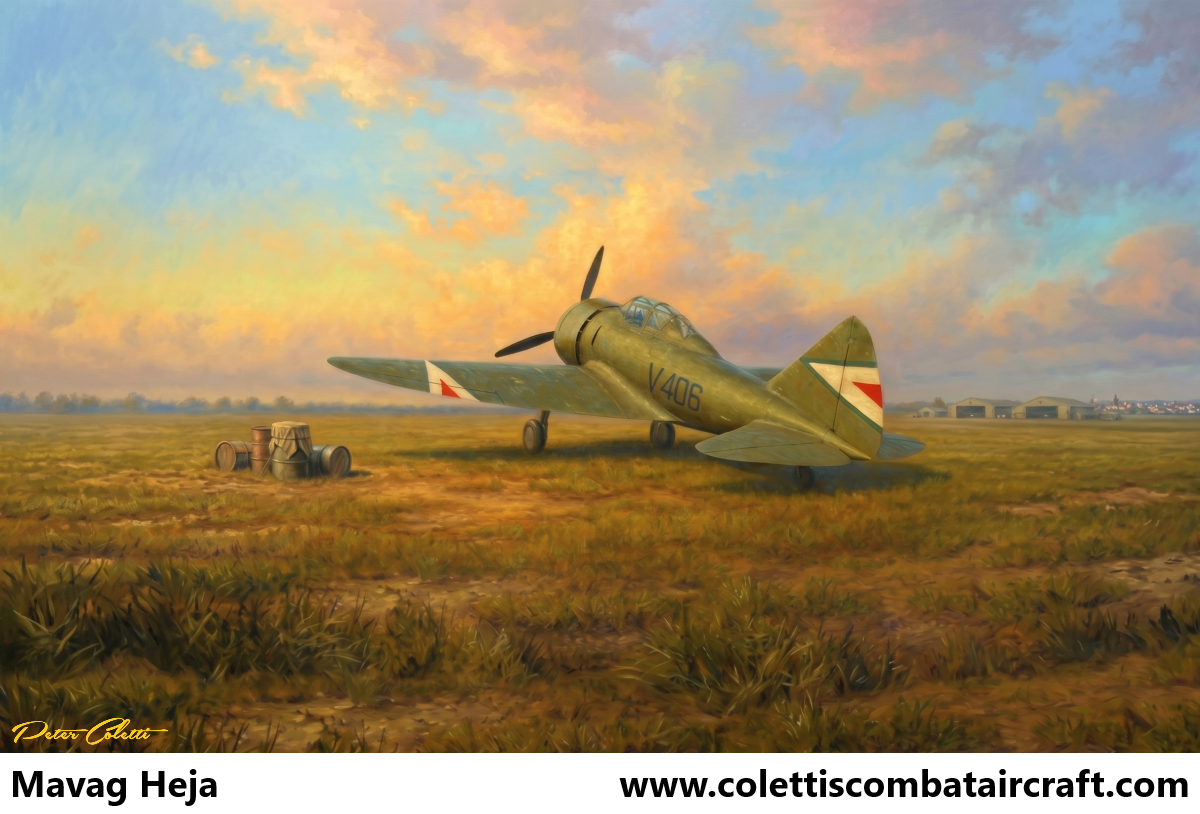
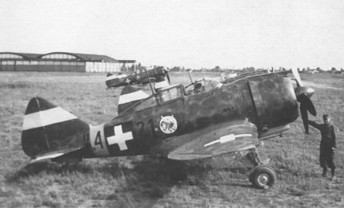
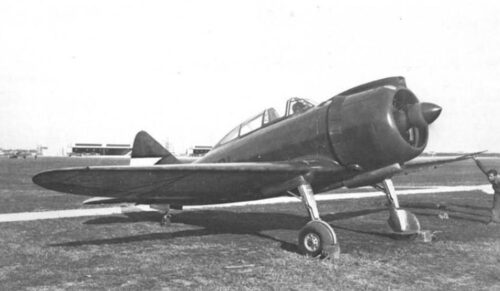
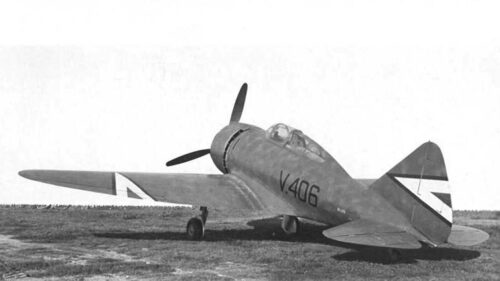
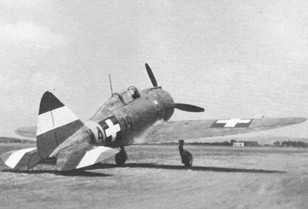
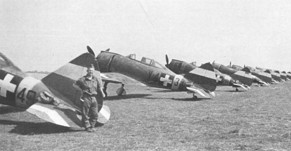
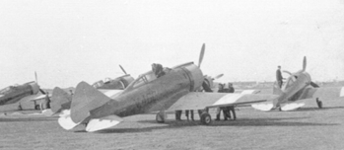
The MÁVAG Héja (“Hawk”) was a Hungarian fighter aircraft derived from the Italian Reggiane Re. 2000.
Hungary initially imported 70 Re.2000s, which were modified into Héja I fighters with Hungarian-built Weiss Manfréd WM K-14 engines, added armour, and fuel capacity.
The Héja II was a fully Hungarian-built evolution with improved armament and engine performance.
Combat Service
Eastern Front
Héja fighters were deployed alongside German forces in operations against the Soviet Union.
They performed air combat and ground support missions, particularly during Hungary’s involvement in Operation Barbarossa and subsequent campaigns.
Home Defense
As the war progressed and Allied bombing intensified, Héjas were used in the defence of Hungarian airspace, especially during 1944–45, when Hungary faced increasing aerial attacks.
Performance and Limitations
While effective in early engagements, the Héja’s performance lagged behind newer Allied and Axis aircraft.
It was eventually outclassed by more modern fighters, limiting its role to secondary duties and homeland defence.
Production and Legacy
A total of 204 Héja II fighters were built.
None survived the war, and the type was retired in 1945.
Despite its limitations, the Héja symbolised Hungary’s effort to field a domestically produced combat aircraft during WWII.
MÁVAG Héja I (“Hawk I”)
The MÁVAG Héja I was Hungary’s domestically modified variant of the Italian Reggiane Re.2000 fighter.
Adapted for local production and operational needs, it featured:
A Hungarian-built WM K-14 radial engine
Revised propeller configuration
Armored protection for the pilot
A self-sealing 100-liter fuselage fuel tank
Onboard radio equipment
Extended fuselage for improved stability
Additional structural and systems changes distinguishing it from its Italian predecessor
These modifications tailored the Héja I for frontline service and reflected Hungary’s push for greater aviation autonomy during WWII.
MÁVAG Héja II (“Hawk II”)
The Héja II was a fully Hungarian-built evolution of the Reggiane Re.2000, incorporating extensive modifications for improved combat performance.
Retaining several enhancements from the earlier Héja I, the Héja II introduced:
Two domestically produced 12.7 mm Gebauer 1940. M GKM machine guns (300 rounds per gun), replacing the Italian Breda-SAFATs.
These offered a significantly higher rate of fire (1,000 rpm) and superior muzzle velocity (800 m/s).
A more powerful WM K-14B radial engine, paired with a redesigned cowling for better airflow and engine cooling.
Wing-mounted fuel tanks (22 cells of 20–25 litres each), reducing vulnerability and improving weight distribution.
A larger Weiss Manfréd propeller for enhanced thrust and engine compatibility.
Additional structural and systems refinements tailored to Hungarian production capabilities and operational needs.
A total of 204 Héja II fighters were manufactured.
MÁVAG Héja II Zuhanóbombázó (“Dive Bomber”)
Experimental Ground-Attack Variant
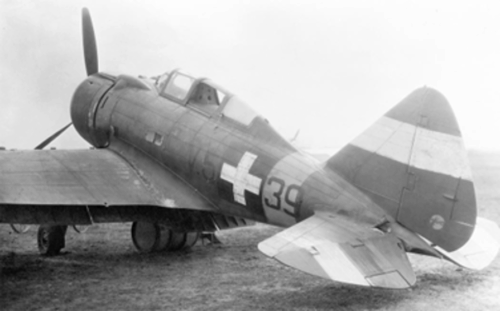
The MÁVAG Héja II Zuhanóbombázó was a rare dive-bomber conversion of the standard Héja II fighter, developed by Hungary during World War II in an effort to expand the aircraft’s tactical versatility.
Only three airframes were modified for this role, making it one of the most obscure and specialised Hungarian aircraft variants of the war.
(V.5+39 was one of those converted to this variant).