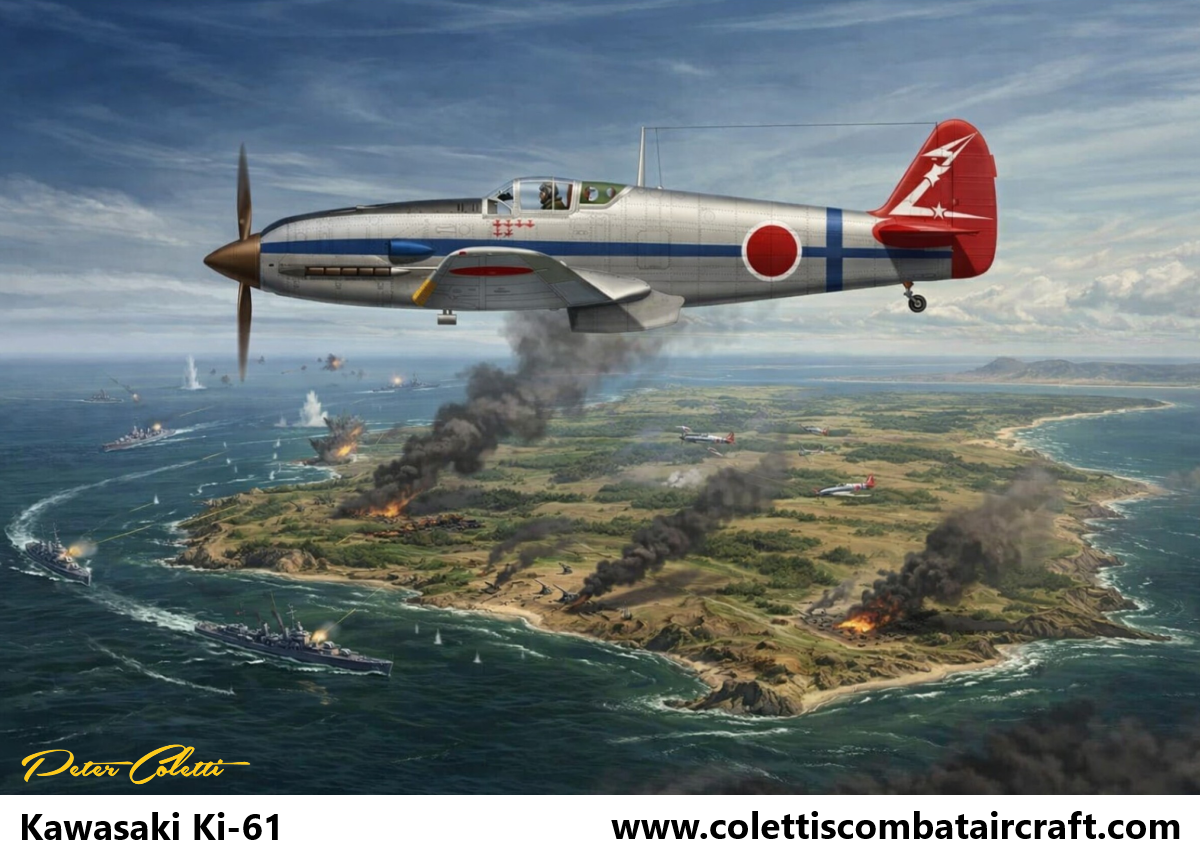
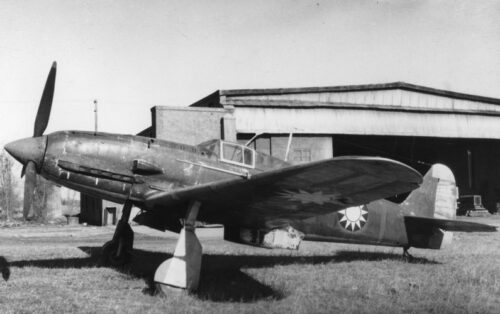
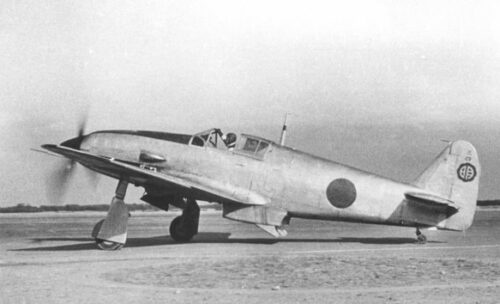
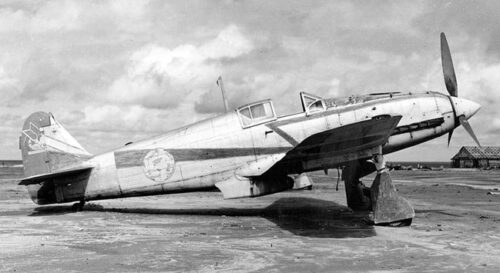
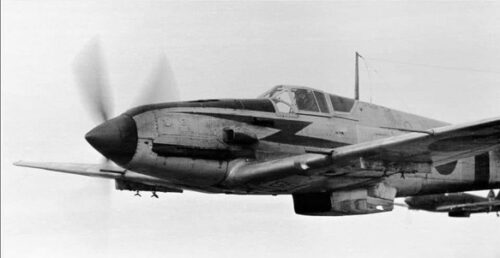
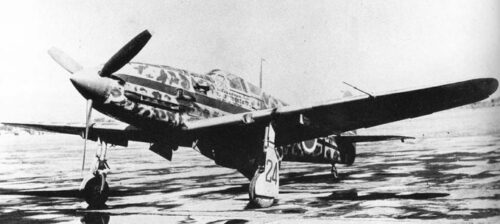
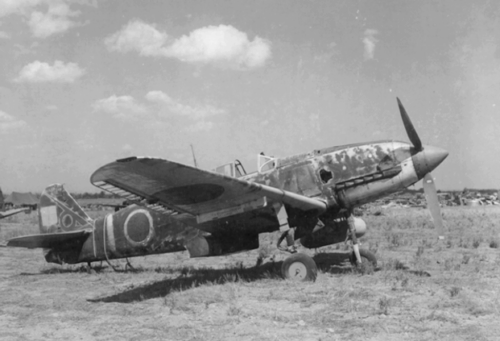
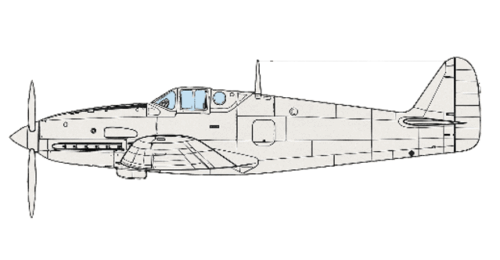
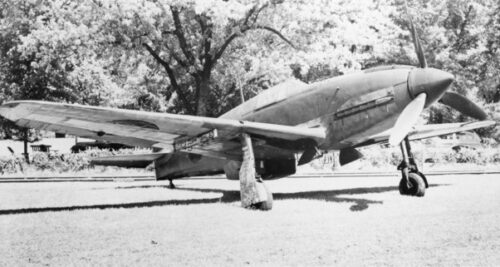
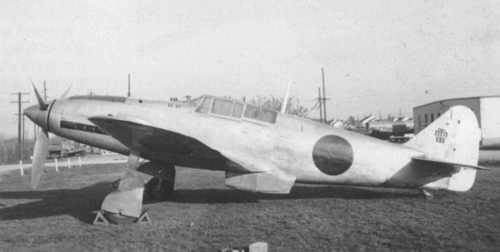
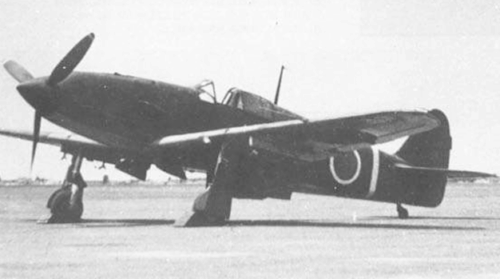
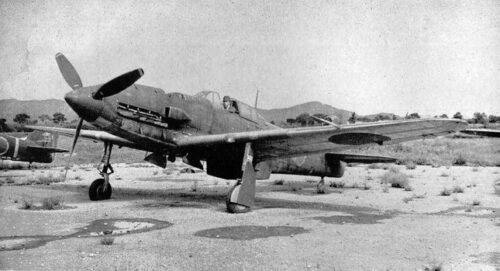
First flown in December 1941, the Ki-61 entered combat in 1942.
It was the only Japanese fighter of the war to use a liquid-cooled inline engine—the Kawasaki Ha-40, a licensed Daimler-Benz DB 601A.
Early Combat Deployment
Debuted during the Doolittle Raid (April 1942), intercepting American B-25 bombers over Yokohama.
Initially misidentified by Allied forces as either a Messerschmitt Bf 109 or a Macchi C.202, earning the codename “Tony”.
Theaters of Operation
Primarily served with the Imperial Japanese Army Air Service in the Pacific and South-east Asia.
Saw extensive action in New Guinea, the Philippines, and the defence of the Japanese home islands.
Tactical Roles
Designed as a general-purpose fighter with air superiority and interception capabilities.
Later adapted for bomber escort and B-29 interception due to its high-altitude performance and heavy armament (up to 4 × 20 mm cannons in some variants).
Combat Effectiveness
Proved effective against Allied fighters like the P-40 and P-38 at medium altitudes.
Struggled with engine reliability and maintenance issues, especially in tropical climates.
Its armour and self-sealing fuel tanks were advanced by Japanese standards but still lagged behind Allied designs.
Production and Variants
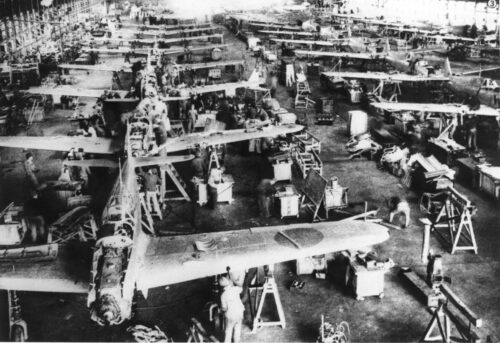
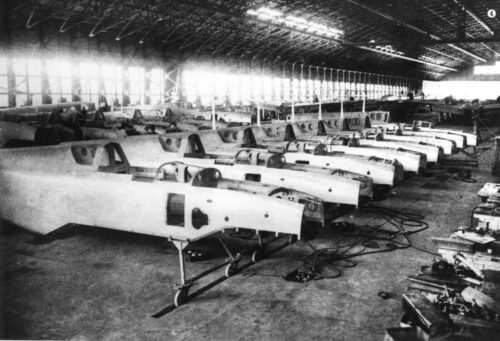
Over 3,000 units produced between 1942 and 1945.
When Ha-40 engine production faltered, airframes were converted into the radial-engine Ki-100 variant, which proved highly successful late in the war.
Final Operations
Used in homeland defence against B-29 raids, often in desperate conditions with dwindling resources.
Retired at the end of the war in 1945, with surviving aircraft scrapped or captured.
Prototypes
Twelve Kawasaki Ki-61 Hien prototypes were the initial development aircraft built between late 1941 and early 1942 to test and refine Japan’s first liquid-cooled inline-engine fighter.
These prototypes were crucial in transitioning from the disappointing Ki-60 interceptor to the more balanced, multi-role Ki-61 design.
Here’s a breakdown of what made these 12 prototypes significant
Design Evolution
Engine
All prototypes used the Kawasaki Ha-40, a licensed version of the Daimler-Benz DB 601A.
This was a radical shift from Japan’s typical air-cooled radial engines.
Airframe
The prototypes featured an all-metal, semi-monocoque fuselage with a three-spar wing—modern and robust for the time.
Armament Testing
Various combinations of 7.7 mm Type 89 & 12.7 mm Ho-103 machine guns were trialled.
Later prototypes explored heavier armament configurations.
Performance Trials
The first prototype flew in December 1941, just days after Pearl Harbour.
These aircraft were tested against a captured Curtiss P-40E and an imported Messerschmitt Bf 109E, helping refine manoeuvrability and climb rate.
Flight characteristics were continuously adjusted—especially the wing loading and control surfaces—to improve agility and stability.
Operational Evaluation
Some prototypes were reportedly involved in combat trials during the Doolittle Raid over Yokohama in April 1942.
Feedback from these early missions helped shape the production Ki-61-I-Ko variant, which entered service in 1942.
Ki-61-I-Ko (a) First production version
Fully retractable tailwheel, two 7.7 mm (0.303 in) Type 89 machine guns in the wings and two synchronised 12.7 mm (0.50 in) Ho-103 machine guns in the forward decking.
Capable of carrying one 151 L (40 gal) drop tank or a light bomb.
Ki-61-I-Otsu (b) Second production fighter variant
The tailwheel retraction mechanism was unreliable; the aircraft was modified accordingly.
Two 12.7 mm (.50 in) Ho-103 machine guns replaced the wing 7.7 mm (.303 in) machine guns.
Ki-61-I-Hei (c)
The Hei was built in conjunction with the Otsu variant; the wing machine guns were replaced by Mauser MG 151/20 cannons.
Ki-61-I-Tei (d)
Fighter variant with two fuselage-mounted Japanese 20 mm Ho-5 cannon and two 12.7 mm (.50 in) wing-mounted Ho-103.
Ki-61-I-KAId
Interceptor variant with 2 × 12.7 mm (.50 in) machine guns and 2 × 30 mm (1.18 in) Ho-155 wing cannon.
Ki-61-I W.C.E.S.
Experimental aircraft with evaporation system, as used on the Heinkel He 100.
It was the fastest Ki-61 built, achieving 630 km/h (395 mph).
The Ki-61-II prototype had a 1,500 PS (1,103 kW) Ha-140 engine and was first flown in December 1943.
Ki-61-II-KAI
Pre-production version which reverted to the Ki-61-I-Tei wing, a 220 mm (8.7 in) fuselage stretch, an enlarged rudder, and a Ha-140 engine; 30 built.
Ki-61-II-KAIa
Armed with 2 x 12.7 mm (.50 in) machine guns in the wings and 2 x 20 mm cannon in the fuselage.
Ki-61-II-KAIb
Armed with a 4 x 20 mm cannon.
Ki-61-III Prototype
This version had a cut-down rear fuselage and a canopy design which was later used by the Ki-100-I-Otsu.