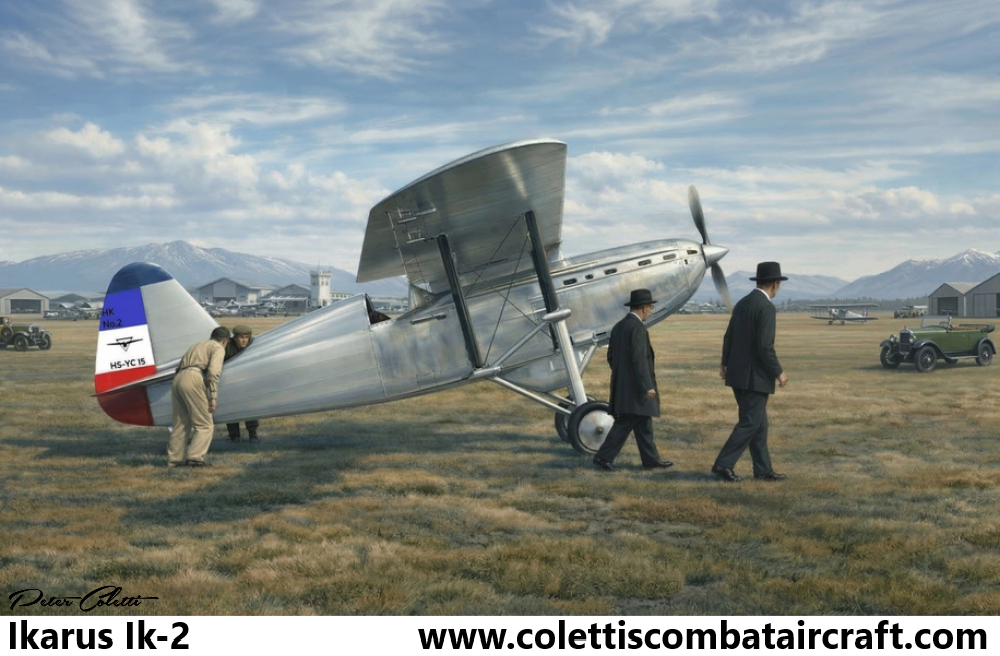
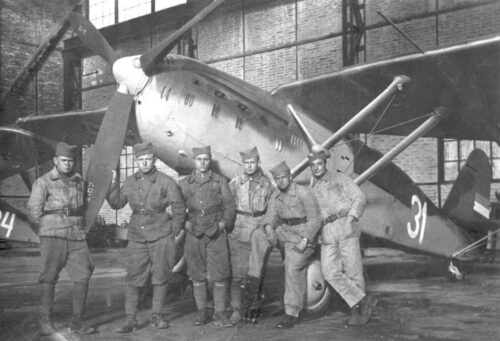
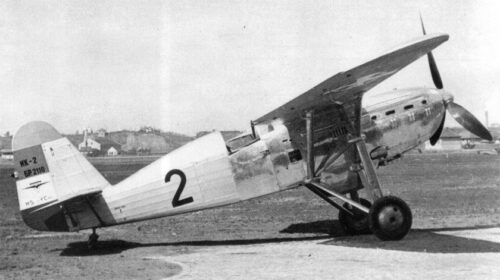
In late 1937, the Yugoslav aircraft manufacturer Ikarus was ordered to produce 12 IK-2 fighters.
The first six were delivered in December 1938, and the remaining six by February 1939.
All 12 were assigned to the 6th Fighter Regiment of the Royal Yugoslav Army Air Force (VVKJ), based in Zemun.
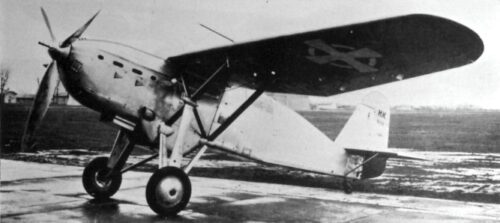
1st Prototype Ikarus IK-L1 v2
Combat Service
April 1941
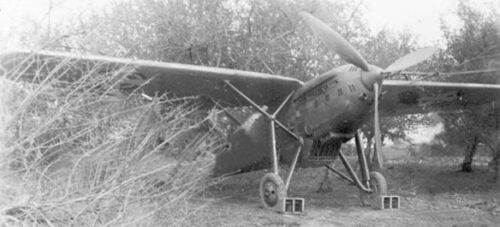
By the time of the Axis invasion of Yugoslavia in April 1941, only eight IK-2s were serviceable.
These aircraft were deployed in defence of Belgrade and surrounding areas.
Despite being outdated by 1941 standards, the IK-2s engaged Luftwaffe aircraft in several skirmishes.
Their robust construction and hub-firing 20 mm cannon gave them limited effectiveness against bombers, but they were outclassed by modern German fighters.
Post-Invasion Fate
After Yugoslavia’s defeat, four surviving IK-2s were captured and overhauled at the Ikarus plant in Zemun.
These were transferred to the Air Force of the Independent State of Croatia (NDH), a German-aligned puppet state.
Their operational use under NDH control was minimal and poorly documented.
None of the IK-2s survived the war; all were lost through combat, accidents, or scrapping.
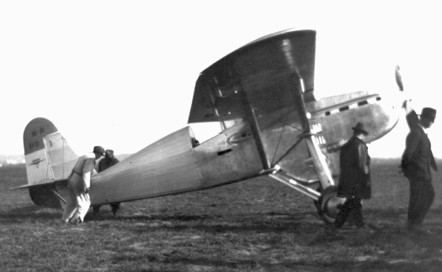
The 1st prototype IK-L1
The IK-L1 was the first prototype of the Ikarus IK-2, designed by Kosta Sivčev and Ljubomir Ilić in 1933–34.
Development Timeline
A wooden mock-up was completed in 1933 and tested in a Paris wind tunnel.
The prototype was ordered from Ikarus A.D. in 1934, with completion originally scheduled for September.
Due to delays, the first flight occurred on 22 April 1935.
Flight Testing and Loss
The IK-L1 was powered by a Hispano-Suiza 12Ycrs inline engine rated at 860 hp.
It featured a gull-wing configuration, fixed landing gear, and all-metal construction.
Tragically, the aircraft was lost during its third test flight due to a piloting accident.
Despite the loss, the design was deemed promising and led directly to the improved IK-2 production model.
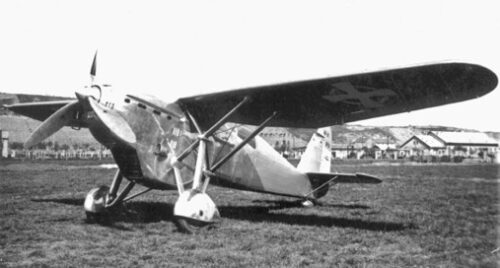
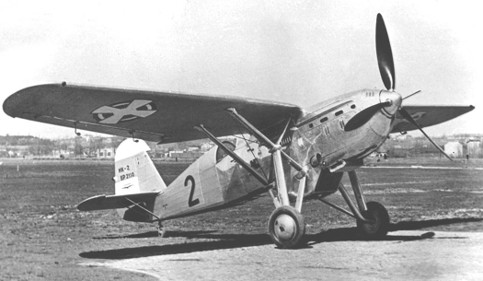
The 2nd prototype IK-L2
The IK-L2 was developed in 1936 as the direct successor to the IK-L1, which had crashed during early flight testing in 1935.
It retained the core design philosophy of a domestically built monoplane fighter but incorporated refinements based on lessons learned from the IK-L1’s instability and structural issues.
Design Improvements
The IK-L2 featured a more refined cooling system for the Hispano-Suiza 12Ycrs engine.
Improved pilot visibility and cockpit ergonomics.
Flight Testing and Evaluation
The first flight occurred in early 1937, with significantly better handling characteristics than its predecessor.
The IK-L2 demonstrated a top speed of approximately 435 km/h.
It was armed with two synchronised 7.92 mm machine guns, mounted in the fuselage.
The Production Variant
Production and Delivery
A total of 12 IK-2s were built by Ikarus A.D. between late 1938 and early 1939.
All were delivered to the Royal Yugoslav Army Air Force (VVKJ) and assigned to the 6th Fighter Regiment, based in Zemun.
The aircraft were generally similar to the IK-L2 prototype but featured minor refinements in engine cowling, armament integration, and cockpit layout.
Post-Invasion Fate
After Yugoslavia’s defeat, four surviving IK-2s were captured and refurbished at the Ikarus plant in Zemun.
These were transferred to the Air Force of the Independent State of Croatia (NDH).
Their use under NDH control was minimal and poorly documented.
None survived the war; all were lost through combat, accidents, or scrapping.
Specifications
Crew
1
Length
7.88 m (25 ft 10 in)
Wingspan
11.4 m (37 ft 5 in)
Height
3.84 m (12 ft 7 in)
Wing area
18 m² (190 sq ft)
Empty weight
1,502 kg (3,311 lb)
Gross weight
1,857 kg (4,094 lb)
Fuel capacity
250 kg (550 lb)
Powerplant
1 × Hispano-Suiza 12Ycrs.
liquid-cooled V-12 piston engine,
640 kW (860 shp)
Propellers
3-bladed adjustable pitch
Performance
Maximum speed
435 km/h (270 mph, 235 kn) at 5,000 m (16,000 ft)
Cruise speed
250 km/h (160 mph, 130 kn)
Range
700 km (430 mi, 380 nmi)
Service ceiling
12,000 m (39,000 ft)
Time to altitude
5 minutes 25 seconds to 5,000 m (16,000 ft)
Wing loading
103 kg/m² (21 lb/sq ft)
Armament
1 × 20 mm Hispano-Suiza HS.404 cannon with 60 rounds in a spiral drum.
2 × 7.92 mm Browning/FN machine guns with 250 rounds per gun.