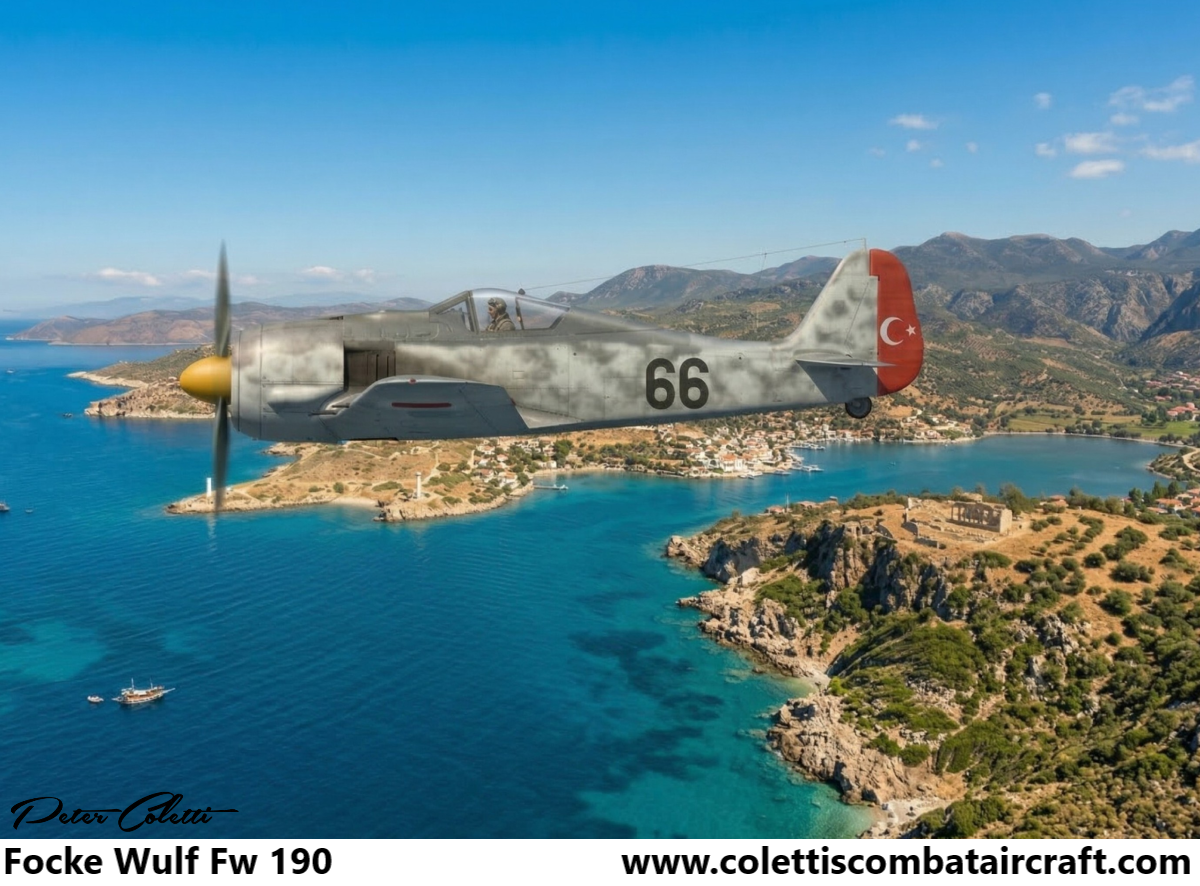
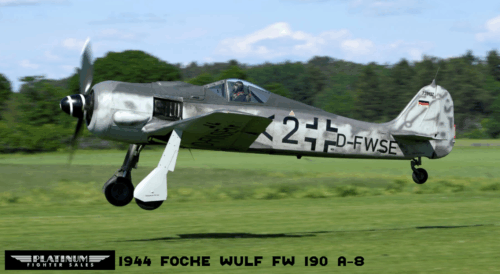
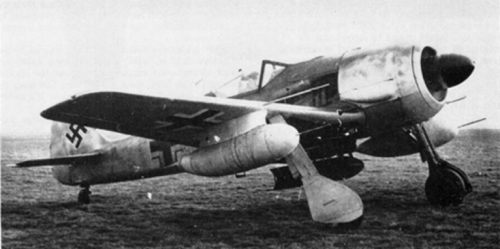
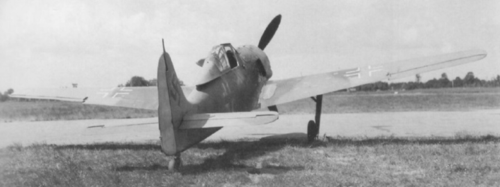
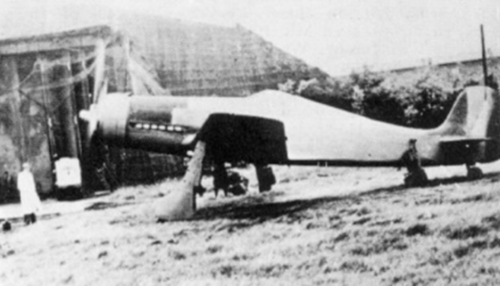
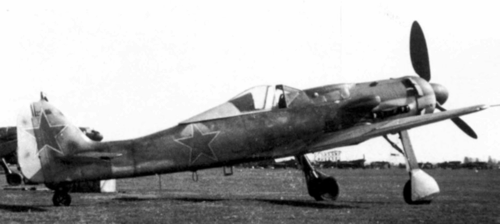
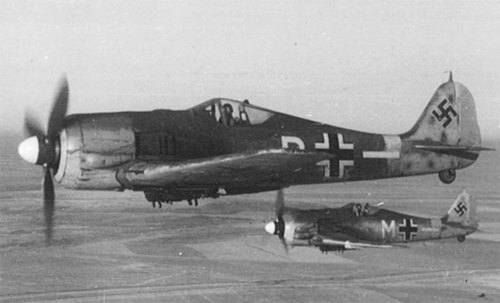
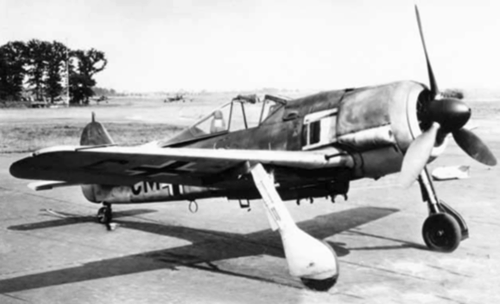
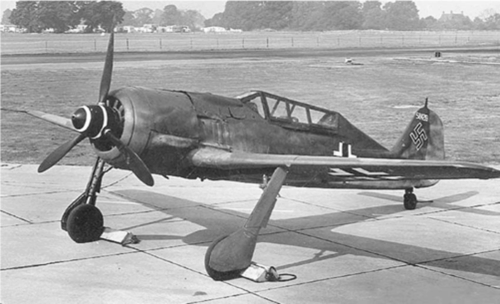
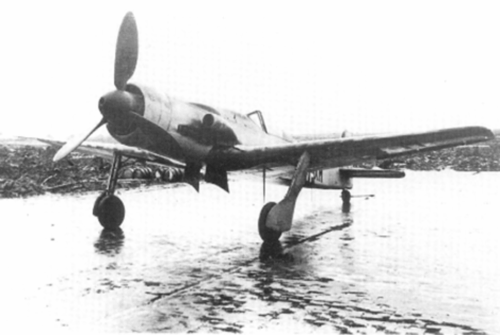
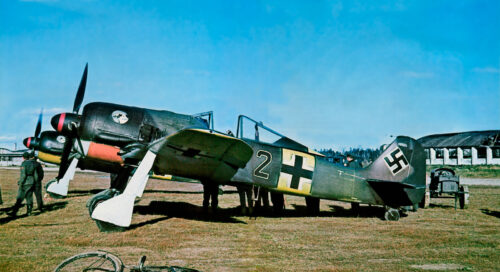
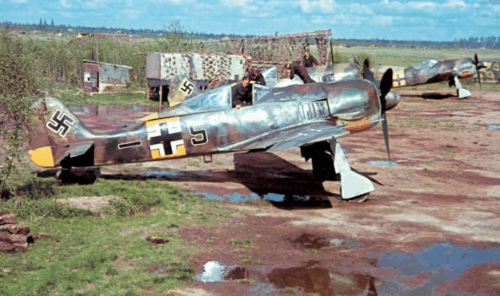
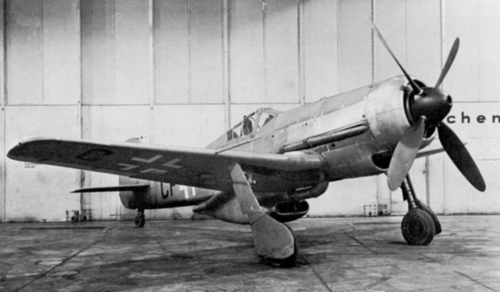
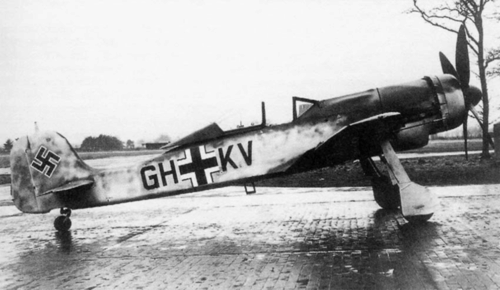
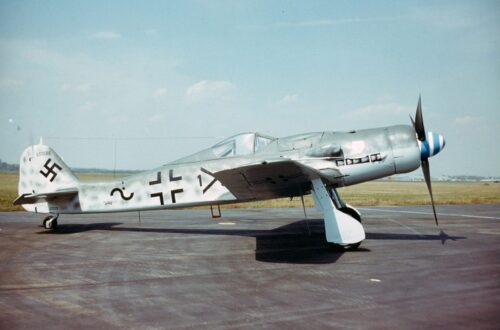
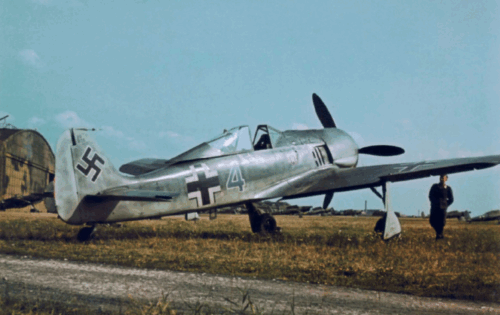
The Focke-Wulf Fw 190 was a versatile and formidable aircraft used by the Luftwaffe during World War II.
It served in multiple roles, including air superiority fighter, strike fighter, ground-attack aircraft, and escort fighter.
Introduction & Early Success
First introduced in August 1941, the Fw 190 quickly proved superior to the Spitfire Mk. V, except in turn radius.
It wrested air superiority from the RAF until the Spitfire Mk. IX was introduced in July 1942.
Eastern Front
The aircraft debuted on the Eastern Front in late 1942, where it was used effectively as both a fighter and fighter-bomber.
It became a backbone of the Jagdwaffe (Fighter Force) alongside the Messerschmitt Bf 109.
Ground Attack
The Fw 190 was deployed in Schlachtgeschwader (Attack Wings), specialised ground-attack units that achieved significant success against Soviet ground forces.
Interceptor Role
The aircraft underwent modifications to improve its high-altitude performance, leading to the Fw 190 D variant, introduced in September 1944.
Western Front
Initially mistaken for captured Curtiss P-36 Mohawks, the Fw 190 outperformed the Spitfire Mk. V in firepower, roll rate, and speed at low altitude.
Bomber Interception
The Fw 190 played a crucial role in defending German airspace against Allied bombers, using under-wing rockets to attack formations of B-17 Flying Fortresses.
The aircraft was well-liked by its pilots, with Luftwaffe aces such as Otto Kittel (267 victories), Walter Nowotny (258), and Erich Rudorffer (222) achieving many of their kills while flying the Fw 190
The Variants
Fw 190 A-series
The primary fighter variant, ranging from A-1 to A-9, with incremental upgrades in armament and engine performance.
Fw 190 B-series
Experimental high-altitude versions with pressurised cockpits.
Fw 190 C-series
Prototypes featuring Daimler-Benz inline engines for improved high-altitude performance.
Fw 190 D-series
Known as the “Dora”, these models replaced the radial engine with a liquid-cooled inline engine for better high-altitude capabilities.
Fw 190 F-series
Ground-attack versions optimised for carrying bombs and heavier weaponry.
Fw 190 G-series
Long-range fighter-bomber variants with increased fuel capacity.
Fw 190 S-series
Trainer versions used for pilot instruction.
Ta 152
A derivative of the Fw 190, designed for high-altitude interception.
Fw 190 A-5
BMW 139 Powered Variants
The Focke-Wulf Fw 190 initially featured the BMW 139 radial engine in its earliest prototypes.
Here are the key models powered by this engine
The first prototype is equipped with a 1,550 PS (1,530 hp) BMW 139 14-cylinder radial engine.
It first flew on June 1, 1939, demonstrating excellent handling and speed.
Another early prototype, featuring refinements in cooling and armament.
It was later modified to test the BMW 801 engine.
The BMW 139 was eventually replaced by the BMW 801.
which became the standard engine for production models due to its improved reliability
and performance.
Fw 190 A-5
BMW 801 Powered Variants
The Focke-Wulf Fw 190 had several prototypes powered by the BMW 801 radial engine.
which became the standard powerplant for production models.
Here’s a comprehensive list of its major prototypes
Fw 190 V5
One of the first prototypes to test the BMW 801 engine, leading to significant cooling system
refinements.
Fw 190 V7-V9
Experimental models used to optimise aerodynamics and engine integration.
Fw 190 V10-V13
Prototypes testing different armament configurations while utilising the BMW 801.
Fw 190 V15-V17
High-altitude testbeds that contributed to later production variants.
Fw 190 V18-V20
Testbeds for inline engines, including the Daimler-Benz DB 603.
The BMW 801 was a game-changer, introducing an advanced engine management system that
simplified pilot workload.
Daimler-Benz DB 603 Powered Variants
Fw 190V-18
The Focke-Wulf Fw 190C had an experimental installation of the Daimler-Benz DB 603 with a turbocharger; persistent problems with the turbocharger installations caused the end of the 190C prototype.
Fw 190C-11
Junkers Jumo 213 Powered Variants
The long-nosed D model was fitted with the Junkers Jumo 213.
Due to complications with the turbocharger installations on the -B and -C variants, only the D model was deployed in September 1944.
These enhancements for high-altitude performance ultimately led to the development of the Focke-Wulf Ta 152, which was capable of achieving impressive speeds at medium to high altitudes (755 km/h [408 kn; 469 mph] at 13,500 m [44,300 ft]).
While these “long nose” 190 variants and the Ta 152 derivative offered the Germans a level of parity against Allied forces, they were introduced too late to affect the outcome of the war.
Specifications
Crew
One
Length
8.95 m (29 ft 4 in)
Wingspan
10.506 m (34 ft 6 in)
Height
3.15 m (10 ft 4 in)
Wing area
18.3 m² (197 sq ft)
Airfoil
Root
NACA 23015.3
Tip
NACA 23009
Empty weight
3,200 kg (7,055 lb)
Gross weight
4,417 kg (9,738 lb)
Max takeoff weight
4,900 kg (10,803 lb)
Fuel capacity
639 L (141 imp gal; 169 US gal)
Powerplant
1 × BMW 801D-2 14-cylinder air-cooled radial piston engine
1,700 PS (1,677 hp; 1,250 kW)
Propellers
3-bladed constant-speed propeller
Fw 190 A-5
Performance
Maximum speed
652 km/h (405 mph, 352 kn) at 5,920 m (19,420 ft)
Range
900–1,000 km (560–620 mi, 490–540 nmi)
Combat range
400–500 km (250–310 mi, 220–270 nmi)
Ferry range
900–1,000 km (560–620 mi, 490–540 nmi) ~1800–2000 km with drop tank.
Service ceiling
10,350 m (33,960 ft)
Rate of climb
15 m/s (3,000 ft/min)
Wing loading
241 kg/m² (49 lb/sq ft)
Power/mass
0.28–0.33 kW/kg (0.17–0.20 hp/lb) No–full emergency power