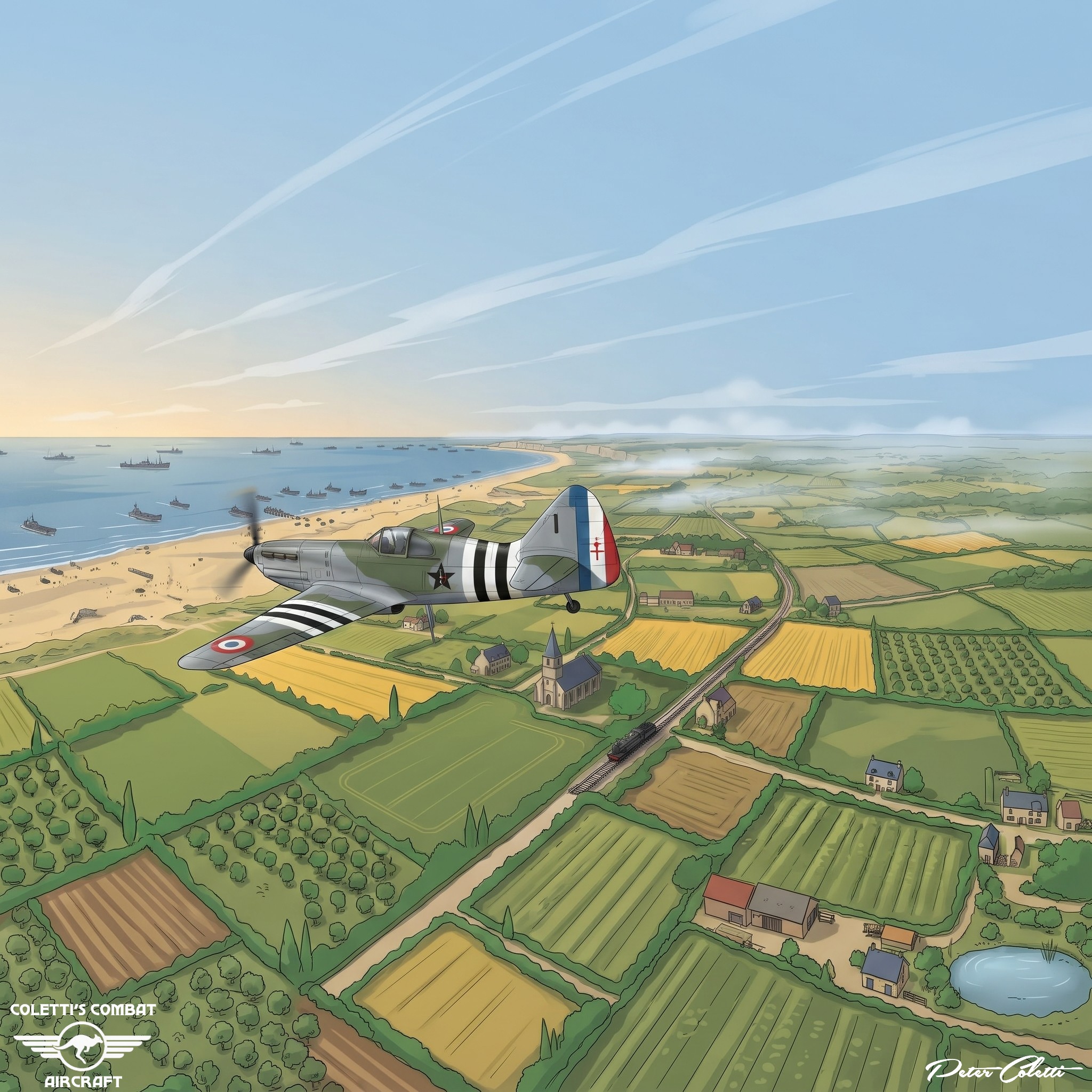
Entered service in early 1940, just before the German invasion.
Assigned to elite fighter units such as Groupe de Chasse I/3.
Despite limited numbers (~36 in service at the start), it proved superior to the Morane-Saulnier M.S.406 and Bloch MB.152.
Engaged Luftwaffe aircraft, including Bf 109Es and bombers; credited with 114 kills at the cost of 85 aircraft.
Pilots praised its manoeuvrability, though it was slightly slower than German contemporaries.
Vichy France (1940–1942)
After the June 1940 armistice, ~153 D.520s remained in unoccupied France.
Used by the Vichy Air Force for homeland defence and colonial policing.
Participated in combat against Allied forces during Operation Torch (North Africa, November 1942).
Notably, Pierre Le Gloan scored 18 kills (including British, German, and Italian aircraft), most with the D.520.
Axis Use (1942–1944)
Germany resumed limited production in 1942 for training and secondary roles.
The Luftwaffe used captured D.520s for training and defence.
Regia Aeronautica (Italy) deployed them for bomber interception; results were mixed.
The Bulgarian Air Force operated D.520s on the Eastern Front and for homeland defence.
Free French Forces & Post-Armistice Use
Some aircraft recaptured or defected to Free French forces.
Used in North Africa for training and limited combat roles into 1944.
Eventually relegated to advanced training duties.
Retirement
Continued postwar service in training roles until final retirement on 3 September 1953.
Origins and Design Requirements (1936–1937)
In response to the French Air Ministry’s Programme A.23 issued in 1936, Emile Dewoitine proposed a new fighter design to meet the revised specification: a top speed of 520 km/h, which inspired the aircraft’s designation.
The goal was to surpass the performance of existing French fighters like the Morane-Saulnier M.S.405 and Dewoitine’s own D.510, which were rapidly becoming obsolete.
The Variants
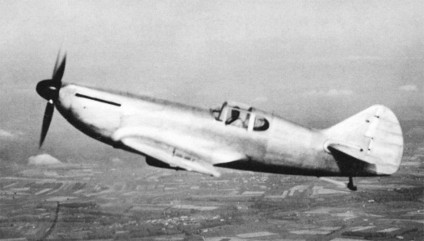
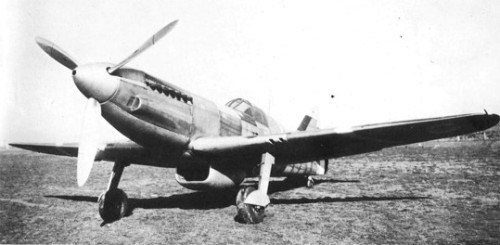
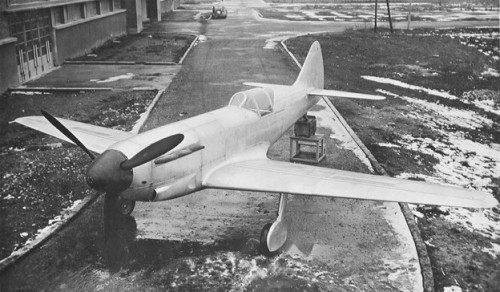
D.520.01 – First Prototype
First flight, 2 October 1938, piloted by Marcel Doret.
Powered by a Hispano-Suiza 12Y-21 engine (initially underpowered).
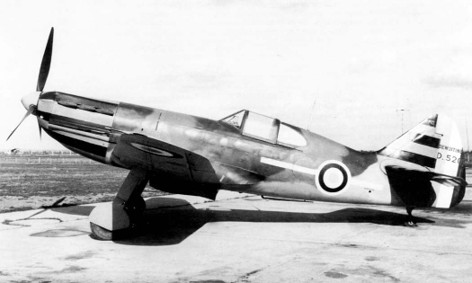
Featured a sleek, low-wing monoplane design with retractable landing gear and an enclosed cockpit—modern for its time.
Initial trials revealed insufficient speed and climb rate; modifications were ordered.
Iterative Refinements
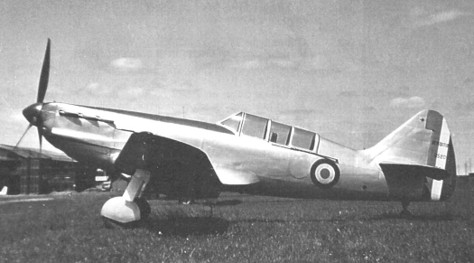
The engine was upgraded to a Hispano-Suiza 12Y-29, improving performance.
Airframe adjustments included:
Enlarged radiator intake.
Modified cowling and propeller spinner.
Revised tailplane geometry for better stability.
Armament configuration evolved:
central 20 mm cannon firing through the propeller hub, plus four wing-mounted 7.5 mm MAC 1934 machine guns.
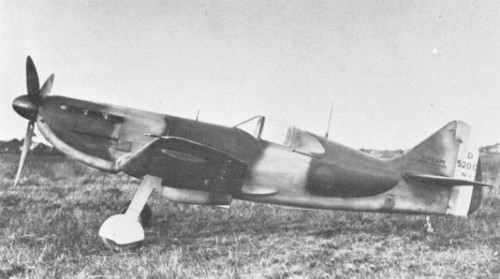
520.02
Pre-Production Evaluation
Additional prototypes and pre-series aircraft (D.520.02 to D.520.13) tested between late 1938 and early 1939.
These trials confirmed the aircraft’s superior manoeuvrability and handling compared to contemporaries.
Production was authorised in early 1939, but delays in engine delivery and tooling slowed rollout.
Transition to Series Production
The finalised configuration led to the D.520 C.1 production model.
The first production aircraft was delivered in January 1940.
Only 36 units were operational by the time of the German invasion in May 1940.
The Production Variant
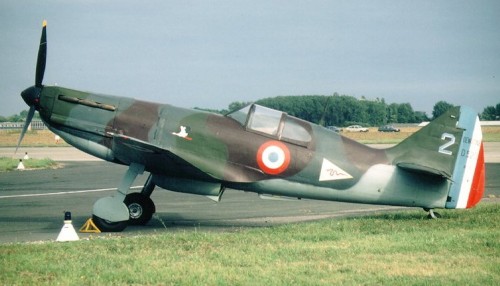
The D.520 C.1 was the principal production version of the Dewoitine D.520, developed in response to a 1936 French Air Ministry requirement for a modern, high-speed fighter.
Powered by the Hispano-Suiza 12Y-45 engine (910 hp), it featured a 20 mm cannon firing through the propeller hub and four wing-mounted 7.5 mm machine guns.
Entering service in early 1940, the D.520 C.1 was praised for its manoeuvrability and firepower, proving superior to the Morane-Saulnier M.S.406 and Bloch MB.152.
Though slower than the Bf 109E, it was more agile and well-liked by pilots.
Limited numbers were available during the Battle of France, with only 36 operational at the outbreak of hostilities.
After the armistice, the type continued in service with the Vichy Air Force and later saw use by Germany, Italy, Bulgaria, and Free French forces.
Postwar, surviving aircraft were used as advanced trainers until final retirement in 1953.
D.520Z
Prototype Overview
The D.520Z was an advanced prototype based on the Dewoitine D.520, designed to test the new Hispano-Suiza 12Z engine (1,200 hp).
Modifications included a larger oil cooler, revised radiator, individual exhaust stacks, and improved landing gear.
Due to engine delays, the aircraft first flew in late 1941 with a 12Y-49 engine, reaching 560 km/h.
Intended as the basis for the SE.520Z production model, 105 units were approved by German authorities in September 1942.
Construction began but was disrupted by the occupation of southern France.
The prototype, completed in February 1943 with a 12Z-01 engine, was projected to reach 660 km/h with wing-mounted armament: two 20 mm cannons and two 7.5 mm machine guns.
Plans to use the 1,600 hp 12Z-89ter were halted when the Germans banned further development.
Postwar, the SE.520Z served as an engine testbed.
It taxied in 1948 but never flew and was scrapped in 1949.
Direct Derivatives (1940)
In early 1940, SNCAM explored multiple engine upgrade programmes for the D.520 airframe to enhance performance.
These efforts were terminated following the French armistice of 22 June 1940.
D.521
Fitted with a Rolls-Royce Merlin III engine.
One prototype completed; project cancelled.
D.522
Planned conversion using the Allison V-1710 C-1 engine.
Abandoned before prototype completion.
D.523
Powered by a Hispano-Suiza 12Y-51 (820 kW / 1,100 hp) with a Szydlowski-Planiol supercharger.
Prototype reached pre-production trials by June 1940.
D.524
A single prototype was built with a Hispano-Suiza 12Y-89ter engine.
Never flown.
D.525
The refined development of the D.523 remained incomplete.
D.790
Carrier-based variant proposed for naval use.
No examples built; project terminated pre-armistice.
HD.780
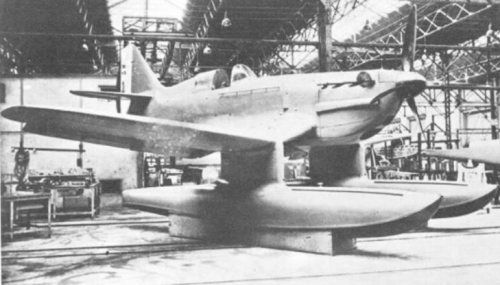
Floatplane adaptation of the D.520.
One prototype was constructed but never flown.
Cancelled following the June 1940 armistice.
Related Projects
D.550
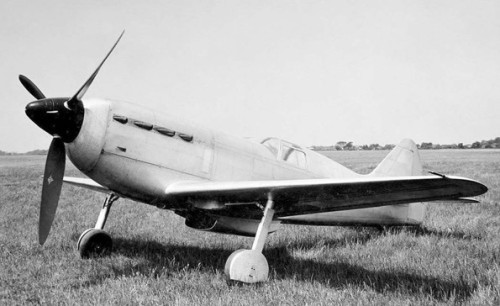
Unarmed speed record aircraft with a lightweight airframe loosely derived from the D.520.
One example completed.
D.551
Armed military developments of the D.550.
Twelve airframes built, none flown.
Development briefly resumed in 1941 but halted under German occupation.
Post-Armistice Developments
Following the June 1940 armistice, several experimental projects were initiated under Vichy control.
All were discontinued after the German occupation of Southern France in November 1942.
D.520 Amélioré
A single production D.520 was modified with minor aerodynamic refinements aimed at increasing top speed while retaining the original engine configuration.
M.520 T
Proposed trainer aircraft featuring a redesigned airframe loosely derived from the D.520.