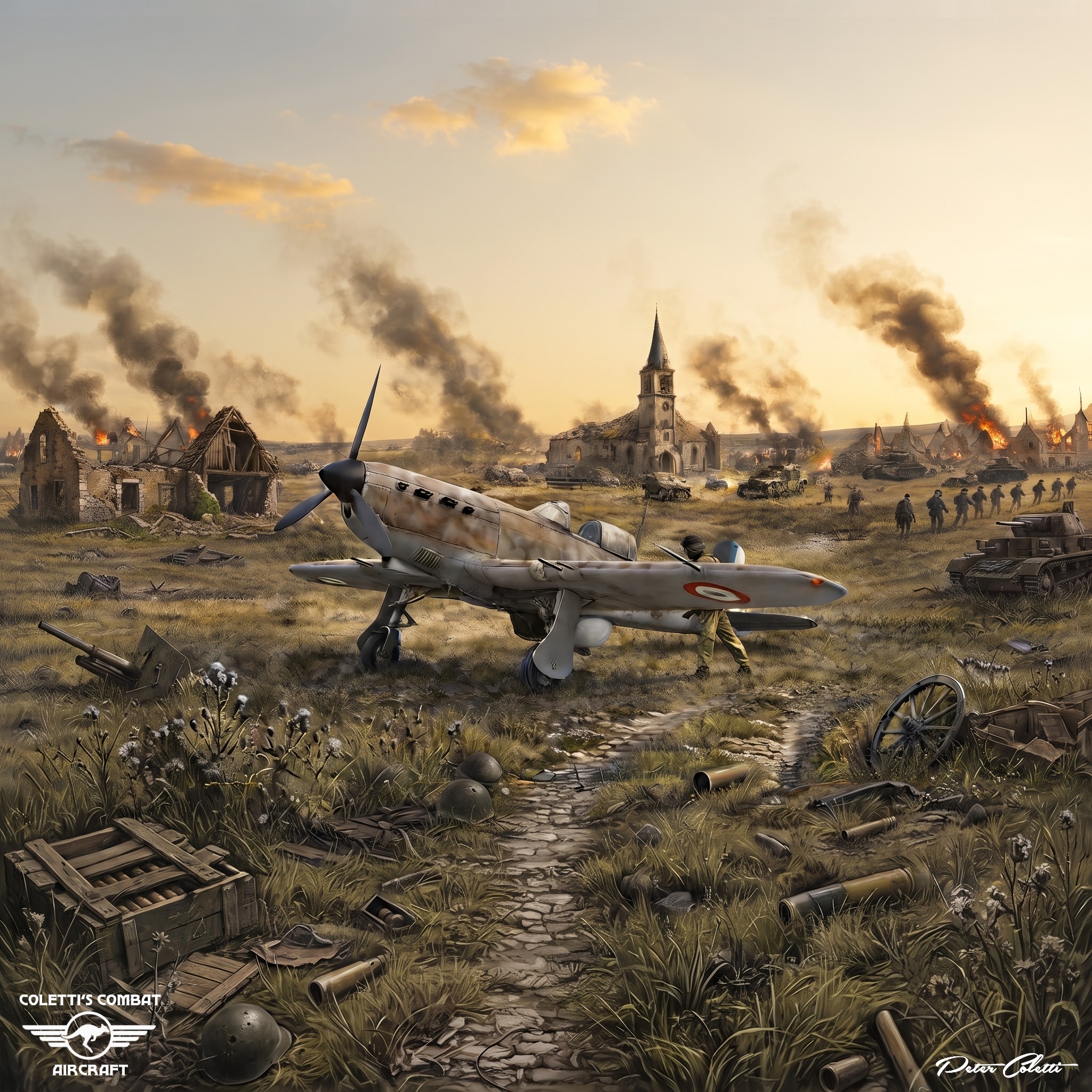
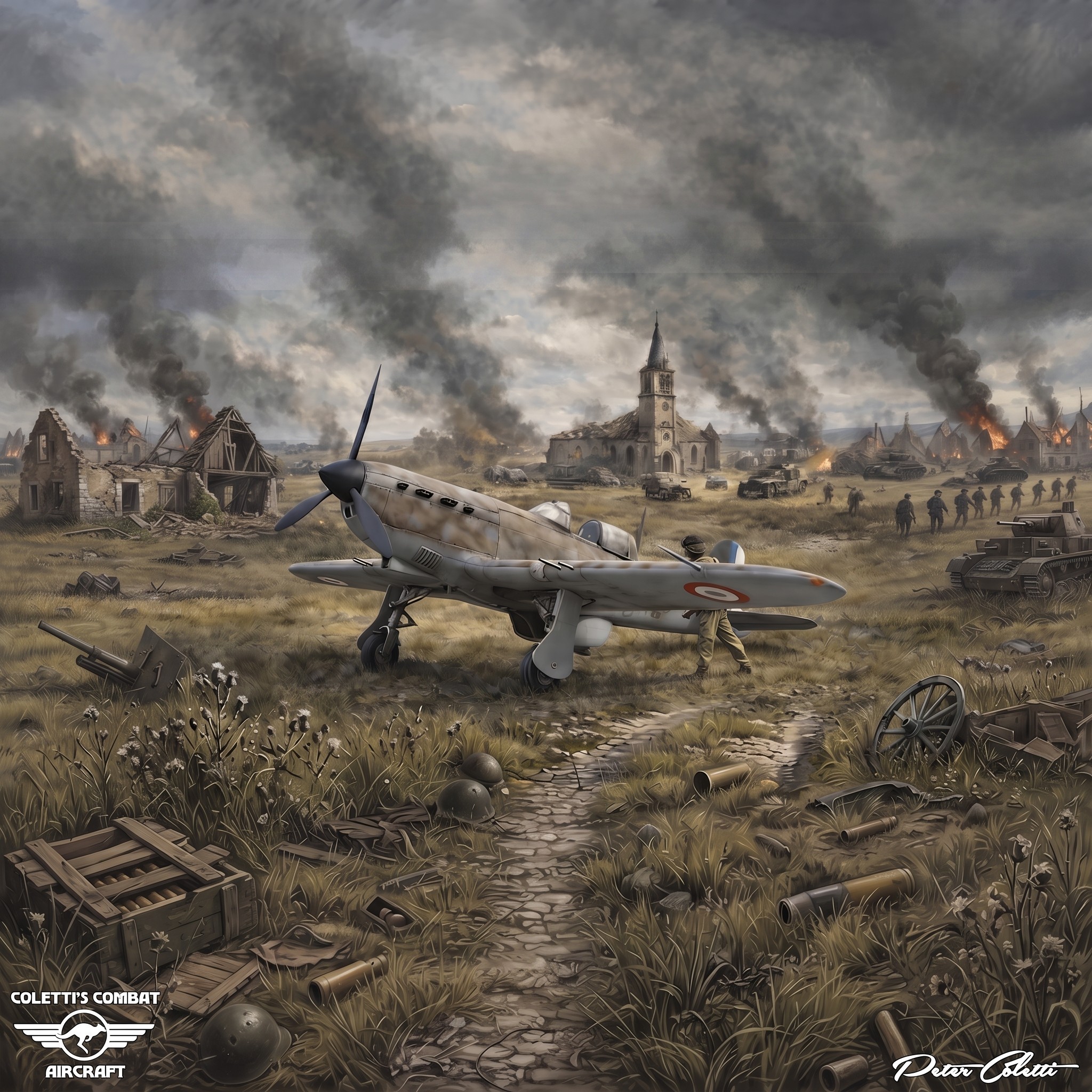
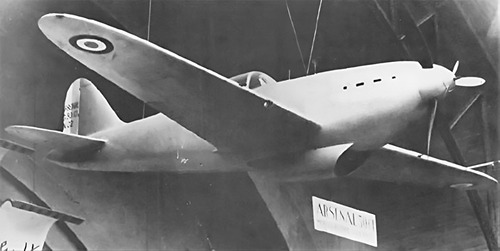
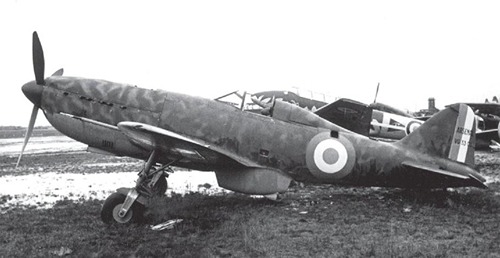
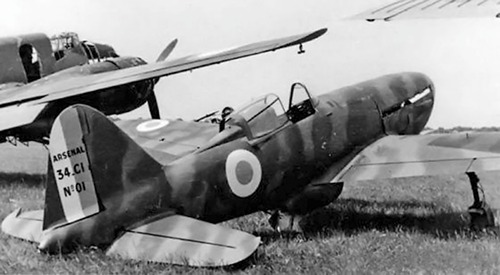
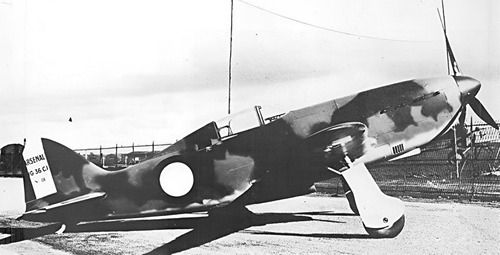
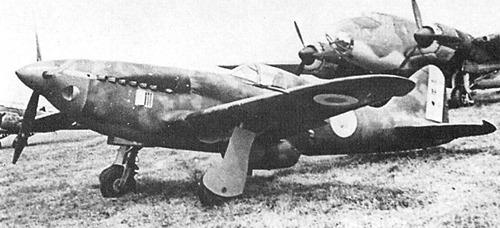
The Arsenal VG-33 was a French light fighter developed by Arsenal de l’Aéronautique as part of a 1936 initiative to rapidly expand France’s modern air fleet using wooden-construction aircraft.
It was a derivative of the VG-30 series, designed by Michel Vernisse and Jean Galtier.
Development and Deployment
First flight
25 April 1939
Engine
Hispano-Suiza 12Y-31 (860 hp)
Armament
1× 20 mm HS.404 cannon (motocannon), 4× 7.5 mm MAC 1934 machine guns
Top speed
~560 km/h (348 mph)
Despite its promising performance, the VG-33 suffered from production delays.
Although 220 units were ordered and later increased to 1,000, only about 25 were completed before the German invasion in May 1940.
Most airframes remained unpowered at the factory when it was overrun.
Combat Service
Battle of France (May–June 1940)
The VG-33 saw extremely limited operational use.
A handful were reportedly delivered to frontline units, but there is no confirmed record of combat engagements.
The aircraft arrived too late to influence the outcome of the campaign.
Post-Invasion Fate
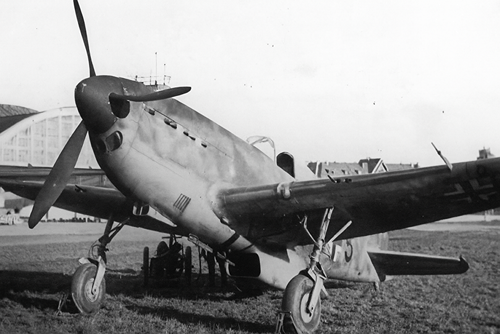
Captured airframes and prototypes were seized by German forces.
There is no evidence they were evaluated or flown by the Luftwaffe.
The VG-33 programme was effectively terminated with the fall of France.
Historical Significance
Though it never saw combat, the VG-33 is often cited as one of the most promising French fighters of 1940—comparable in performance to the Dewoitine D.520 and even the Messerschmitt Bf 109E.
Its streamlined design and wooden construction made it a symbol of French ingenuity under pressure, but its fate underscores the logistical and industrial challenges France faced in the lead-up to WWII.
Arsenal VG-30
The VG-30 was a French lightweight fighter prototype developed in 1938 by Arsenal de l’Aéronautique.
Designed with a wooden monocoque fuselage and retractable gear, it aimed to be fast and easy to produce using non-strategic materials.
Engine
Initially planned for a Potez 12Dc, but flew with a Hispano-Suiza 12Xcrs (690 hp)
Armament (planned)
1 × 20 mm cannon + 4 × 7.5 mm machine guns
First flight
1 October 1938
Performance
Faster than the MS.406, it reached 805 km/h in dive tests
Though promising, the VG-30 was superseded by the VG-33 and later variants due to engine upgrades and wartime urgency.
It never entered production but laid the foundation for the VG series.
VG-32
(1940)
Engine
Allison V-1710C-15
(American liquid-cooled V-12)
Purpose
Intended to evaluate compatibility with U.S. powerplants amid engine shortages
Historical Note
Completed but never flown; captured intact by German forces at Villacoublay airfield during the Battle of France
Significance
Represents France’s attempt to diversify engine sourcing and maintain fighter development under wartime constraints.
VG-33
(1939–1940)
Engine
Hispano-Suiza 12Y-45, producing 860 hp
First Flight
April 25, 1939
Top Speed
560 km/h (348 mph)
Production Orders
Initially 220 units, later expanded to 1,000
Operational Context
Intended to replace older fighters like the MS.406 and D.520
Challenges
Production bottlenecks and engine delivery delays meant only a handful were combat-ready by the time of the German invasion in May 1940.
Combat Use
A few VG-33s saw limited action, being praised for their speed and manoeuvrability.
VG-34
(1940)
Engine
Hispano-Suiza 12Y-45, upgraded to 920 hp
Enhancements
Improved propeller and cooling system
Performance
Slightly better climb rate and acceleration than the VG-33
Status
Prototype only; not mass-produced.
VG-36
(1940)
Engine
Hispano-Suiza 12Y-51, 1,000 hp
Aerodynamic Refinements
Redesigned nose, radiator intake, and canopy for reduced drag
Performance
Estimated top speed of 600 km/h (373 mph)
Significance
Represented the most aerodynamically advanced iteration before the VG-39.
VG-39
(1940)
Engine
Hispano-Suiza 12Y-89, delivering 1,200 hp
Top Speed
625 km/h (388 mph)
Design Features
Extended nose, improved streamlining, and armament upgrades (including a 20 mm cannon and six 7.5 mm machine guns)
Combat Potential
It would have rivaled contemporary German fighters like the Bf 109E.
Outcome
The prototype flew successfully, but France’s defeat halted further development.