Home
Aircraft
Blog
Contact
Home
Aircraft
Blog
Contact
Search
Home
/
A - Z INDEX
/
P
/ Polikarpov I-153
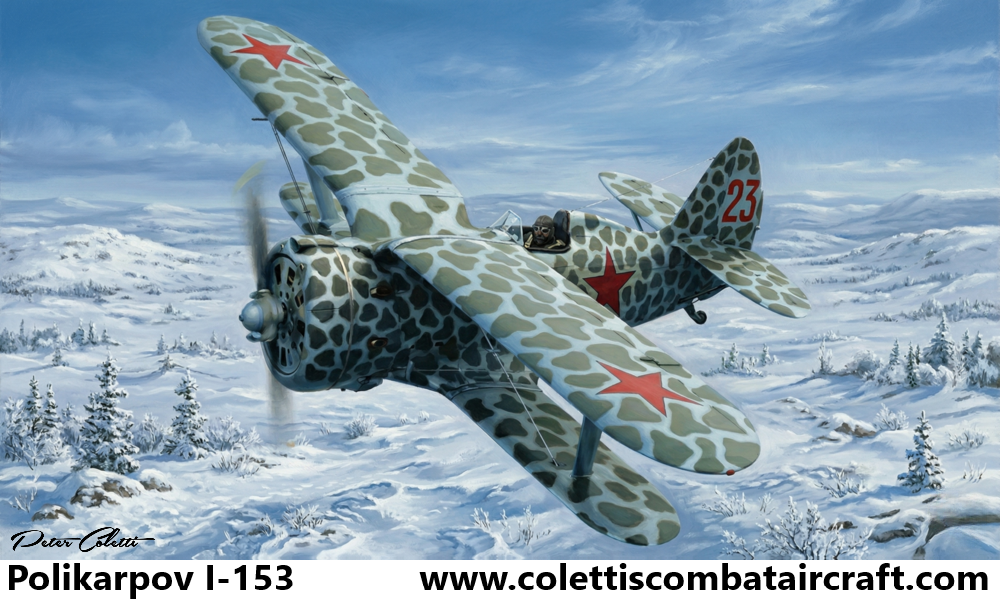
Polikarpov I-153
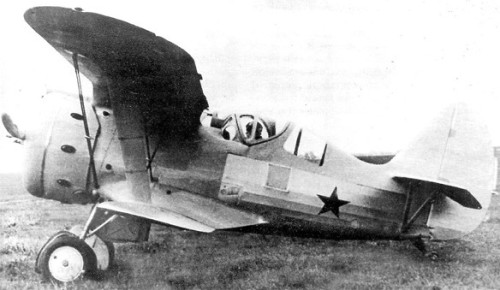
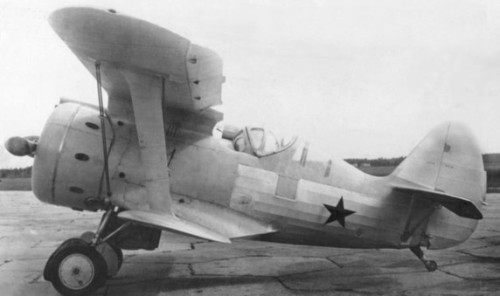
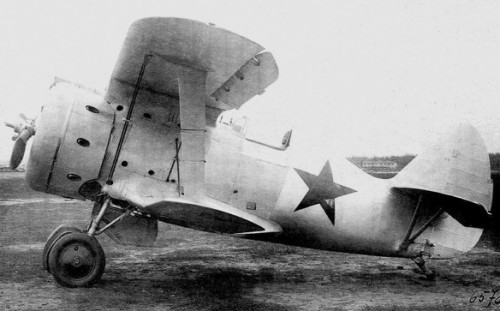
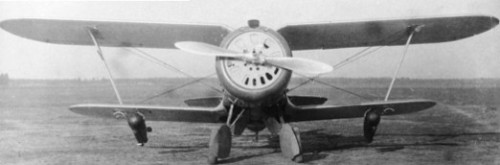
Polikarpov I-153 Chaika
Early Deployment and Pre-War Combat
Khalkhin Gol (1939)
The I-153 first saw combat during the Soviet-Japanese border conflict in Mongolia.
It performed well against the Japanese Nakajima Ki-27, leveraging its agility and improved speed over earlier biplanes.
Winter War (1939–1940)
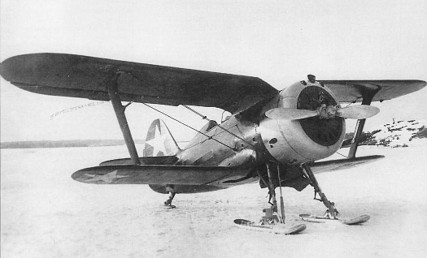
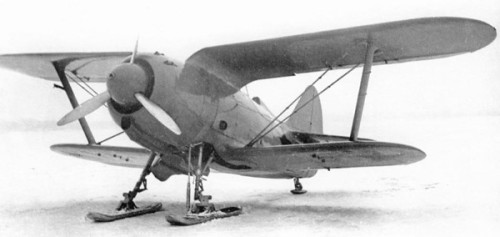
Used extensively by Soviet forces against Finland.
Despite its manoeuvrability, the I-153 suffered losses to Finnish fighters and anti-aircraft fire.
Several were captured and reused by the Finnish Air Force.
Role in the Great Patriotic War (1941–1945)
Initial Soviet Defense (1941)
At the outbreak of Operation Barbarossa, the I-153 was still in frontline service.
It was deployed alongside the I-16 in mixed fighter regiments.
However, it was quickly outclassed by modern German aircraft like the Bf 109.
Tactical Use
The I-153 was often reassigned to ground attack and reconnaissance roles.
Its ability to operate from rough fields and its tight turning radius made it useful in close support missions.
Naval Aviation
Modified I-153s with extended range were used by Soviet naval aviation for coastal defence and convoy escort duties.
Decline and Replacement
Obsolescence
By 1942, the I-153 was largely withdrawn from frontline service.
It was replaced by more capable monoplane fighters such as the Yak-1, LaGG-3, and MiG-3.
Training and Secondary Roles
Surviving aircraft were relegated to training units and secondary duties.
Some were used for experimental modifications, including pressure cabins and ramjet trials.
Legacy
Production
Over 3,400 units were built between 1939 and 1941.
Survivors
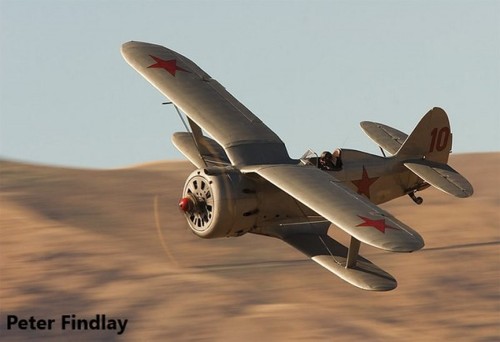
A few I-153s remain in museums and flying condition, symbolising the end of the biplane era in Soviet aviation.
The Variants
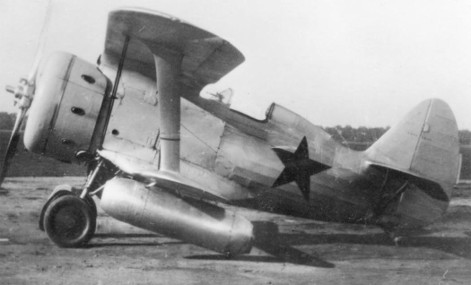
I-153DM
(Supplementary Engine)
Purpose
Experimental speed enhancement using ramjet technology.
Configuration
Fitted with DM-2 or DM-4 gasoline-burning ramjets under the wings.
Operational Notes
Conducted 74 test flights, primarily to evaluate ramjet feasibility on piston aircraft.
Significance
One of the earliest Soviet attempts to integrate jet propulsion into existing airframes.
I-153P
(Pushechnyy – Cannon-Armed)
Armament
Two synchronised 20 mm ShVAK cannons replacing standard ShKAS machine guns.
Trade-offs
Increased firepower effective against armoured targets.
Heavier armament reduced manoeuvrability.
Gunpowder residue often obscured the windscreen.
Production
At least eight built.
Role
Intended for frontline combat against more heavily protected aircraft.
I-153Sh and I-153USh
(Ground Attack Variants)
I-153Sh
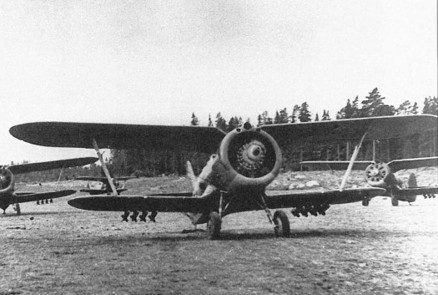
Equipped with underwing containers housing four ShKAS machine guns.
I-153 Ush
Carried twenty 2.5 kg bombs for light ground attack.
Purpose
Tactical support and battlefield interdiction.
Deployment
Used in limited numbers; effectiveness constrained by payload and survivability.
I-153TK
(Turbo-Kompressor)
Engine
M-25V or M-62 radial engines with twin TK-1 superchargers.
Production
Four prototypes tested; twenty aircraft built.
Objective
Improve high-altitude performance and climb rate.
Outcome
Demonstrated modest gains but was quickly overshadowed by monoplane fighters.
I-153V / I-190GK
(Pressure Cabin Testbed)
Modification
Fitted with Schyerbakov’s “minimum leak” pressure cabin.
Purpose
Evaluate pressurisation for high-altitude operations.
Legacy
Served as a precursor to later Soviet high-altitude fighter designs.
I-153V-TKGK
(Turbocharged Hermetic Cabin)
Engine
Turbocharged M-63 radial.
Cabin
Fully pressurised for high-altitude flight.
Production
One built.
Significance
Advanced concept for its time, but impractical for mass production.
I-153UD
(Wooden Rear Fuselage)
Design
The rear fuselage is constructed as a wooden monocoque.
Goal
Conserve strategic metals during wartime.
Result
Did not enter production due to structural limitations.
Extended-Range I-153
(Naval Use)
Modification
Larger oil tanks and plumbing for underwing external fuel tanks.
Effect
Doubled combat range.
Deployment
Primarily used by Soviet naval aviation for coastal patrol and escort duties.
I-190
(High-Powered Experimental Variant)
Engine
M-88V radial (820 kW / 1,100 hp).
Armament
Two ShVAK cannons + four ShKAS machine guns.
First Flight
30 December 1939.
Fate
Crashed on 13 February 1941; programme discontinued.
Specifications
Crew
one
Length
6.17 m (20 ft 3 in)
Wingspan
10 m (32 ft 10 in)
Height
2.8 m (9 ft 2 in)
Wing area
22.14 m² (238.3 sq ft)
Airfoil
Clark YH
Empty weight
1,452 kg (3,201 lbs)
Gross weight
1,960 kg (4,321 lbs)
Max takeoff weight
2,110 kg (4,652 lbs)
Powerplant
1 × Shvetsov M-62 9-cylinder
air-cooled radial piston engine,
597 kW (801 hp)
Propellers
2-bladed variable-pitch propeller
Performance
Maximum speed
444 km/h (276 mph, 240 kn) at 4,600 m (15,100 ft)
Cruise speed
297 km/h (185 mph, 160 kn) at 2,000 m (6,600 ft)
Range
470 km (290 mi, 250 nmi)
Service ceiling
10,700 m (35,100 ft)
Rate of climb
15 m/s (3,000 ft/min)
Time to altitude
7,000 m (23,000 ft) in 8 minutes 18 seconds
Armament
Guns
4 × 7.62 mm (0.300 in) ShKAS machine guns
with 2,600 rounds of ammunition
Rockets
8 x 82 mm (3.228 in) RS-82 rockets.
Share on facebook