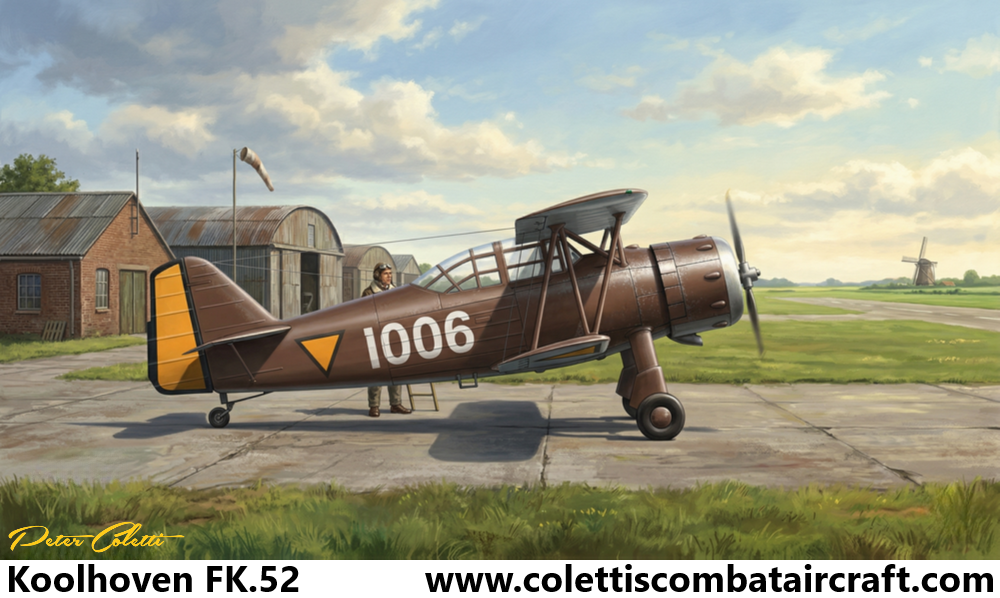
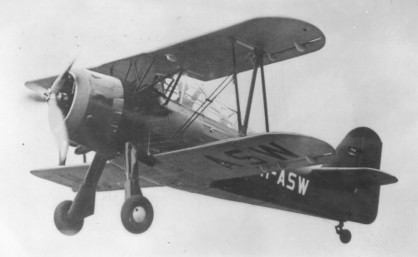
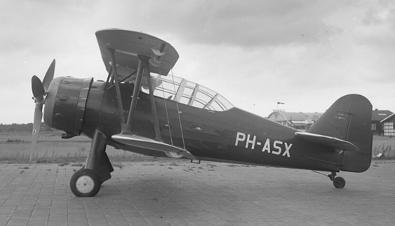
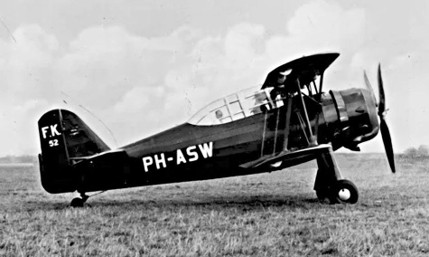
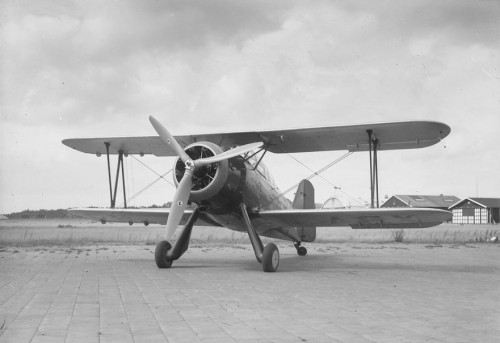
Conceived in the Netherlands during the late 1930s by aircraft manufacturer Koolhoven.
Intended as a modern replacement for the ageing Fokker C.Vs used by the Dutch Army Air Force (Luchtvaartafdeling).
It featured an enclosed cockpit, single-strut landing gear, and a Bristol Mercury VIII engine rated at 830 hp.
The first flight occurred on 9 February 1937, but the prototype was tragically lost in an accident during a public display at the 5th World Scout Jamboree in August 1937.
Production & Specifications
Only six units were built between 1938 and 1940.
Maximum speed
382 km/h;
service ceiling
9,300 m;
range
1,150 km.
Operational Use
The Dutch Air Force evaluated the aircraft, but it was considered obsolete by the time of its introduction in 1939.
Two aircraft were purchased by Swedish Count Carl Gustav von Rosen and donated to the Finnish Air Force during the Winter War (1939–1940).
Designated KO-129 and KO-130, they flew 15 combat sorties, attacking Soviet forces near Vironlahti.
KO-130 was lost in 1941 during a leaflet-dropping mission over Hanko; both crew members perished and were buried in Estonia.
KO-129 was destroyed in a 1943 accident, though the pilot survived.
Legacy
The F.K.52 was retired by 1943 and remains a rare example of Dutch biplane design at the twilight of the biplane era.
Its limited production and combat use make it a niche but poignant chapter in interwar aviation history.