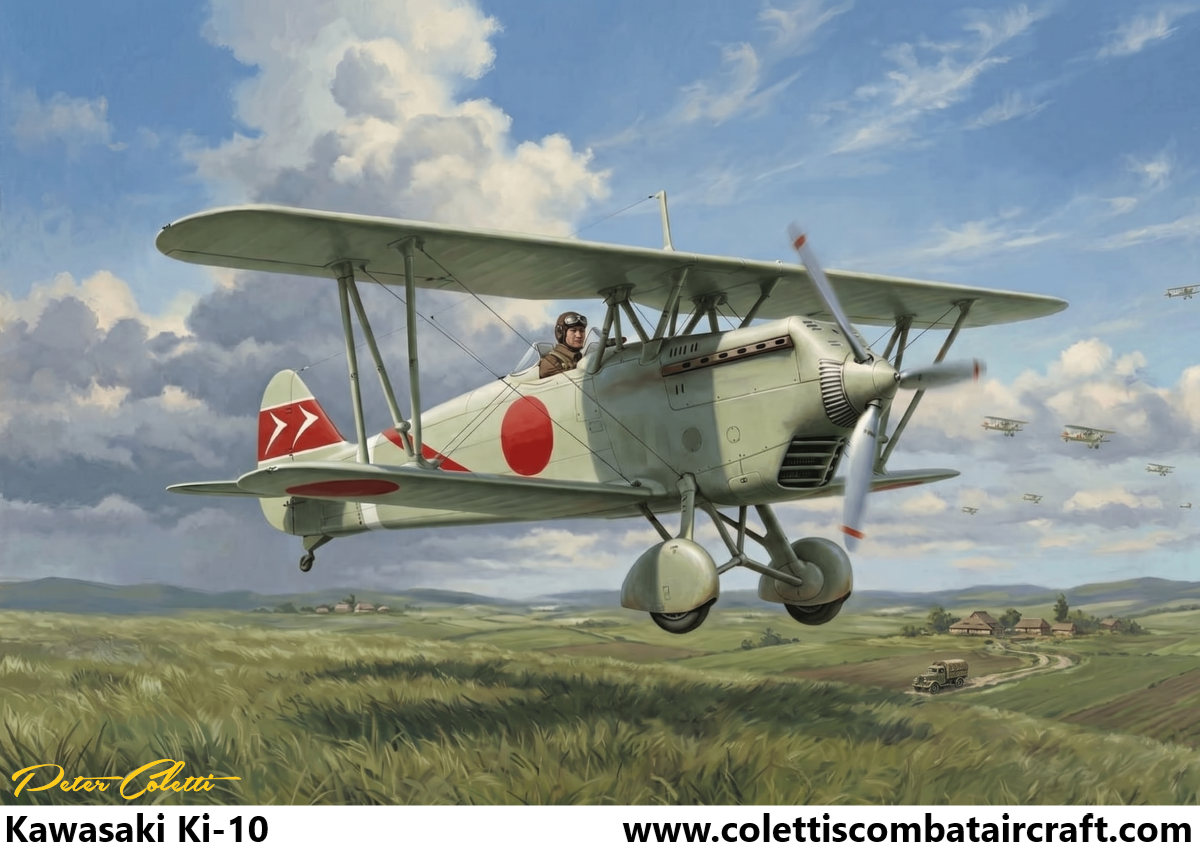
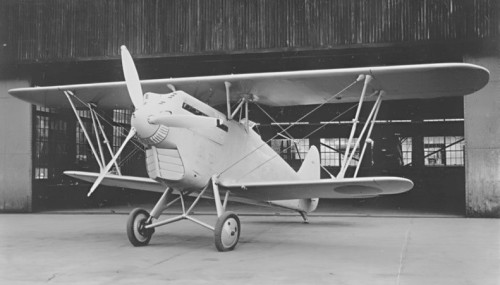
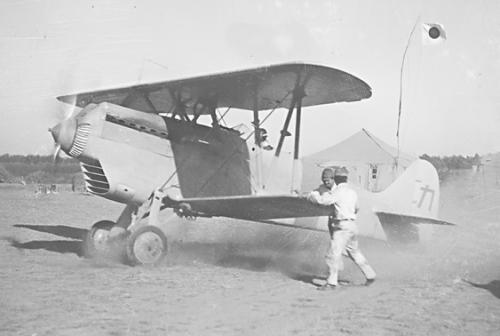
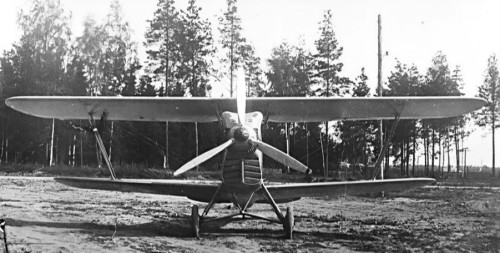
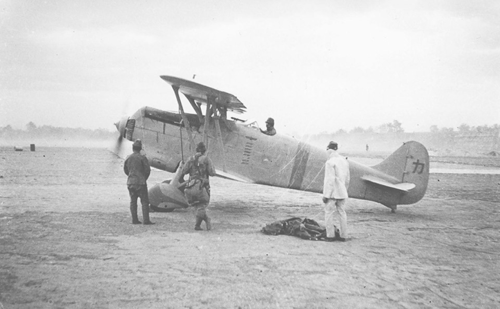
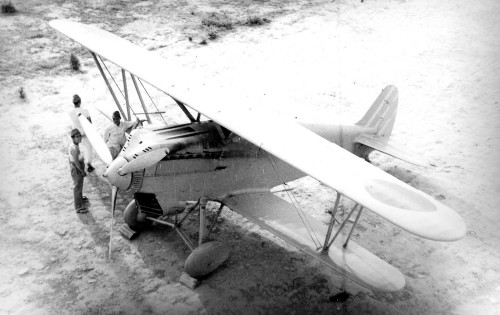
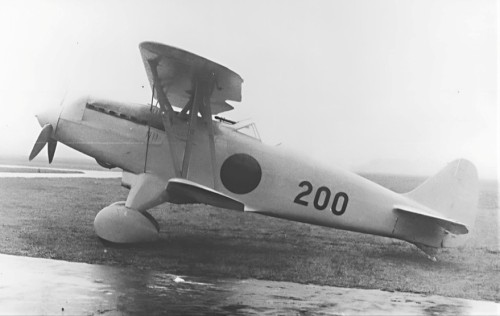
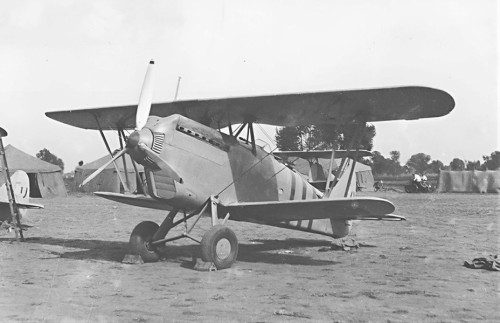
The Kawasaki Ki-10, designated as the Army Type 95 Fighter,
was the last biplane fighter adopted by the Imperial Japanese Army Air Force (IJAAF).
Designed by Takeo Doi and introduced in 1935, it was chosen over the more modern monoplane Nakajima Ki-11 due to its superior manoeuvrability—a trait highly valued in Japanese aerial doctrine at the time.
Design and Capabilities
Engine
Kawasaki Ha-9-IIb
liquid-cooled V12,
850 hp
Armament
Two synchronized 7.7 mm Type 89 machine guns
Max Speed
~400 km/h
Range
~1,100 km
Service Ceiling
~11,500 m
Construction
All-metal frame with fabric-covered surfaces; unequal-span biplane wings with upper ailerons
Early Combat Use
The Ki-10 saw its first combat during the Second Sino-Japanese War, beginning in 1937:
Deployed in Manchukuo and North China, it escorted bombers and engaged Chinese fighters such as the Curtiss Hawk II and Vought V-65C Corsair.
One notable engagement occurred over Taiyuan, where Ki-10s clashed with Chinese aircraft.
Although they scored some victories, Japanese ace Major Hiroshi Miwa was shot down and killed by Captain Chan Kee-Wong of the Chinese Air Force.
Decline and Obsolescence
By 1939, during the Nomonhan Incident (Battles of Khalkhin Gol against Soviet forces), the Ki-10 was clearly outclassed by newer Soviet monoplanes like the Polikarpov I-16.
It was gradually replaced by the more advanced Nakajima Ki-27.
Secondary Roles in WWII
Although obsolete by the start of the Pacific War, the Ki-10 was retained for:
Training missions
Short-range patrols
Reconnaissance duties in Japan and occupied China (notably in early 1942).
A total of 588 units were built, including prototypes and both production variants
Ki-10-I
300 units
Ki-10-II
280 units (with improved stability and longer fuselage)
Legacy
The Ki-10’s service life reflects Japan’s transitional phase from biplane to monoplane fighters.
Though outdated by WWII standards, it played a formative role in shaping IJAAF tactics and pilot training in the late 1930s.
The Variants
Ki-10 (Prototype)
Built
4 units (early 1935)
Purpose
Evaluation aircraft for IJAAF trials
Notes
These prototypes were constructed to compete against Nakajima’s Ki-11 monoplane.
Despite the Ki-11’s superior speed, the Ki-10 prototypes demonstrated a better climb rate and turning ability—qualities the IJAAF prioritised.
Outcome
Selected for production as the Army Type 95 Fighter.
Ki-10-I
(Army Fighter Type 95-I)
Built
300 units (Dec 1935 – Oct 1937)
Role
First production model; frontline fighter during the early Second Sino-Japanese War
Features
All-metal frame with fabric-covered wings
Kawasaki Ha-9-IIa V12 engine (~850 hp)
Two synchronized 7.7 mm Type 89 machine guns
Combat Use
Deployed in China for bomber escort and air superiority missions.
Engaged Chinese aircraft, like the Curtiss Hawk II and Vought Corsair.
Its agility made it effective in early dogfights, though it lacked armour and modern speed.
Ki-10-II (Prototype)
Built
1 unit (May 1936)
Purpose
Experimental upgrade of Ki-10-I
Modifications
Lengthened fuselage for improved longitudinal stability
Slightly increased wingspan
Outcome
Served as the basis for the improved Ki-10-II production model.
Ki-10-II
(Army Fighter Type 95–2)
Built
280 units (June 1937 – Dec 1938)
Role
Enhanced production variant
Improvements
Better stability and control at high speeds
Refined aerodynamics and strengthened airframe
Operational Use
Continued service in China and Manchuria; some units participated in the Nomonhan Incident (1939) against Soviet forces, where they were outclassed by Polikarpov I-16 monoplanes.
Ki-10-I KAI
Built
1 unit (Oct 1936)
Purpose
Engine and radiator testbed
Modifications
Revised cooling system
Minor aerodynamic tweaks
Outcome
Used to evaluate performance enhancements for future variants.
Ki-10-II KAI
Built
2 units (Nov 1937)
Purpose
Advanced aerodynamic prototype
Features
Streamlined airframe
Powered by the Kawasaki Ha-9-IIb engine (850 hp)
Designation Confusion
Despite being based on the Ki-10-II, it was re-designated as Ki-10-I KAI due to its experimental nature.
Outcome
Did not enter production but informed later monoplane designs.