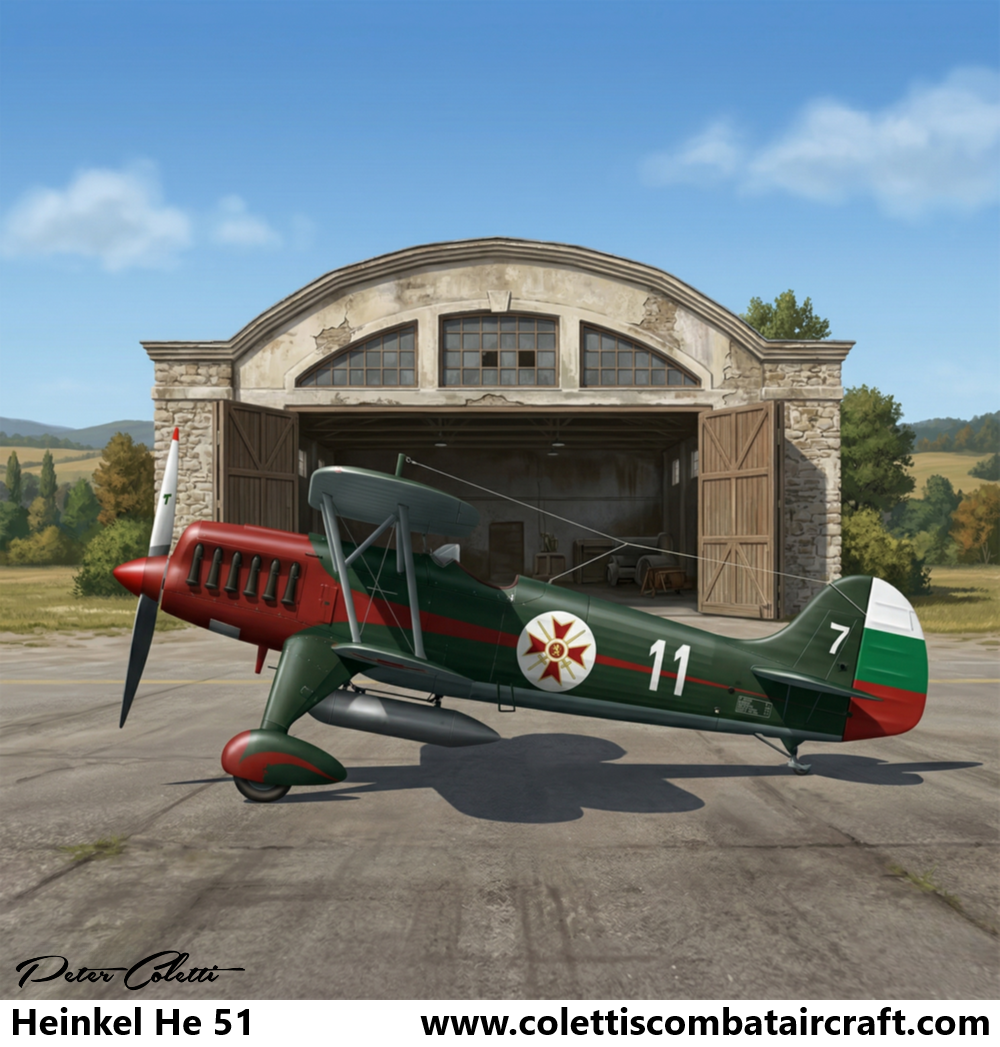
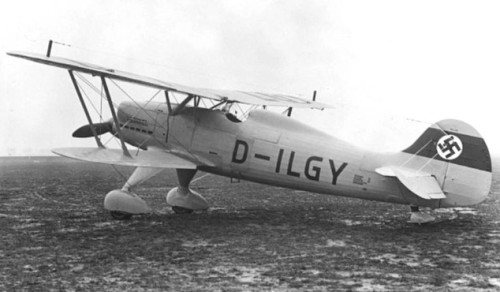
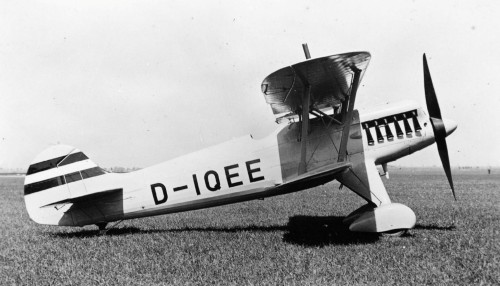
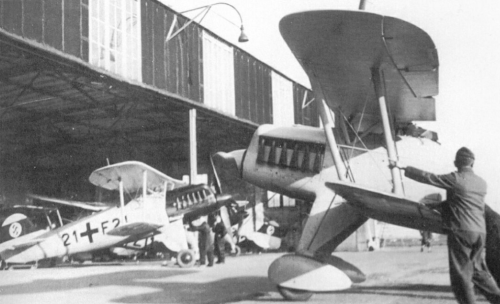
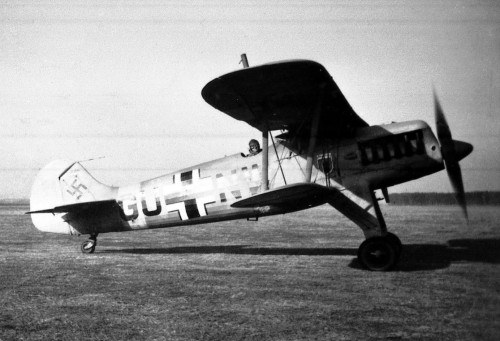
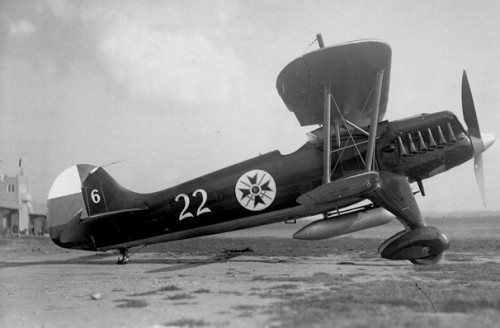
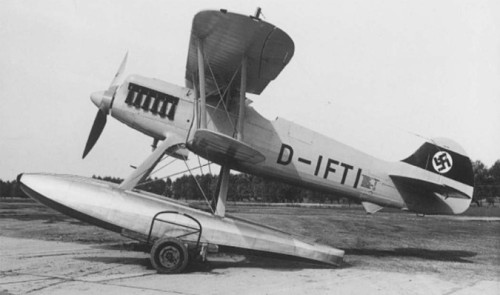
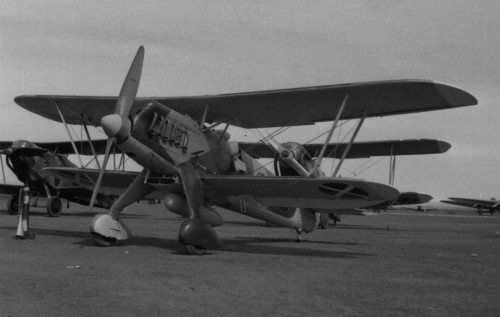
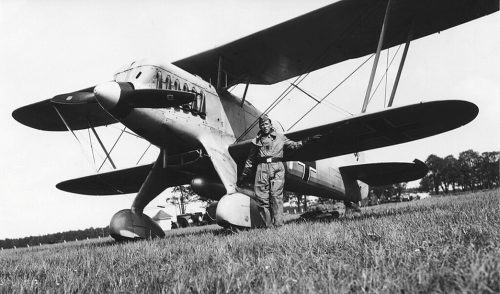
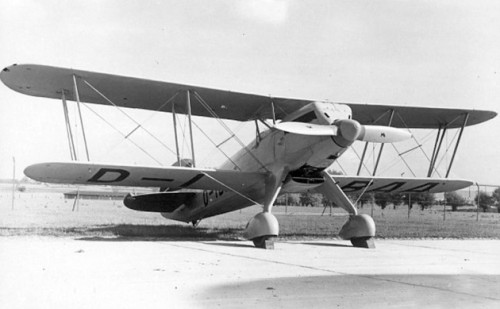
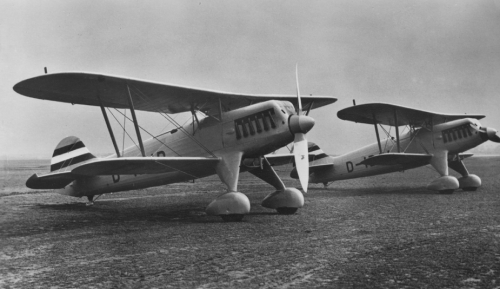
The Heinkel He 51 was a single-seat German biplane fighter developed in the early 1930s as a successor to the He 49.
It featured all-metal construction with fabric covering, powered by a BMW VI engine and armed with two 7.92 mm machine guns.
Spanish Civil War (1936–1939)
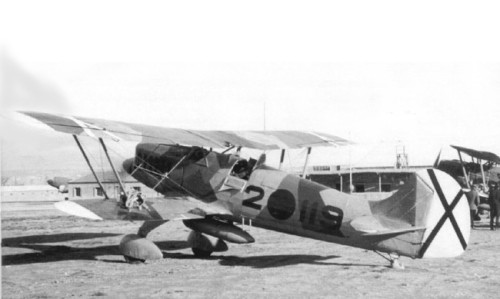
The He 51 saw its most active combat during the Spanish Civil War, where it was deployed by the German Condor Legion and Spanish Nationalist forces.
Initially successful against outdated Republican aircraft, its performance quickly proved inadequate against Soviet-supplied Polikarpov I-15 and I-16 fighters and Tupolev SB bombers.
It was soon relegated from air superiority to ground-attack roles, where it contributed to the development of close air support tactics under Wolfram von Richthofen—tactics later refined by the Luftwaffe in WWII.
World War II Service
By the outbreak of WWII in 1939, the He 51 was obsolete as a front-line fighter.
It was retained primarily for training, liaison, and ground-attack duties, especially in secondary theatres or rear areas.
The aircraft was gradually phased out and retired from Luftwaffe service by 1942.
Legacy
Though short-lived as a combat fighter, the He 51 played a pivotal role in shaping Luftwaffe doctrine, especially in ground-attack operations.
Its deployment in Spain provided valuable combat experience for German pilots and commanders ahead of WWII.
The Variants
He 51a
Role and changes
A prototype that evolved from the He 49 family, the He 51a introduced a new vertical tail, revised wings and undercarriage, and a redesigned radiator compared with the He 49; these changes established the basic airframe and handling that entered pre‑production testing.
He 51A-0
Role and production
The pre‑production batch was used to validate production tooling and flight characteristics; 9 aircraft were built to finalise details before full production.
He 51A-1
Role and production
Initial mass‑production fighter version incorporating the prototype refinements; approximately 150 built and delivered as the first main production run to equip early Luftwaffe fighter units before the type was superseded by improved models.
He 51B-0
Role and modifications
Strengthened pre‑production airframes implementing structural improvements discovered during A‑series service and flight testing; 12 B‑0s were built to test the reinforced structure and minor aerodynamic refinements prior to large‑scale B production.
He 51B-1
Role and production
The primary B-series production fighter had the strengthened structure from B-0, refined equipment fit and routine production changes; roughly 450 B-1s were built, forming the bulk of He 51 production and supplying both Luftwaffe units and export/operational detachments such as those sent to Spain.
He 51B-2
Role and configuration
The twin‑float seaplane variant was adapted from the B airframe for maritime fighter and reconnaissance missions, fitted with central floats and seaworthy fittings; about 46 floatplanes were produced to give the He 51 limited coastal and naval reconnaissance capability.
He 51C-1
Role and combat use
Ground‑attack and close support adaptation with a reinforced structure for ordnance carriage and a ruggedised undercarriage: 100 C‑1s were built, and 79 were sent to Spain to equip the Legion Condor and Nationalist squadrons, where the C‑1 proved more useful in the ground‑attack role than as a fighter.
He 51C-2
Role and Improvements
Incremental C-Series production with revised radio equipment, cockpit and equipment refinements tailored for battlefield communications and operational reliability; 21 C-2 aircraft were built to incorporate those improvements into a close support role.
He 52
Role and status
An experimental high-altitude variant was produced as a single prototype to explore further performance at altitude and potential engine or supercharging changes; the He 52 did not enter production but represents Heinkel’s attempts to stretch the design’s capabilities beyond its original scope.
Spanish designation A.1
Role and usage
The Spanish Air Force designation A.1 corresponds to locally operated.
The 51B‑1 aircraft was supplied during the Spanish Civil War, reflecting the type’s integration into Nationalist inventories, where it served in fighter and later ground‑attack roles.
Production scale
Total He 51 productions were concentrated in the A‑1, B‑1 and C‑series runs, with roughly 700 airframes built across variants, including floatplanes and specialised prototypes.
Evolutionary pattern
The variants trace a clear pattern from prototype refinement (He 51a, A‑0) to reinforced production (B‑0, B‑1); role specialisation (B‑2 floatplane, C‑1/C‑2 ground attack); and limited experimental high-altitude attempts (B‑3, He 52).
Specifications
Crew
One
Length
8.4 m (27 ft 7 in)
Wingspan
11 m (36 ft 1 in)
Height
3.2 m (10 ft 6 in)
Wing area
27.2 m² (293 sq ft)
Empty weight
1,460 kg (3,219 lbs)
Gross weight
1,900 kg (4,189 lbs)
Powerplant
1 × BMW VI 7.3 Z V-12,
liquid-cooled piston engine,
559 kW (750 hp)
Propellers
2-bladed variable-pitch propeller
Performance
Maximum speed
330 km/h (210 mph, 180 kn)
Cruise speed
280 km/h (170 mph, 150 kn)
Range
570 km (350 mi, 310 nmi)
Service ceiling
7,700 m (25,300 ft)
Time to altitude
1,000 m (3,300 ft) in 1 minute 24 seconds
6,000 m (20,000 ft) in 16 minute 30 seconds
Wing loading
69.9 kg/m² (14.3 lbs/sq ft)
Power/mass
0.29 kW/kg (0.18 hp/lb)
Armament
Guns
2 × 7.92 mm (0.312 in) MG 17 machine guns in nose;