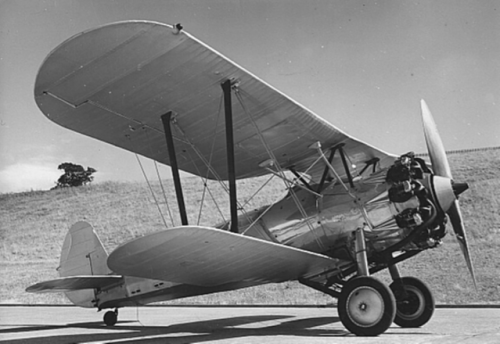
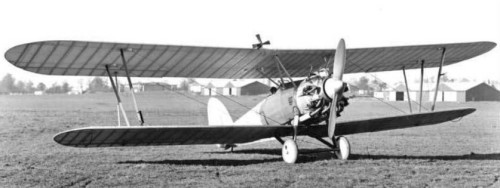
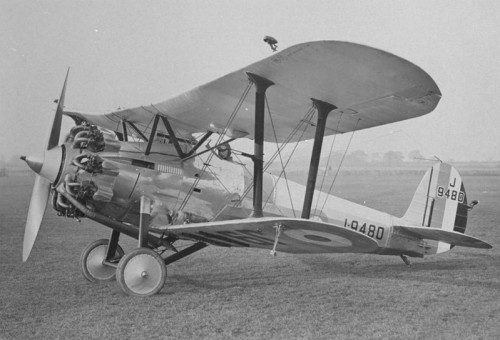
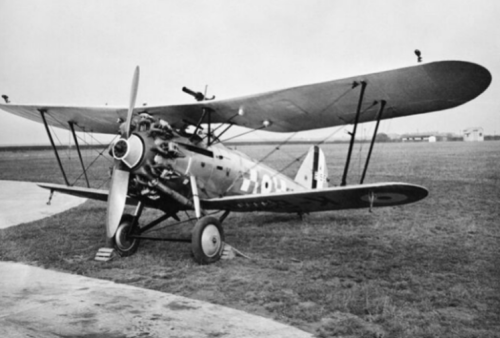
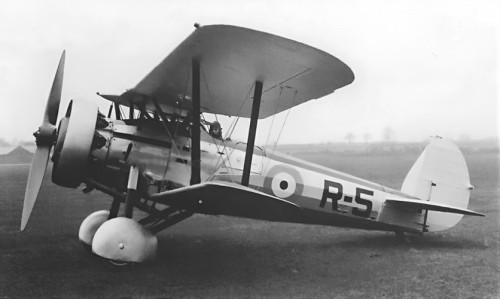
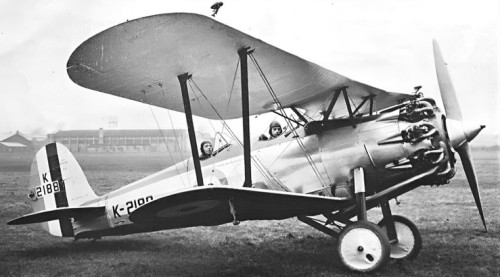
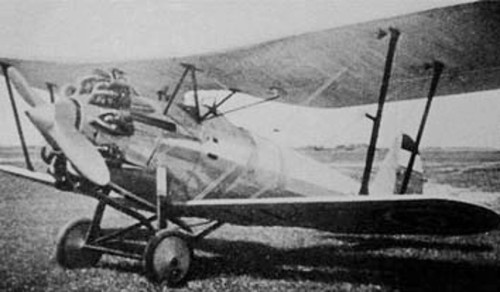
The Bristol Bulldog was a British single-seat biplane fighter developed during the 1920s by the Bristol Aeroplane Company.
Designed by Frank Barnwell, it emerged from a series of studies aimed at producing a modern fighter to meet Air Ministry specifications F.9/26 (day-and-night fighter) and N.21/26 (shipborne fighter).
The Bulldog was conceived as a private venture, designated Type 105, and powered by the Bristol Jupiter VII radial engine.
Its structure was all-metal with fabric covering, featuring an unequal-span biplane layout and Frise ailerons on the upper wing.
Armament consisted of two synchronised 0.303 in (7.7 mm) Vickers machine guns mounted on either side of the cockpit.
The first prototype flew on 17 May 1927, piloted by Cyril Uwins at Filton.
Initial trials at RAF Martlesham Heath were promising, and the Bulldog was selected over competitors like the Hawker Hawfinch after extensive evaluations.
Development and Variants
The Bulldog evolved through several variants, each refining performance and adapting to new roles:
Bulldog Mk. I (Type 105)
Role
Prototype single-seat day-and-night fighter.
Production
Two built.
Details
First flown on 17 May 1927, the Mk. I was powered by a supercharged Bristol Jupiter VII radial engine.
It featured an all-metal structure with fabric covering and twin 7.7 mm Vickers machine guns.
The design emphasised visibility and manoeuvrability, with a cut-out in the upper wing trailing edge and Frise ailerons.
It laid the foundation for subsequent Bulldog developments.
High-Altitude Bulldog
Role
Experimental high-altitude aircraft.
Production
One modified from the Mk. I prototype.
Details
This variant featured enlarged wings to improve lift at altitude, intended for a world altitude record attempt.
It retained the Jupiter engine but incorporated oxygen supply and radio equipment, showcasing early innovations in high-altitude flight.
Bulldog Mk. II (Type 105A)
Role
Second prototype and first production model.
Production
92 built by Bristol.
Engine
440 hp (330 kW) Bristol Jupiter VII radial.
Details
Introduced a longer fuselage and retained the smaller tail of the Mk. I.
It was selected over the Hawker Hawfinch after competitive trials and entered RAF service in 1929, replacing the Gloster Gamecock and Armstrong Whitworth Siskin.
It became the backbone of Britain’s air defence in the early 1930s.
Bulldog Mk. IIA
Role
Main production variant.
Production
268 built by Bristol.
Engine
490 hp (370 kW) Bristol Jupiter VIIF radial.
Details
Featured refined aerodynamics, improved structural details, and enhanced reliability.
Widely exported to countries including Australia, Denmark, Estonia, and Siam. Optional bomb racks allowed for light ground-attack capability.
This variant represented the peak of Bulldog operational use.
Bulldog Mk. IIIA
Role
Advanced development prototype.
Production
Two built.
Engine
Bristol Mercury IV enclosed in a Townend ring.
Details
Incorporated revised wings and a strengthened fuselage to improve performance and durability.
The Townend ring reduced drag and improved engine cooling.
One Mk. IIIA was later converted into the prototype for the Mk. IVA.
Bulldog Mk. IVA
Role
A four-gun day-and-night fighter developed to meet Air Ministry specification F.7/30.
Production
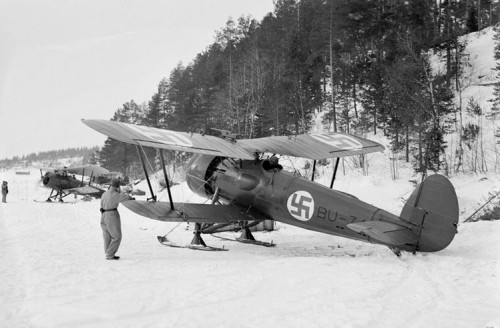
18 built (17 exported to Finland).
Armament
Two 7.7 mm Vickers machine guns (the RAF spec called for four).
Details
Despite meeting the RAF’s specification, it was not adopted domestically.
Finland used the Mk. IVA effectively, including during the Winter War against Soviet forces.
The aircraft retained the Mercury engine and Townend ring from the Mk. IIIA.
Bulldog TM (Type 124)
Role
Two-seat trainer.
Production
59 built.
Engine
310 hp (230 kW) Armstrong Siddeley Cheetah IX.
Details
Designed for pilot instruction and conversion training.
It featured dual controls and a modified fuselage to accommodate the second seat.
Though slower and less agile than its fighter counterparts, it was essential for preparing RAF and export pilots.
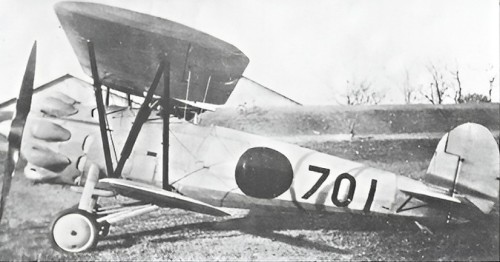
J.S.S.F.
(Japanese Single-Seat Fighter)
Role
Licence-built variant for Japan.
Production
Two built by Nakajima Aircraft Works.
Details
These aircraft were constructed under licence and used for evaluation and training.
They retained the core features of the Mk. II but were adapted to Japanese requirements.
They represent early Japanese interest in Western fighter design.
B.Kh.6
Role
Royal Siamese Air Force designation for the Bulldog Mk. II.
Details
Siam (now Thailand) operated the Bulldog Mk. II under the local designation B.Kh. 6.
These aircraft were used for air defence and pilot training, contributing to the modernisation of Siam’s air force in the 1930s.
Specifications
Crew
1
Length
25 ft 2 in (7.67 m)
Wingspan
33 ft 10 in (10.31 m)
Height
8 ft 9 in (2.67 m)
Wing area
307 sq ft (28.5 m²)
Airfoil
Bristol 1A, both wings.
Empty weight
2,205 lbs (1,000 kg)
Max takeoff weight
3,490 lbs (1,583 kg)
Powerplant
1 × Bristol Jupiter VIIF,
9-cylinder air-cooled radial piston engine,
490 hp (370 kW)
Propellers
2-bladed wooden fixed-pitch propeller
Performance
Maximum speed
178 mph (286 km/h, 155 kn)
Service ceiling
29,300 ft (8,900 m)
Armament
Guns
2 × 0.303 in (7.7 mm) Vickers machine guns
Bombs
4 × 20 lb (9 kg) bombs.
Operators
Estonian Air Force, Finnish Air Force, Imperial Japanese Navy Air Service, Latvian Air Force,
Royal Air Force, Royal Australian Air Force, Royal Danish Air Force, Royal Siamese Air Force,
Royal Swedish Air Force, Spanish Republican Air Force, United States Navy.